
TL;DR
This paper examines the idea that the word 'good' has a uniform form in sentences and argues that the differences in its usage are real, not illusory.
Contribution
The paper introduces a new strategy for opposing uniformity theses about 'good' and advocates for non-uniformity contextualism and relativism.
Findings
Uniformity theses about 'good' lack strong motivation.
Tough-adjective data supports the argument against uniformity.
Non-uniformity contextualism and relativism offer better explanations for 'good' constructions.
Abstract
Some philosophers hold that sentences with the word good have a uniform form. On this view, many of the apparent syntactic and semantic differences between (say) That is a good knife, Xavier is good with children and It is good to have pets are illusory. A difficulty in evaluating uniformity theses is that they are often not formulated in a linguistically precise way. I provide an interpretation where uniformity theses treat good as taking the same arguments at some syntactic or semantic level. I then defend the view that the motivation for uniformity theses is weak, and I develop a strategy for opposing them. One version of this strategy is deployed, drawing on under-appreciated data about tough-adjectives. I argue that there is better motivation for alternative analyses of good, namely ‘non-uniformity contextualism’ and ‘relativism’. The resulting picture is one where the apparent…
Genes, proteins, chemicals, diseases, species, mutations and cell lines named across the full text — each resolved to its canonical identifier and authoritative record.
Click any figure to enlarge with its caption.
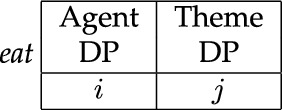 Figure 1
Peer Reviews
No public reviews on file for this paper yet. If you reviewed it on a platform where reviews are public (OpenReview, ICLR, NeurIPS, ICML), you can paste yours below so the community can read it here.
Videos
No videos yet. Explain this paper in a talk, walkthrough, or lecture? Add one.
Taxonomy
TopicsEpistemology, Ethics, and Metaphysics · Philosophy and Theoretical Science · Philosophical Ethics and Theory