Apolipoprotein C-III: Risk-factor, Regulator of Triglyceride-rich Lipoprotein Metabolism and Therapeutic Target
Elias Björnson, Martin Adiels, Marja-Riitta Taskinen, Chris J Packard, Jan Borén

TL;DR
Apolipoprotein C-III (apoC-III) influences triglyceride levels and heart disease risk, making it a promising target for new therapies.
Contribution
This review highlights apoC-III as a multifaceted therapeutic target in cardiometabolic disease.
Findings
Loss-of-function mutations in APOC3 reduce triglycerides and heart disease risk.
ApoC-III promotes lipoprotein retention and arterial inflammation.
Inhibitors targeting APOC3 lower apoC-III and triglyceride levels in studies.
Abstract
Apolipoprotein C-III (apoC-III) has emerged as a pivotal regulator of triglyceride metabolism and a key factor in cardiovascular risk. This review explores the physiological and pathological roles of apoC-III, focusing on kinetic mechanisms, genetic data, and the therapeutic potential of targeting apoC-III. Loss-of-function mutations in APOC3 significantly lower plasma triglyceride levels and coronary heart disease risk, validating apoC-III as a therapeutic target. Kinetic studies indicate that increased hepatic secretion of apoC-III raises triglyceride levels, particularly in individuals with type 2 diabetes. Beyond lipid metabolism, apoC-III promotes lipoprotein retention and amplifies arterial inflammation. Novel inhibitors, such as antisense oligonucleotides targeting APOC3, have been shown to markedly reduce plasma apoC-III and triglyceride concentrations in both preclinical and…
Genes, proteins, chemicals, diseases, species, mutations and cell lines named across the full text — each resolved to its canonical identifier and authoritative record.
Click any figure to enlarge with its caption.
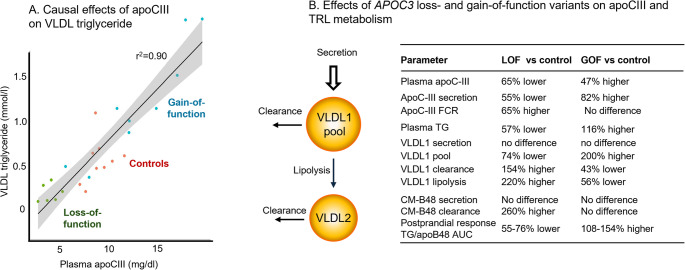 Figure 1
Peer Reviews
No public reviews on file for this paper yet. If you reviewed it on a platform where reviews are public (OpenReview, ICLR, NeurIPS, ICML), you can paste yours below so the community can read it here.
Videos
No videos yet. Explain this paper in a talk, walkthrough, or lecture? Add one.
Taxonomy
TopicsDiabetes, Cardiovascular Risks, and Lipoproteins · Caveolin-1 and cellular processes · Clusterin in disease pathology