A physics-informed neural network approach for estimating population-level pharmacokinetic parameters from aggregated concentration data
Periklis Tsiros, Vasileios Minadakis, Haralambos Sarimveis

TL;DR
This paper introduces a new method called D-PINNs to estimate drug behavior in populations using aggregated concentration data.
Contribution
The novel D-PINNs algorithm enables statistical modeling of pharmacokinetic parameters at the population level from summary statistics.
Findings
D-PINNs accurately estimated parameter distributions and residual error in simulated pharmacokinetic data.
The framework successfully recovered population-level kinetic parameters from real-world aggregated concentration data.
D-PINNs outperformed or matched MCMC methods in recovering pharmacokinetic parameter distributions.
Abstract
The pharmacokinetic literature is rich in aggregated concentration data that contain valuable information, yet tools to extract this information remain limited. This work introduces distributional physics-informed neural networks (D-PINNs), a novel algorithm designed to enable statistical modelling within the PINN framework, allowing recovery of pharmacokinetic parameter distributions at the population level from published concentration means and variances. Unlike traditional PINNs, which often focus on point estimates, D-PINNs incorporate distributional assumptions directly into the optimisation process. The framework utilises neural networks for predicting the mean and variance of the concentration over time. These predictions are then incorporated into a sampling-based procedure within the residual network, which uses the governing ordinary differential equation (ODE) system to…
Genes, proteins, chemicals, diseases, species, mutations and cell lines named across the full text — each resolved to its canonical identifier and authoritative record.
Click any figure to enlarge with its caption.
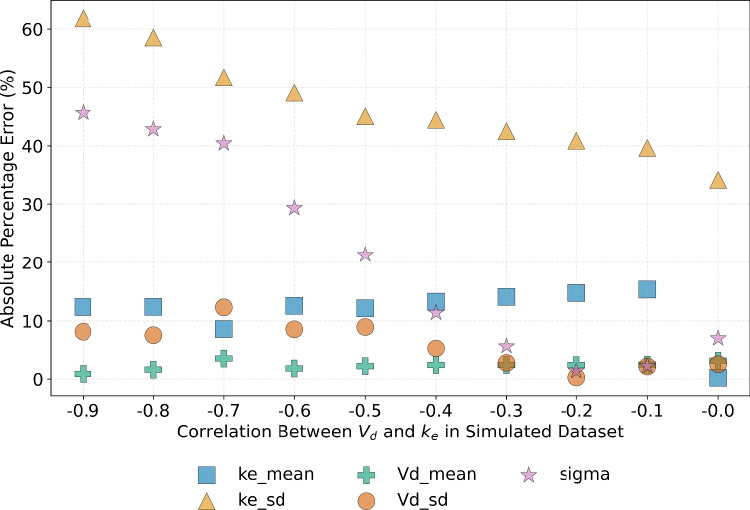 Figure 10
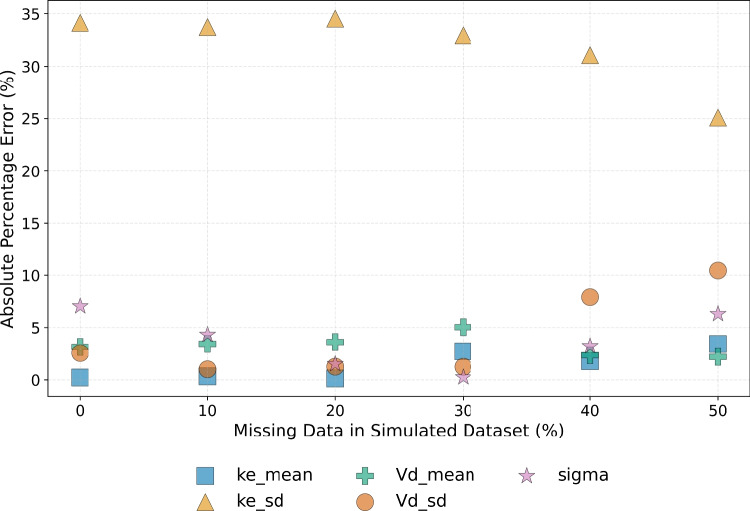 Figure 11
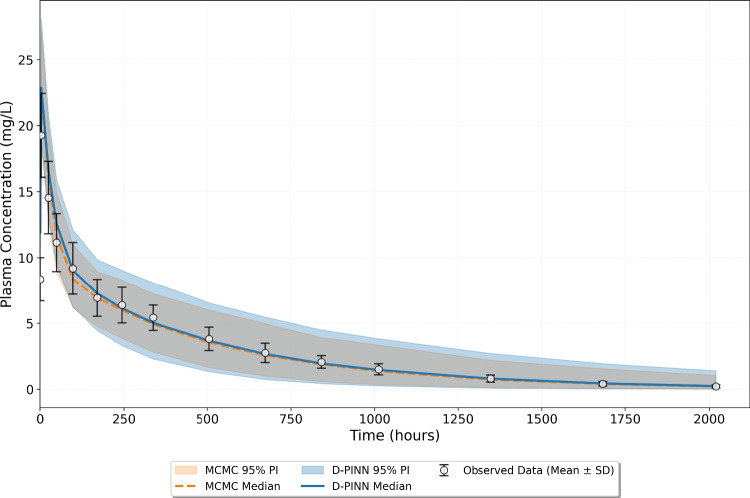 Figure 12
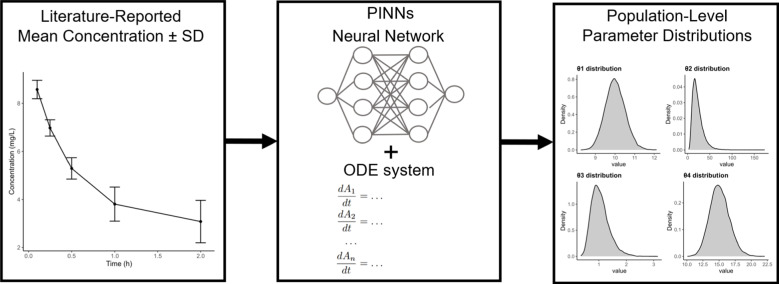 Figure 1
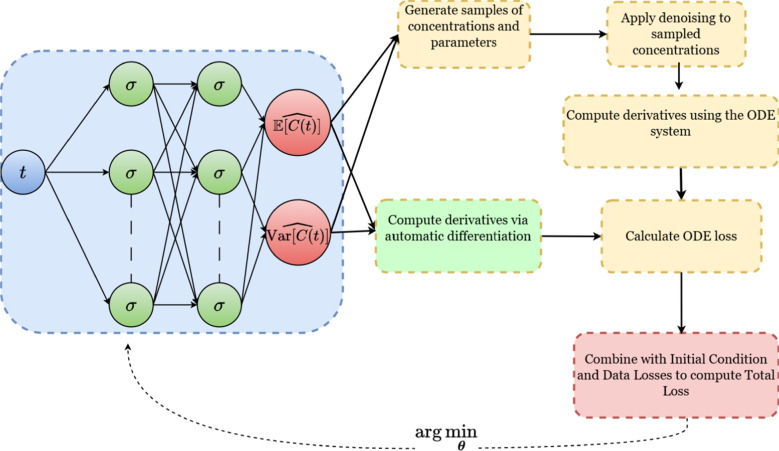 Figure 2
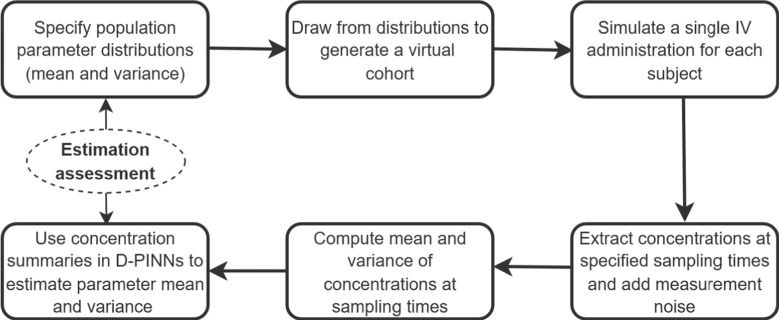 Figure 3
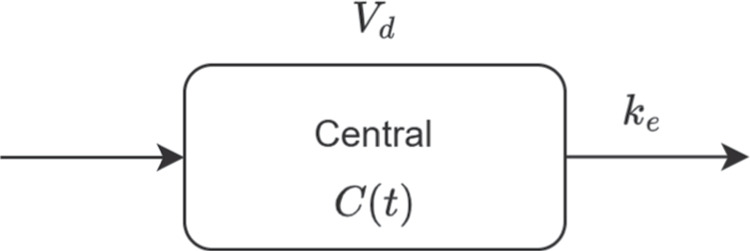 Figure 4
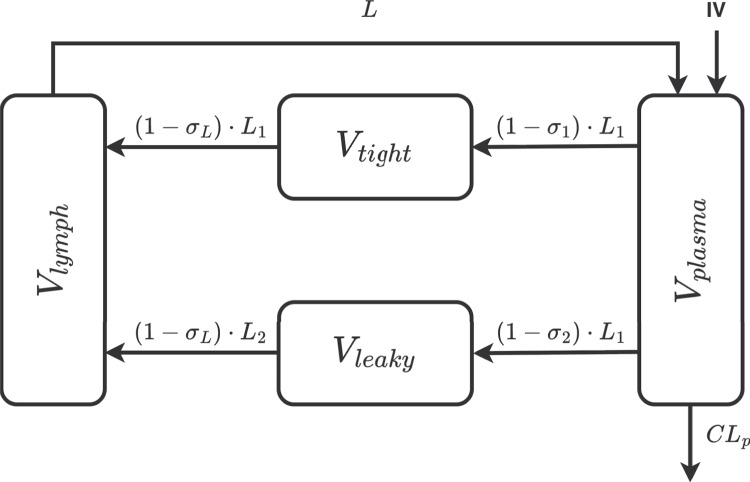 Figure 5
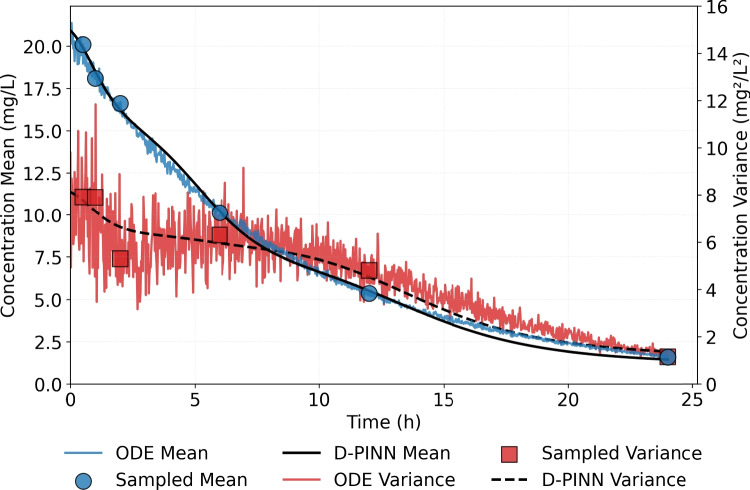 Figure 6
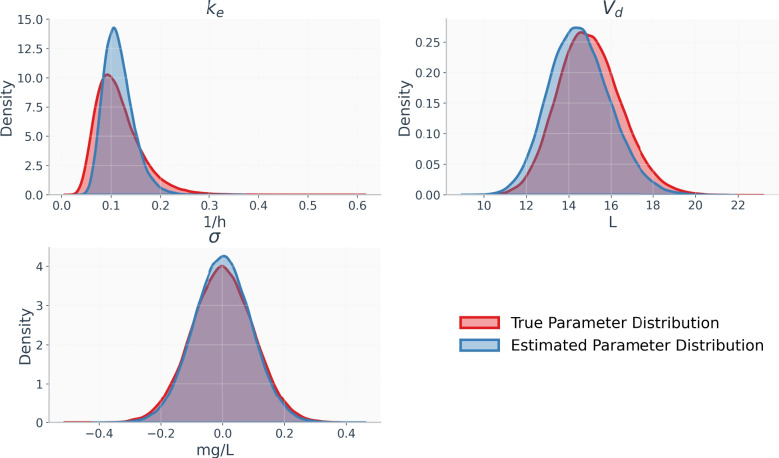 Figure 7
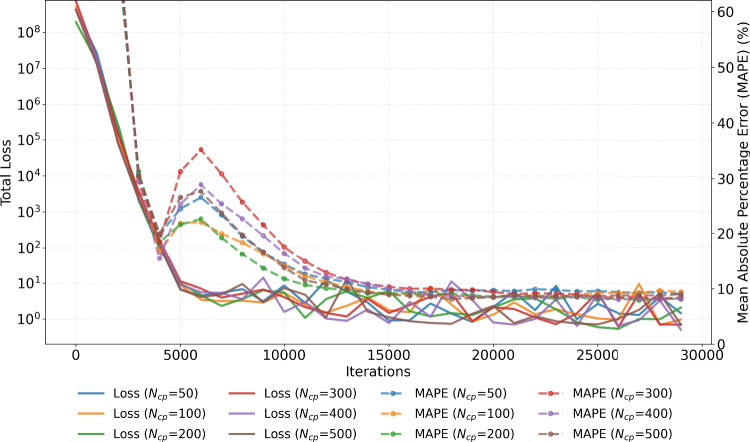 Figure 8
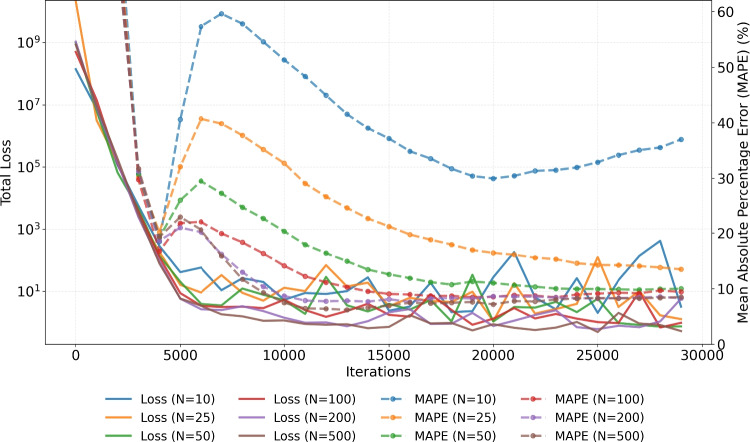 Figure 9
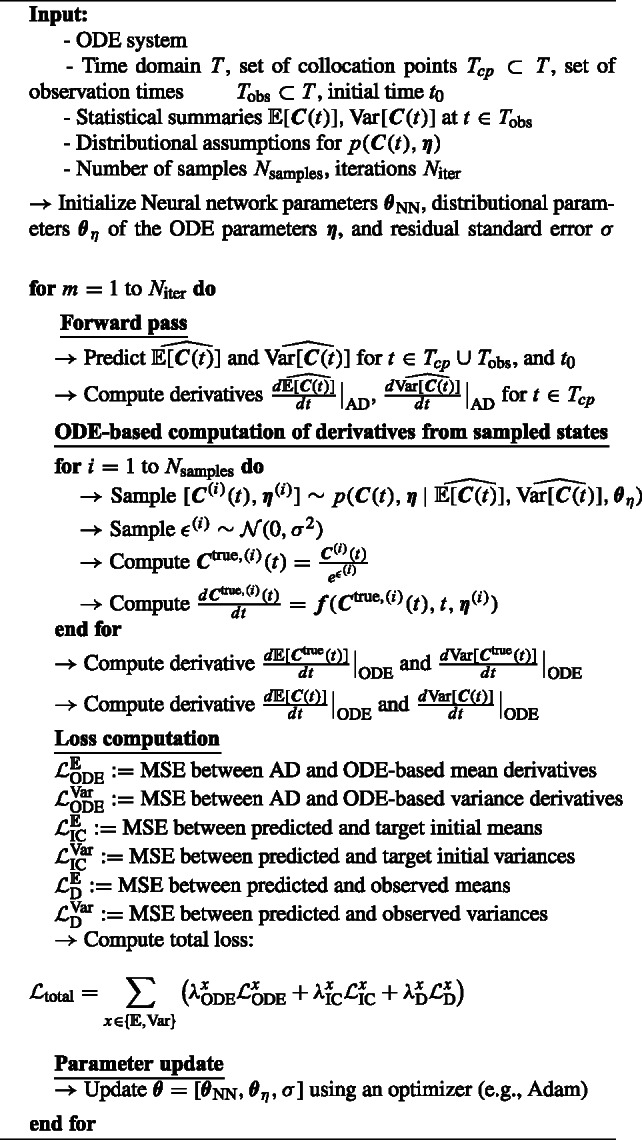 Figure 13
Peer Reviews
No public reviews on file for this paper yet. If you reviewed it on a platform where reviews are public (OpenReview, ICLR, NeurIPS, ICML), you can paste yours below so the community can read it here.
Videos
No videos yet. Explain this paper in a talk, walkthrough, or lecture? Add one.
Taxonomy
TopicsMonoclonal and Polyclonal Antibodies Research · Model Reduction and Neural Networks · Statistical Methods in Clinical Trials