Polycyclic aromatic hydrocarbons and polychlorinated biphenyls in tissue of mangrove Rhizophora mangle from the Colombian Caribbean
Laura García-Meléndez, Nicolás Santos-Vásquez, Néstor Hernando Campos-Campos, Adolfo Sanjuan-Muñoz, Néstor Javier Mancera-Rodríguez, Mario Monroy

TL;DR
This study measured harmful chemical levels in mangrove roots in Colombia, finding seasonal and location differences that highlight the need for better pollution control.
Contribution
The study provides new insights into PAH and PCB bioaccumulation in mangroves and their seasonal variation in the Colombian Caribbean.
Findings
PAH levels were highest during the rainy season in Cispatá Bay, averaging 180.5 ± 21.4 ng g−1.
PCB concentrations peaked during the dry season in the Ciénaga Grande de Santa Marta, averaging 10.7 ± 11.6 ng g−1.
Mangrove roots showed limited PAH accumulation from sediments, and albino mangroves suggest mutagenic stress.
Abstract
The expansion of human activities has led to organic compound contamination. These compounds have adverse ecosystem effects, yet research on their bioaccumulation is insufficient globally. This study aimed to (i) determine PAH and PCB concentration levels in Rhizophora mangle root tissue, and (ii) evaluate seasonal variations in PAH and PCB levels between rainy and dry seasons in two estuarine areas: the Ciénaga Grande de Santa Marta (CGSM) and Cispatá Bay (CIS). Samples from three places per area, collected in September 2022 and April 2023, were analyzed by gas chromatography-mass spectrometry. Results revealed that PAH concentrations were highest during the rainy season, in the Cispatá Bay, with an average of 180.5 ± 21.4 ng g−1. In contrast, PCB concentrations peaked during the dry season, in CGSM, with an average of 10.7 ± 11.6 ng g−1. A significant positive correlation was observed…
Genes, proteins, chemicals, diseases, species, mutations and cell lines named across the full text — each resolved to its canonical identifier and authoritative record.
Click any figure to enlarge with its caption.
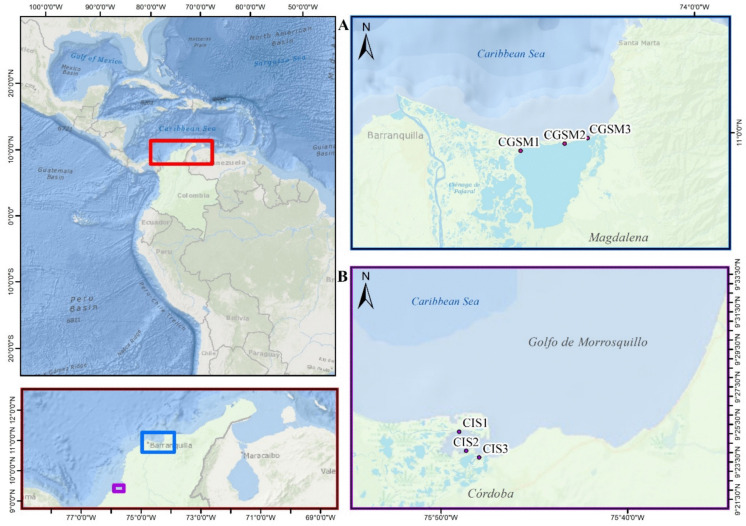 Figure 1
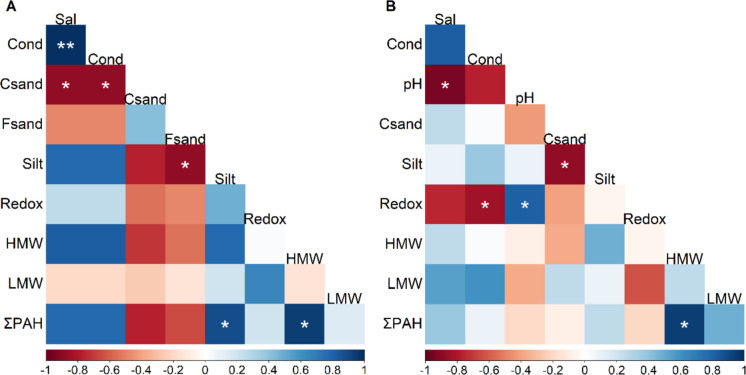 Figure 2
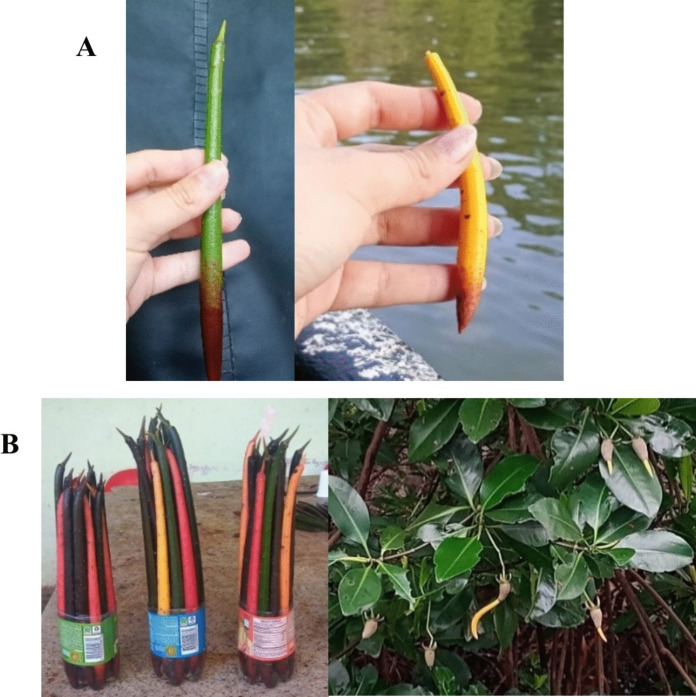 Figure 3
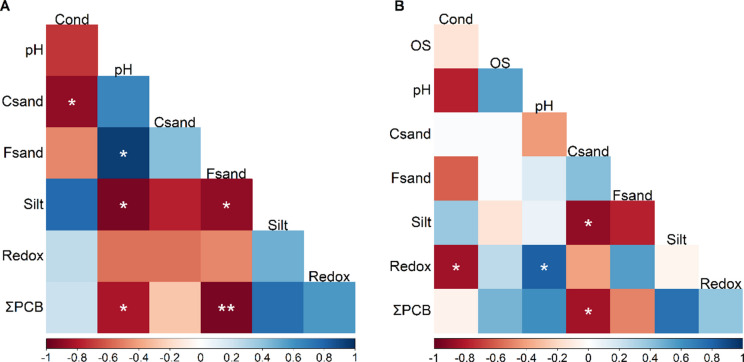 Figure 4
Peer Reviews
No public reviews on file for this paper yet. If you reviewed it on a platform where reviews are public (OpenReview, ICLR, NeurIPS, ICML), you can paste yours below so the community can read it here.
Videos
No videos yet. Explain this paper in a talk, walkthrough, or lecture? Add one.
Taxonomy
TopicsToxic Organic Pollutants Impact · Coastal wetland ecosystem dynamics · Microbial bioremediation and biosurfactants