Homologous recombination deficiency in primary ER-positive and HER2-negative breast cancer
Helen R. Davies, Daniella Black, Anders Kvist, Kristín Sigurjónsdóttir, Ana Bosch, Ramsay Bowden, Yasin Memari, Ziqian Chen, Giuseppe Rinaldi, Frida Rosengren, Deborah F. Nacer, Srinivas Veerla, Lennart Hohmann, Nicklas Nordborg, Jari Häkkinen, Johan Vallon-Christersson

TL;DR
This study finds that HRD is rare in ER-positive HER2-negative breast cancer and does not significantly affect patient outcomes after standard treatment.
Contribution
The study provides the first comprehensive analysis of HRD in ER-positive HER2-negative breast cancer using whole-genome sequencing and clinical data.
Findings
HRD occurs in 8.4% of ER-positive HER2-negative breast cancer cases, much less than in triple-negative breast cancer.
HRD in these tumors is mainly caused by alterations in BRCA1/BRCA2/RAD51C/PALB2 genes.
HRD tumors do not show distinct gene expression or DNA methylation profiles and do not consistently predict worse outcomes with standard therapy.
Abstract
Homologous recombination deficiency (HRD) originating from inactivation of genes like BRCA1/BRCA2 is a targetable abnormality common in triple-negative breast cancer (TNBC). In estrogen-receptor (ER)-positive HER2-negative (ERpHER2n) breast cancer (BC), HRD prevalence and clinical impact are unclear. We analyzed 502 ERpHER2n tumors from patients recruited via the population-representative Swedish SCAN-B study by whole genome sequencing (WGS), defining mutational signatures-based HRD, as well as matched transcriptional, DNA methylation, clinicopathological, adjuvant treatment, and outcome data. We show that HRD is much less frequent in ERpHER2n BC (8.4%) compared to TNBC, though induced by similar genetic/epigenetic mechanisms acting on mainly BRCA1/BRCA2/RAD51C/PALB2 together, providing a plausible HR-inactivation mechanism for 71.4% of HRD tumors. Our modelled estimate of HRD in…
Genes, proteins, chemicals, diseases, species, mutations and cell lines named across the full text — each resolved to its canonical identifier and authoritative record.
Click any figure to enlarge with its caption.
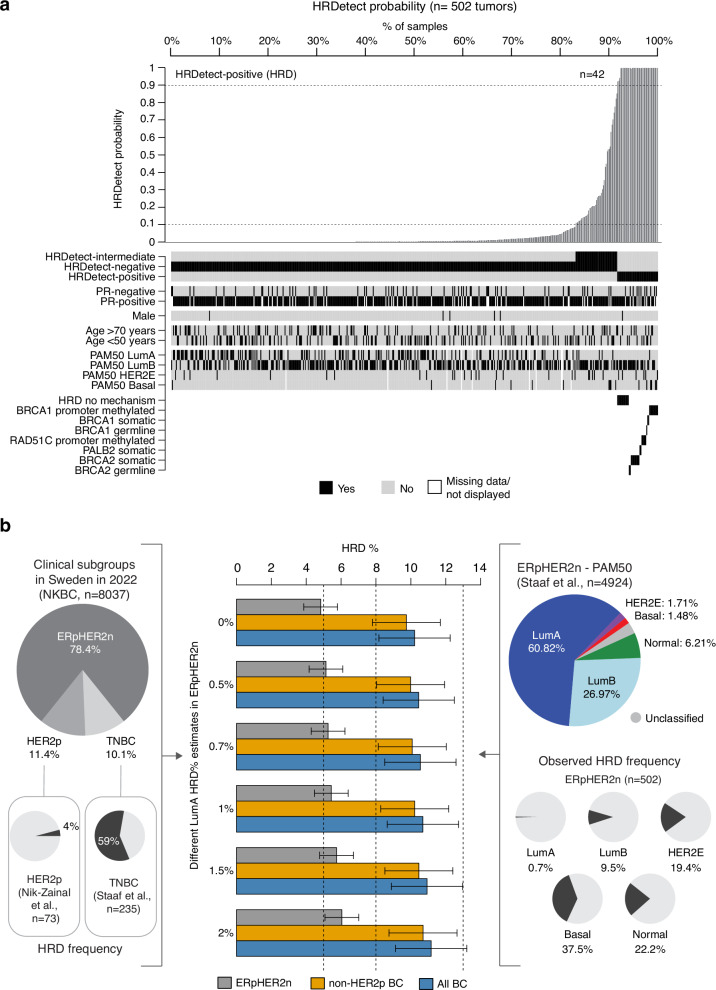 Figure 1
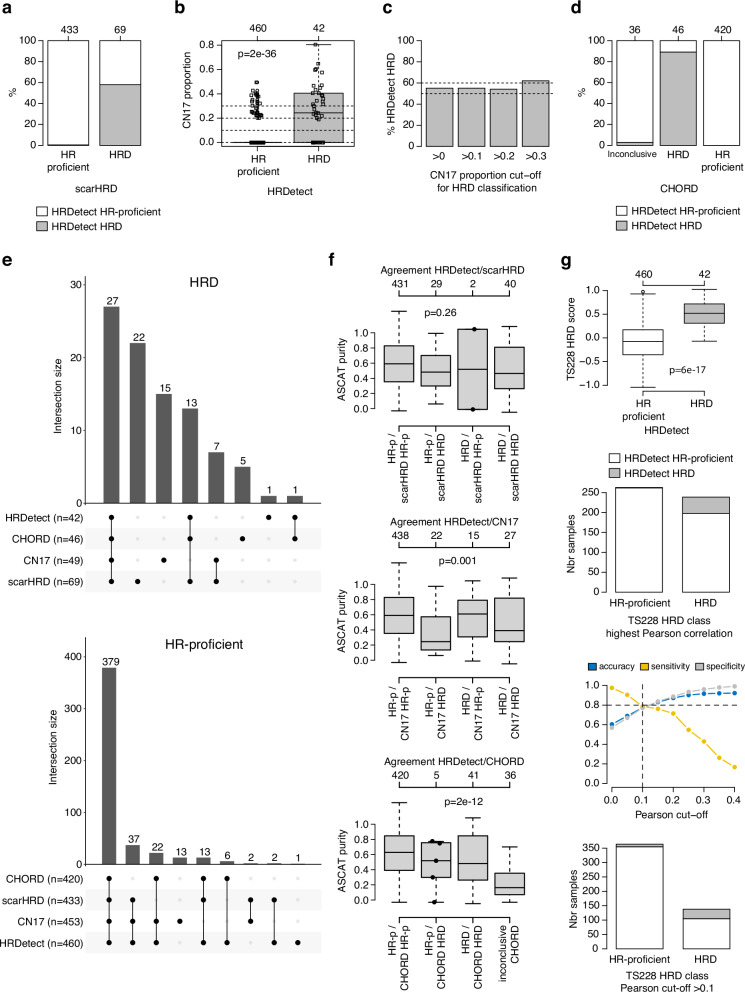 Figure 2
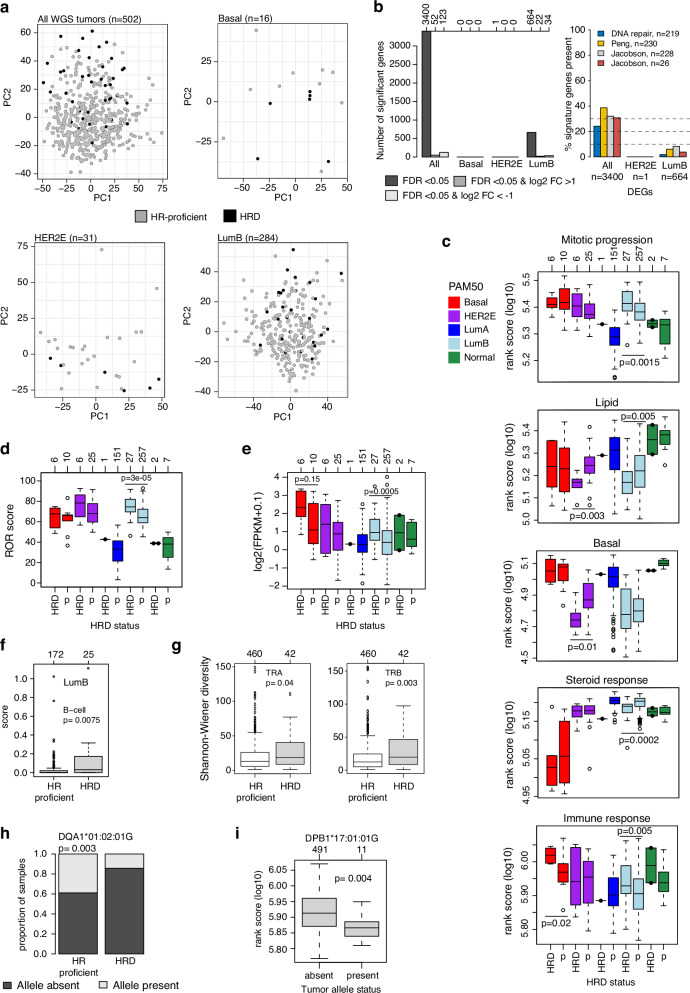 Figure 3
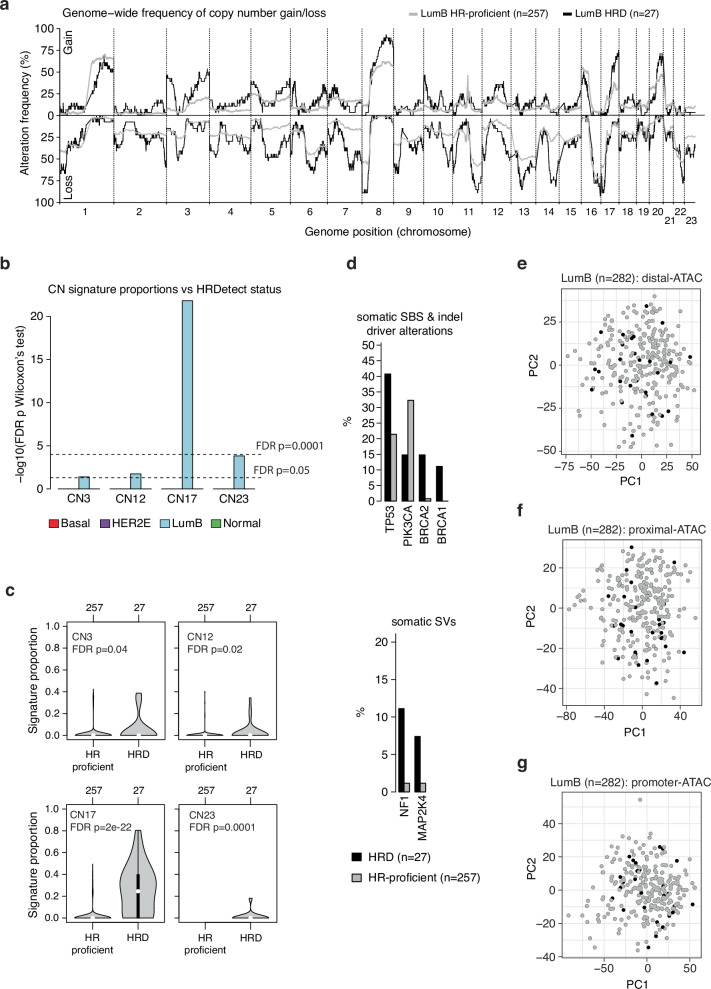 Figure 4
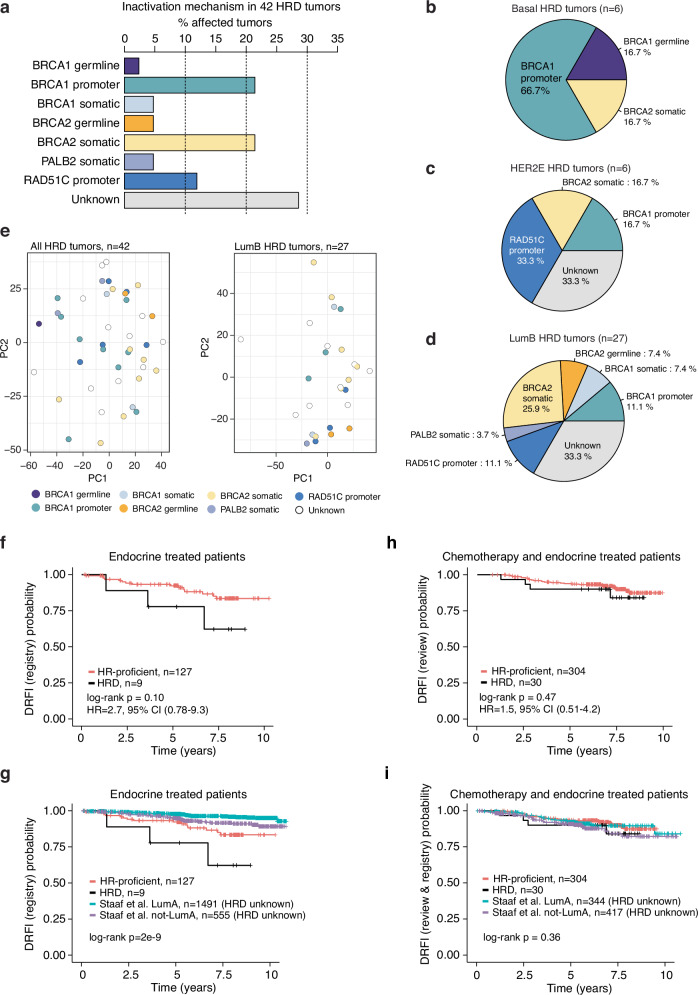 Figure 5
Peer Reviews
No public reviews on file for this paper yet. If you reviewed it on a platform where reviews are public (OpenReview, ICLR, NeurIPS, ICML), you can paste yours below so the community can read it here.
Videos
No videos yet. Explain this paper in a talk, walkthrough, or lecture? Add one.
Taxonomy
TopicsPARP inhibition in cancer therapy · BRCA gene mutations in cancer · DNA Repair Mechanisms