Ginsenoside Rg3 Ameliorates Psoriasis‐Like Dermatitis through Inhibition of NF‐κB/NLRP3 Inflammasome Signaling and Regulating Th17/Treg Balance
Liyun Gao, Qingge Xie, Zhaoli Zhou, Wanlu Zhang, Huiya Sun, Zhen Yue, Congjun Jiang

TL;DR
Ginsenoside Rg3 reduces psoriasis-like skin inflammation in mice by suppressing harmful immune signals and restoring immune balance.
Contribution
This study reveals a novel therapeutic mechanism of Ginsenoside Rg3 in psoriasis through inhibition of NLRP3 inflammasome and NF-κB signaling.
Findings
Ginsenoside Rg3 significantly reduced PASI scores and epidermal thickness in psoriasis-like dermatitis models.
Grg3 suppressed IL-17 and pro-inflammatory cytokines while increasing regulatory T cells in psoriasis mice.
The compound inhibited NLRP3 inflammasome activation and NF-κB signaling pathways in vivo.
Abstract
Psoriasis, characterized as a persistent cutaneous inflammatory condition driven by aberrant immunity, exhibits pathogenesis and disease course heavily influenced by sustained inflammatory activity. Ginsenoside Rg3 (Grg3), a traditional Chinese medicinal compound, has shown notable therapeutic effects on various inflammatory diseases. However, its therapeutic efficacy and mechanisms of action in the treatment of psoriasis remain unclear. In this study, we utilized 6 to 8‐week‐old female BALB/c mice and applied 5% imiquimod (IMQ) cream to their dorsal skin to establish a psoriasis‐like dermatitis model. Twenty‐five mice were randomly divided into five groups: control, model, and the Grg3‐L/M/H groups, receiving dosages of 5, 10, and 20 mg/kg/day, respectively, with three mice in each group. Grg3 was administered continuously for 7 days to evaluate its effects on the skin of the…
Genes, proteins, chemicals, diseases, species, mutations and cell lines named across the full text — each resolved to its canonical identifier and authoritative record.
Click any figure to enlarge with its caption.
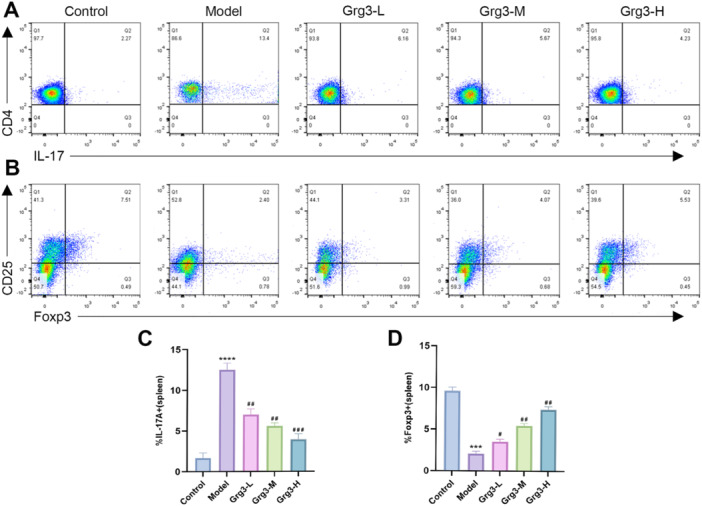 Figure 1
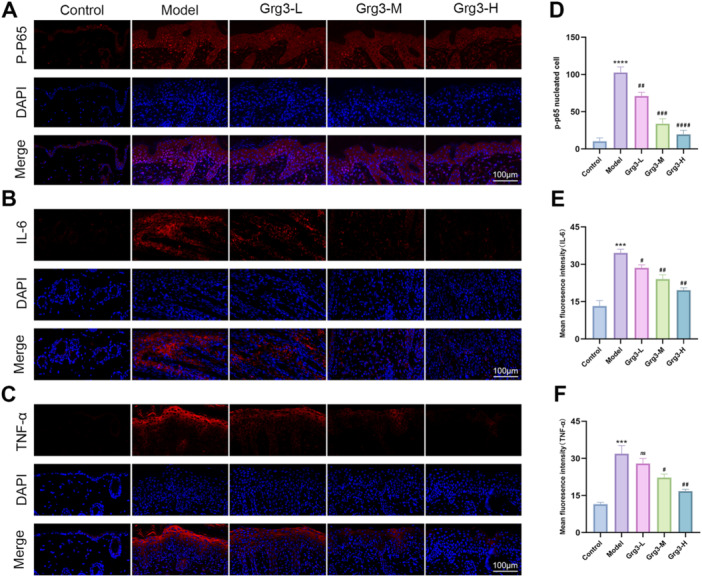 Figure 2
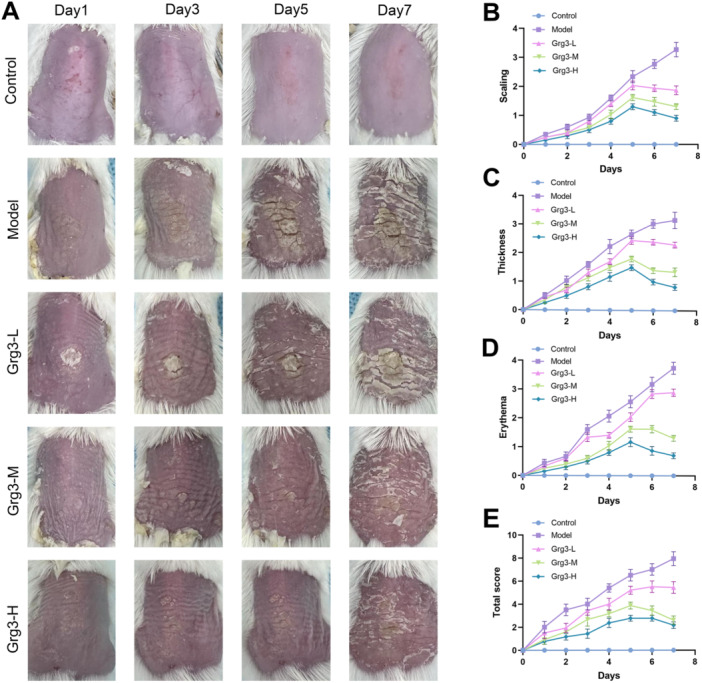 Figure 3
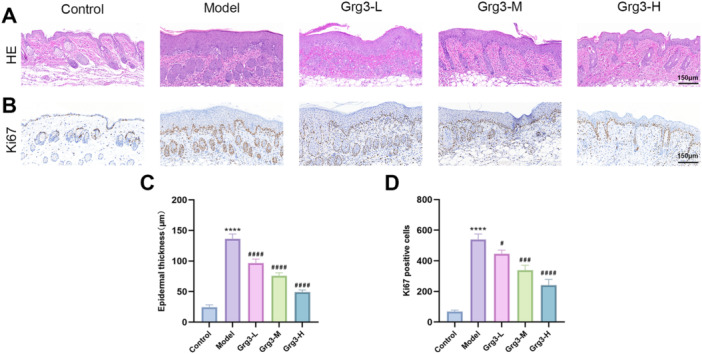 Figure 4
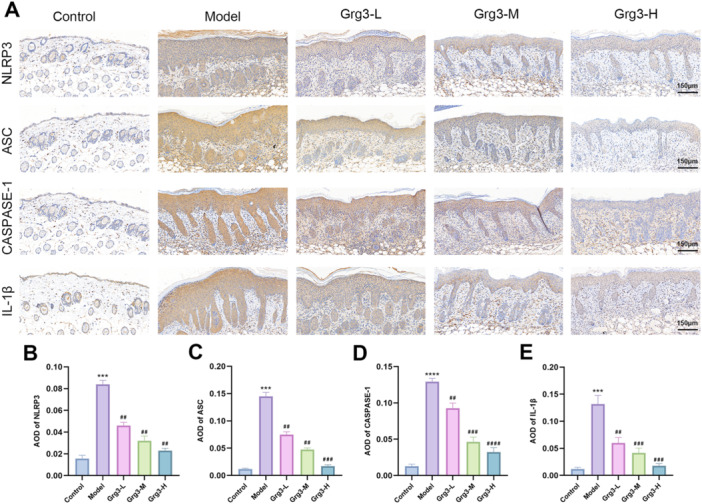 Figure 5
Peer Reviews
No public reviews on file for this paper yet. If you reviewed it on a platform where reviews are public (OpenReview, ICLR, NeurIPS, ICML), you can paste yours below so the community can read it here.
Videos
No videos yet. Explain this paper in a talk, walkthrough, or lecture? Add one.
Taxonomy
TopicsPsoriasis: Treatment and Pathogenesis · Inflammasome and immune disorders · Dermatology and Skin Diseases