NOD-like receptor repertoire in the chromosome-level genome of the demosponge Dysidea avara (Schmidt, 1862)
Vasiliki Koutsouveli, Montserrat Torres-Oliva, Angela M. Marulanda-Gomez, Andre Franke, Janina Fuß, Ruth A. Schmitz, Ute Hentschel, Thorsten B. H. Reusch, Lucía Pita

TL;DR
This study characterizes the immune-related NOD-like receptor (NLR) diversity in the chromosome-level genome of the sponge Dysidea avara, revealing insights into their evolution in early animals.
Contribution
The first characterization of NLR diversity in a chromosome-level sponge genome, providing new insights into their evolution in Porifera.
Findings
Dysidea avara has a large number of immune-related genes, including 230 NACHT domain-containing genes.
NLRs in D. avara are grouped by species rather than by category in phylogenetic analyses.
The NLRX category is the most expanded, while NLRC is absent in most studied sponge genomes.
Abstract
Porifera, one of the earliest diverging metazoans, have shown a surprisingly complex immune repertoire. However, most information to date is based on de novo transcriptome assemblies, limiting our knowledge regarding the presence and evolution of poriferan immune repertoire. Here, we generated the chromosome-level genome of the demosponge Dysidea avara, a target species in studies on symbiosis and differential expression of immune genes. We examined the presence and the number of common immune protein domains in the annotated genome of D. avara, and we further focused on NOD-like Receptors (NLRs), which are one of the most expanded immune receptors in Porifera according to previous reports on draft genomes and transcriptome assemblies. Dysidea avara has a 575 Mb genome with N50 41Mb, 162 scaffolds, and 15 chromosomes. We additionally recovered 37 sequences corresponding to microbial…
Genes, proteins, chemicals, diseases, species, mutations and cell lines named across the full text — each resolved to its canonical identifier and authoritative record.
Click any figure to enlarge with its caption.
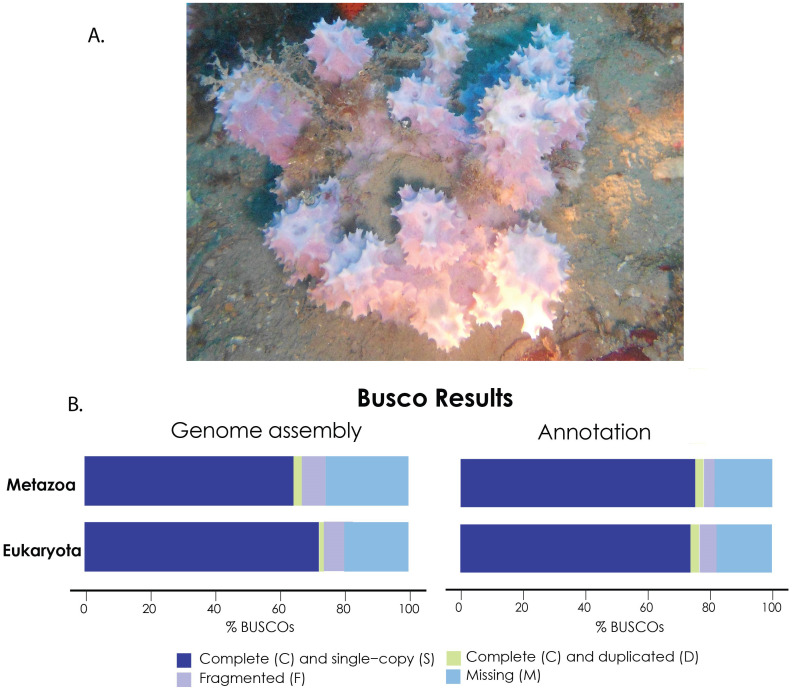 Figure 1
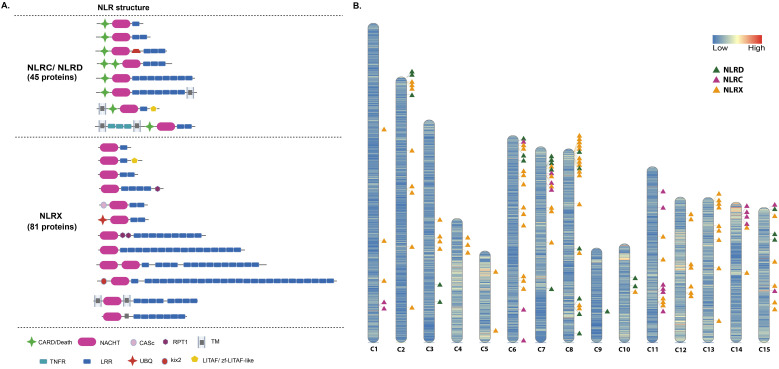 Figure 2
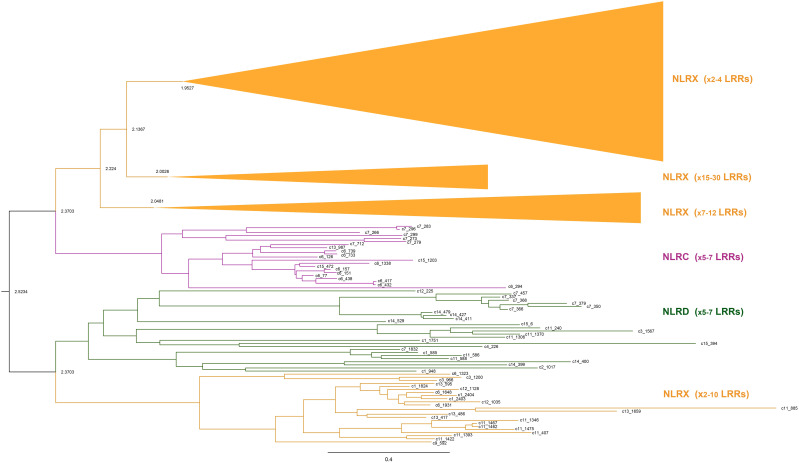 Figure 3
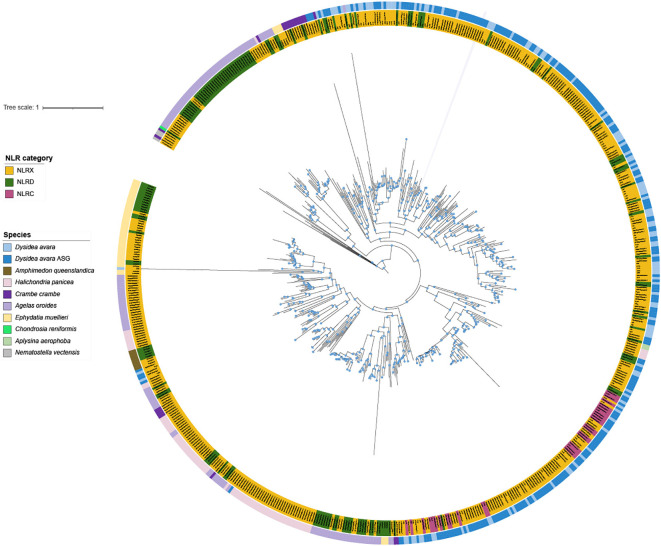 Figure 4
Peer Reviews
No public reviews on file for this paper yet. If you reviewed it on a platform where reviews are public (OpenReview, ICLR, NeurIPS, ICML), you can paste yours below so the community can read it here.
Videos
No videos yet. Explain this paper in a talk, walkthrough, or lecture? Add one.
Taxonomy
TopicsInvertebrate Immune Response Mechanisms · Marine Sponges and Natural Products · Marine Ecology and Invasive Species