Update on direct embryo transfer in sheep: hatched blastocysts increase conception rates
Ștefan Gregore Ciornei

TL;DR
Transferring hatched blastocysts in sheep improves conception rates compared to non-hatched blastocysts.
Contribution
Demonstrates that hatched blastocysts lead to higher pregnancy rates in direct embryo transfer in sheep.
Findings
Recipient ewes receiving hatched blastocysts had an 86.9% pregnancy rate.
Over 12% of embryos hatched, with 74.5% being transferable.
The embryo recovery rate at 6.5 days was 84.3%.
Abstract
This article presents an overview of the update on direct embryo transfer using hatched blastocysts. Recent research has observed differences in conception rates in sheep following surgical transfer. All sessions included in the study followed the same standard protocol, resulting in the creation of two groups, with the control group (CG) being the one in which blastocysts were transferred, and the experimental group (EG) received hatched blastocysts. Embryos were obtained from meat sheep through in vivo derived (IVD) and transferred to crossbred sheep synchronized with very obvious corpus luteum (CL) on at least one of the ovaries (84.21%). Thus, a retrospective study highlights the clear success of embryo recipients who also received hatched blastocysts (code 9.1) compared to recipients with blastocysts only (code 6.1, 7.1). The embryo recovery rate at 6.5 days, determined by…
Genes, proteins, chemicals, diseases, species, mutations and cell lines named across the full text — each resolved to its canonical identifier and authoritative record.
Click any figure to enlarge with its caption.
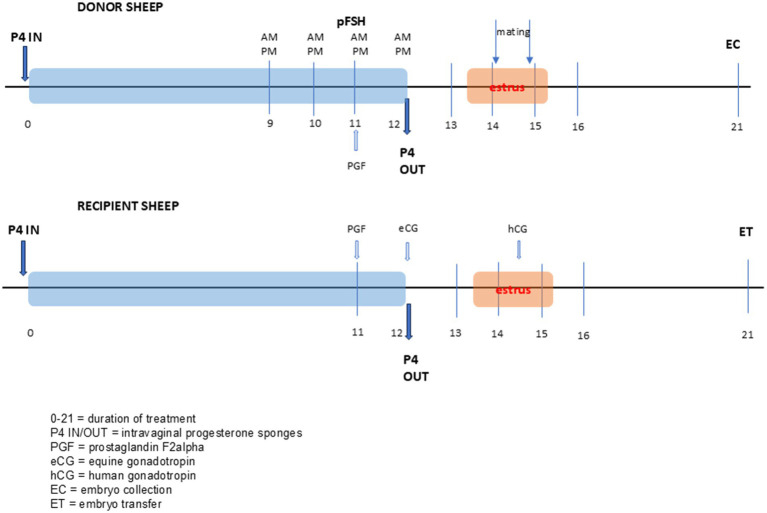 Figure 1
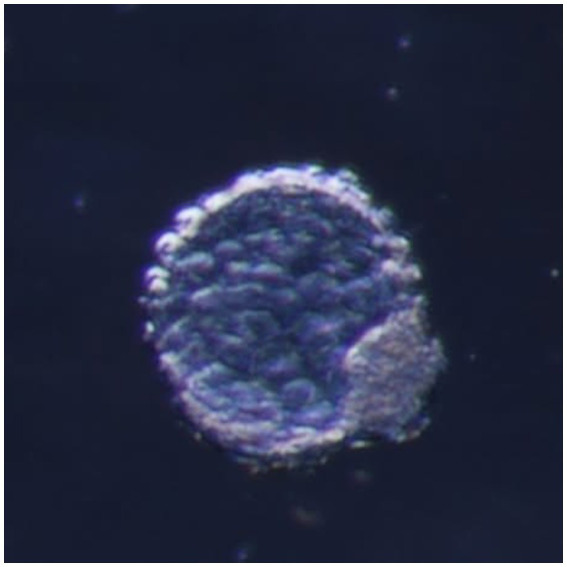 Figure 2
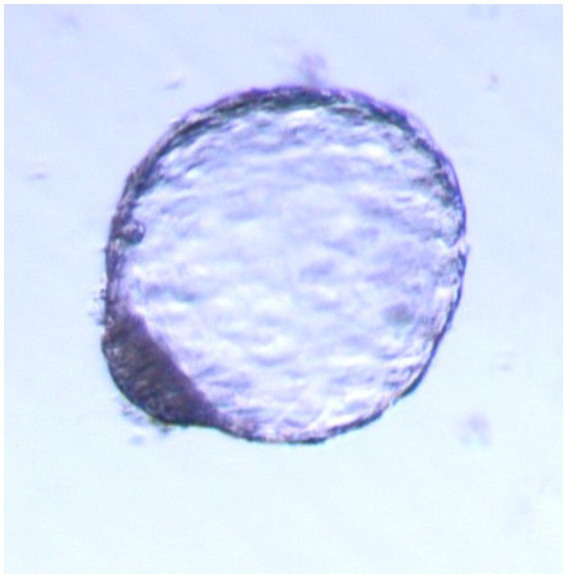 Figure 3
Peer Reviews
No public reviews on file for this paper yet. If you reviewed it on a platform where reviews are public (OpenReview, ICLR, NeurIPS, ICML), you can paste yours below so the community can read it here.
Videos
No videos yet. Explain this paper in a talk, walkthrough, or lecture? Add one.
Taxonomy
TopicsReproductive Biology and Fertility · Reproductive Physiology in Livestock · Ovarian function and disorders