A survey about laughter upon viewing functional seizures
Mohamad Z. Koubeissi, Nadim Jaafar, Christopher Saouda, Alexandra Eid, W. Curt LaFrance, Gülşen Öztosun, Hassna S. Aziz, Muhammad T. Khan, Faraaz A. Khan, Adam U. Syed, Adam Khalil, Candan Gürses, Tanvir U. Syed

TL;DR
This study explores why physicians laugh when observing functional seizures, finding that reasons vary between medical professionals and non-physicians.
Contribution
The study identifies 10 thematic categories for laughter in response to functional seizures, revealing cultural and professional differences.
Findings
Laughter responses to FS videos varied widely, with 57% in U.S. medical settings versus 5–17% internationally.
Non-physicians cited defense mechanisms and ignorance more often, while physicians linked laughter to superiority or skepticism.
U.S. physicians reported more discomfort and negative opinions compared to non-U.S. physicians.
Abstract
Laughter among physicians when observing clinical manifestations of functional seizures (FS) or other functional disorders is frequently noted. This reflexive response can occur both in clinical practice and during video presentations at medical conferences. We examine the underlying factors contributing to physicians’ laughter in response to the diagnosis of FS. The research, spanning 5 years and diverse geographical locations, surveyed 221 participants, including physicians and non-physicians, to understand the reasons behind laughter during FS diagnoses. A total of 221 respondents (estimated 20–25% of attendees) completed the survey, with 56% identifying as physicians and 44% as non-physicians. Observational data showed laughter responses to FS videos varied widely across settings: approximately 57% at U. S. medical grand rounds, compared to 5–17% at international conferences, and…
Genes, proteins, chemicals, diseases, species, mutations and cell lines named across the full text — each resolved to its canonical identifier and authoritative record.
Click any figure to enlarge with its caption.
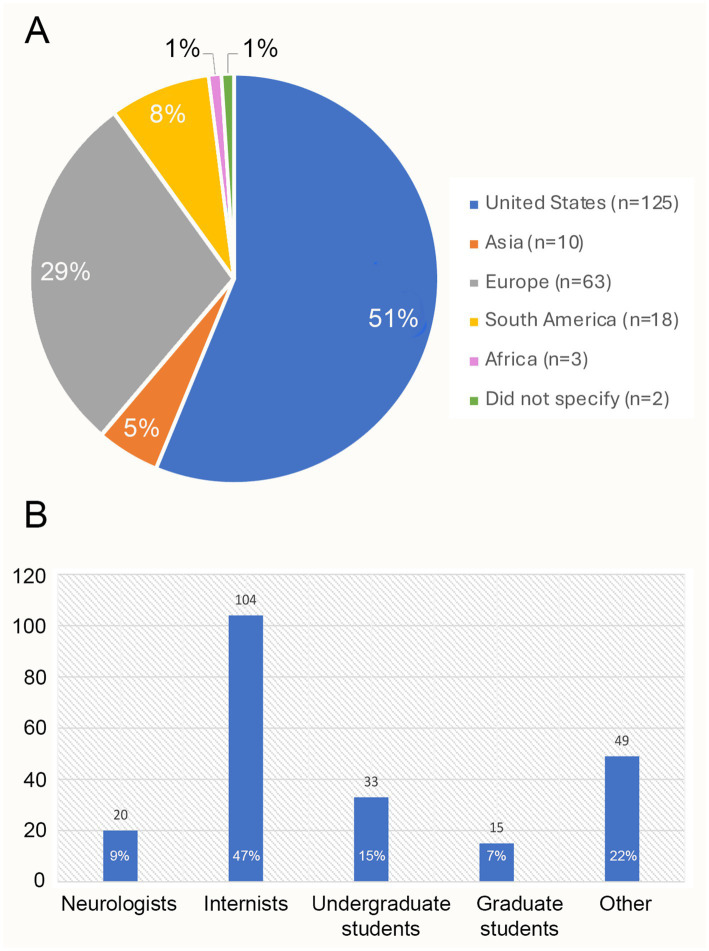 Figure 1
Peer Reviews
No public reviews on file for this paper yet. If you reviewed it on a platform where reviews are public (OpenReview, ICLR, NeurIPS, ICML), you can paste yours below so the community can read it here.
Videos
No videos yet. Explain this paper in a talk, walkthrough, or lecture? Add one.
Taxonomy
TopicsPsychosomatic Disorders and Their Treatments · Epilepsy research and treatment · Traumatic Brain Injury Research