Theory of mind on demand: do we prepare or react?
Marion Roth, Stacy Marsella

TL;DR
This paper explores how humans efficiently infer others' mental states by proposing a reactive and demand-driven theory of mind mechanism.
Contribution
The novel contribution is the hypothesis of reactive and demand-driven theory of mind (ToM) mechanisms shaped by cognitive heuristics.
Findings
Qualitative data suggests humans use heuristics to efficiently infer mental states in complex social interactions.
Themes identified include cognitive shortcuts that help manage the complexity of social reasoning.
The study proposes a reactive ToM model that requires further quantitative validation.
Abstract
Reasoning about others’ thoughts, emotions, or intentions is a sophisticated human ability. Modelling such a complex phenomenon with limited available resources is a challenging pursuit. This work proposes the hypothesis of demand-driven and reactive ToM in humans as an additional strategy to establish sufficient mental inferences in complex social spaces. The authors consider a perspective of bounded rationality and cognitive costs in conceptualising ToM and understanding how humans form, maintain, and reason with models of others efficiently and effectively. This study presents qualitative data exploring what patterns in human ToM may allow humans to quickly and seemingly effortlessly perform the complex task of inferring other people’s mental states. The results consist of several themes, which point to various heuristics that may be employed in shaping tractable ToM mechanisms. In…
Genes, proteins, chemicals, diseases, species, mutations and cell lines named across the full text — each resolved to its canonical identifier and authoritative record.
Click any figure to enlarge with its caption.
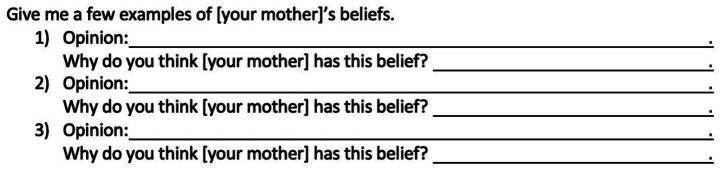 Figure 1
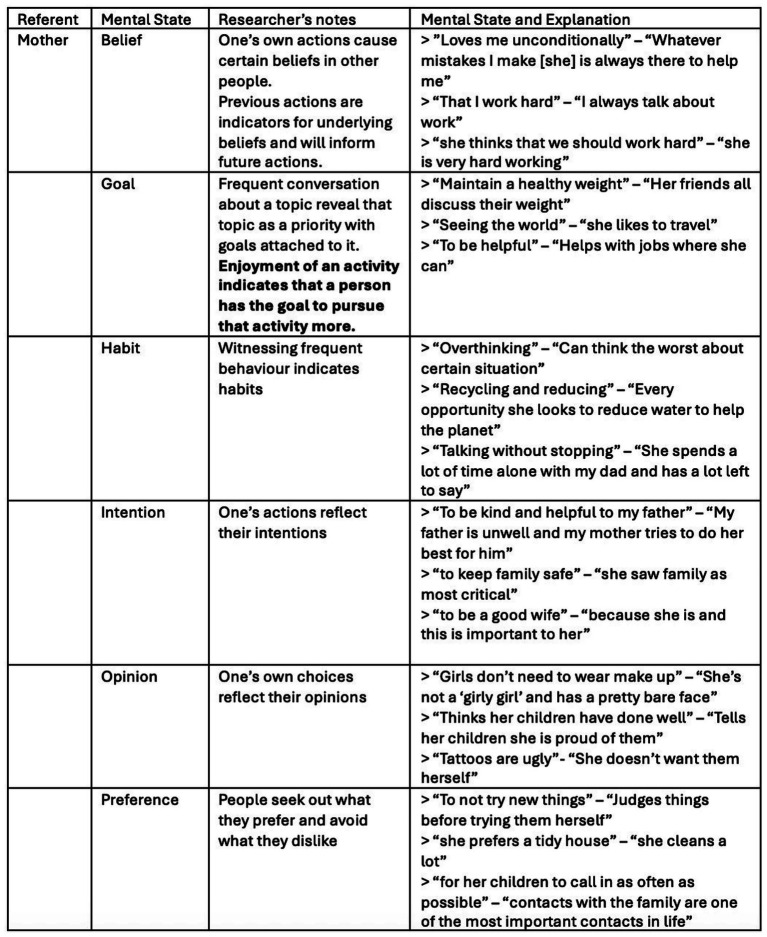 Figure 2
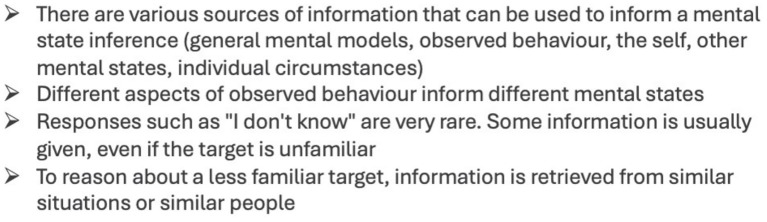 Figure 3
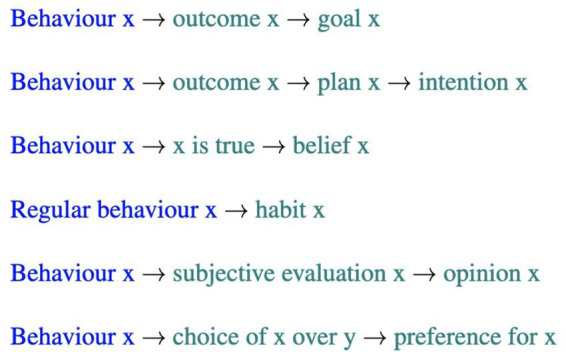 Figure 4
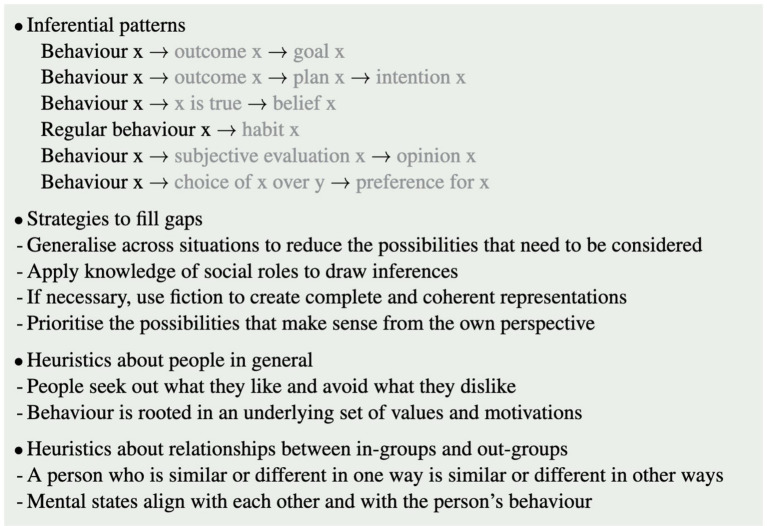 Figure 5
Peer Reviews
No public reviews on file for this paper yet. If you reviewed it on a platform where reviews are public (OpenReview, ICLR, NeurIPS, ICML), you can paste yours below so the community can read it here.
Videos
No videos yet. Explain this paper in a talk, walkthrough, or lecture? Add one.
Taxonomy
TopicsEmbodied and Extended Cognition · Child and Animal Learning Development · Action Observation and Synchronization