Analysis of risk factors for Meige syndrome and construction and validation of a clinical prediction nomogram model
Gang Liu, Qiangying Guo, Jie Xiang, Zhen Xu, Suying Chen, Lili Shang, Jiao Du, Huiying Wang, Xianzhong Liu, Yongjun Wu

TL;DR
This study identifies risk factors for Meige syndrome and creates a prediction model to help doctors assess risk and intervene early.
Contribution
The novel contribution is the development and validation of a clinical prediction nomogram model for Meige syndrome.
Findings
Thyroid disease, psychiatric disorders, and head/face surgery are significant risk factors for Meige syndrome.
Smoking, alcohol consumption, and diabetes are protective factors against Meige syndrome.
The nomogram model showed strong predictive performance with AUC values of 0.789 and 0.800 in training and validation sets.
Abstract
Meige syndrome (MS) is a craniocervical dystonia characterized by blepharospasm and oromandibular dystonia. Its etiology remains unclear, and clinical diagnosis is often delayed. Currently, there is a lack of effective risk prediction tools, making early intervention challenging. To systematically analyze the risk factors for MS and develop and validate a clinical prediction nomogram model based on clinical indicators to facilitate early risk assessment. A retrospective case–control study was conducted, enrolling 450 confirmed MS patients and 450 controls from the Third People’s Hospital of Henan Province between January 2021 and December 2023. Univariate and multivariate logistic regression analyses were performed to identify independent risk factors, and a nomogram prediction model was constructed based on regression coefficients. The model’s discriminative ability, calibration, and…
Genes, proteins, chemicals, diseases, species, mutations and cell lines named across the full text — each resolved to its canonical identifier and authoritative record.
Click any figure to enlarge with its caption.
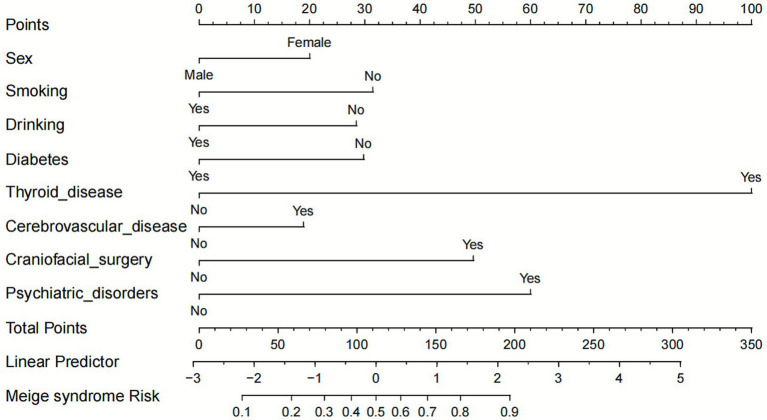 Figure 1
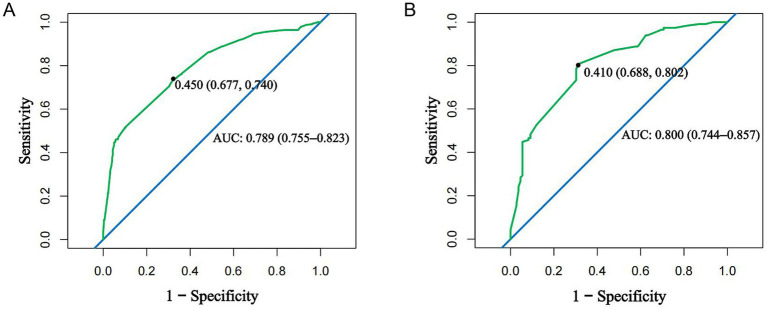 Figure 2
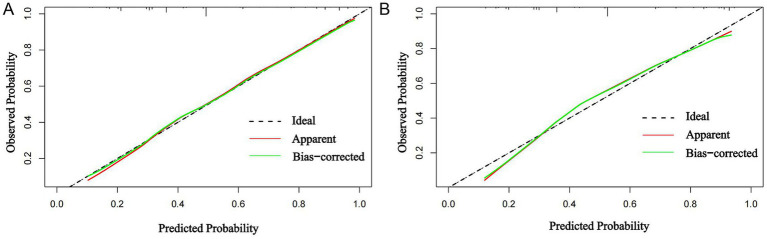 Figure 3
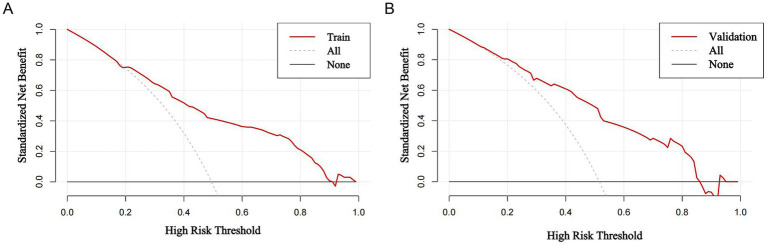 Figure 4
Peer Reviews
No public reviews on file for this paper yet. If you reviewed it on a platform where reviews are public (OpenReview, ICLR, NeurIPS, ICML), you can paste yours below so the community can read it here.
Videos
No videos yet. Explain this paper in a talk, walkthrough, or lecture? Add one.
Taxonomy
TopicsBotulinum Toxin and Related Neurological Disorders · Sympathectomy and Hyperhidrosis Treatments · Migraine and Headache Studies