Construction of a prediction model for axillary lymph node metastasis in stage cN0 hormone receptor-positive breast cancer: based on interpretable machine learning methods
Wenyan Liu, Zhijun Ma, Yufei Wang, Qishuai Chen, Liu Wang, Jiuqing Chi

TL;DR
This paper develops a machine learning model to predict lymph node metastasis in hormone receptor-positive breast cancer patients, using interpretable methods to guide preoperative decisions.
Contribution
The novel contribution is an interpretable KNN model for predicting axillary lymph node metastasis in cN0 HR+ BC patients using SHAP explanations.
Findings
The KNN model achieved an AUC of 0.898 in the test set and 0.774 in the external validation set.
SHAP analysis identified parity as the most critical predictor of axillary lymph node metastasis.
The model provides high net clinical benefit within the 30%–65% probability threshold range.
Abstract
Accurately predicting axillary lymph node metastasis (ALNM) preoperatively is crucial for optimizing management in patients with clinically node-negative (cN0) hormone receptor-positive (HR+) breast cancer (BC). We retrospectively analyzed 816 cN0 HR+ BC patients (2016-2024). Data from 2016-2023 (n=726) were randomly assigned to a training set (n=503) or an internal test set (n=223) in a 7:3 ratio. Patients treated in the most recent year, 2024 (n=90), were reserved as a held-out temporal validation set. Following feature selection via Recursive Feature Elimination (RFE), five machine learning models—XGBoost, Random Forest, Logistic Regression, Support Vector Machine, and K-Nearest Neighbors (KNN)—were developed. Performance was assessed by the area under the receiver operating characteristic curve (AUC) and decision curve analysis (DCA). The optimal model was interpreted using SHapley…
Genes, proteins, chemicals, diseases, species, mutations and cell lines named across the full text — each resolved to its canonical identifier and authoritative record.
Click any figure to enlarge with its caption.
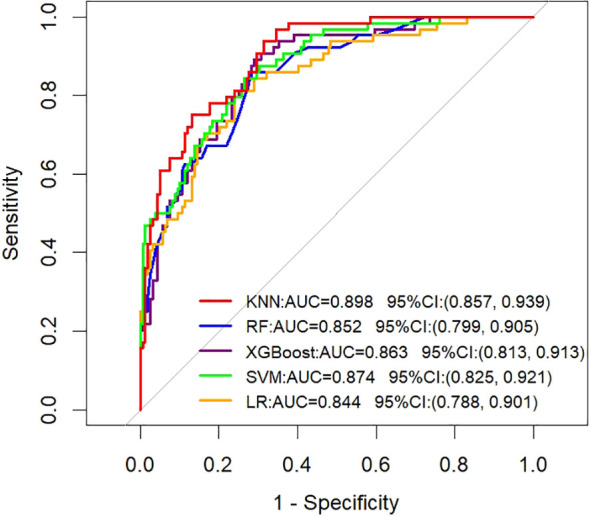 Figure 1
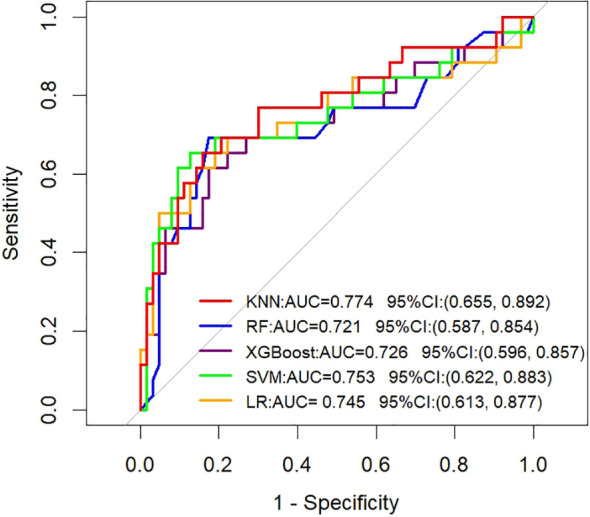 Figure 2
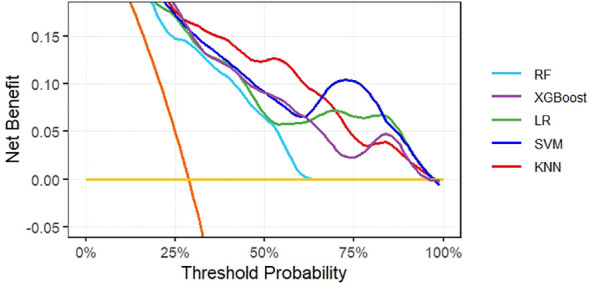 Figure 3
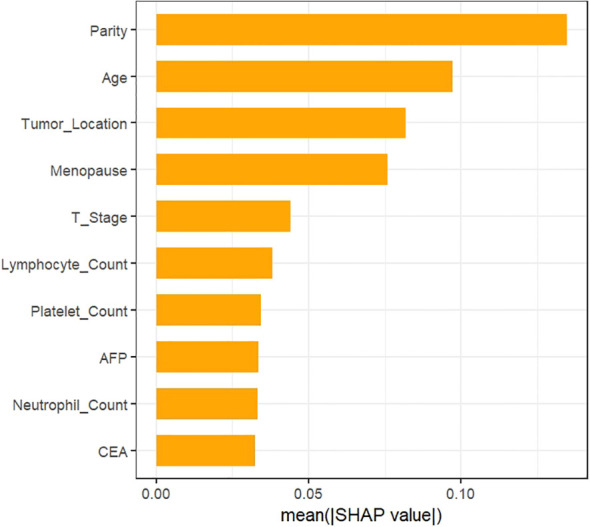 Figure 4
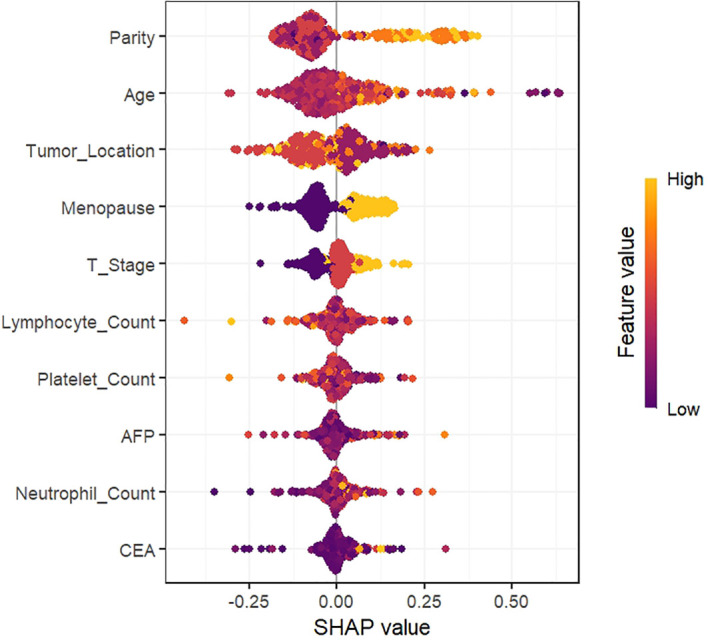 Figure 5
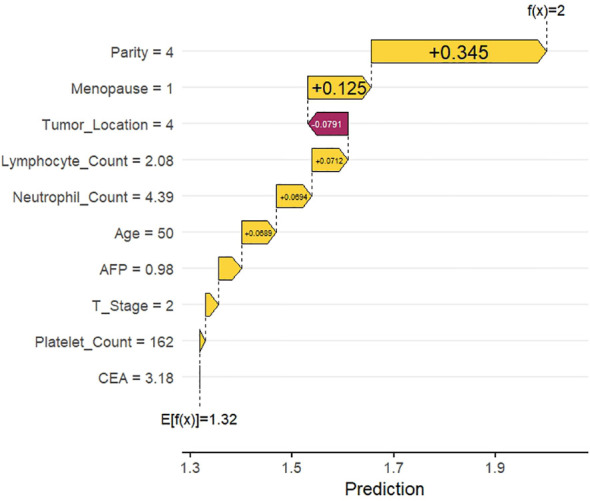 Figure 6
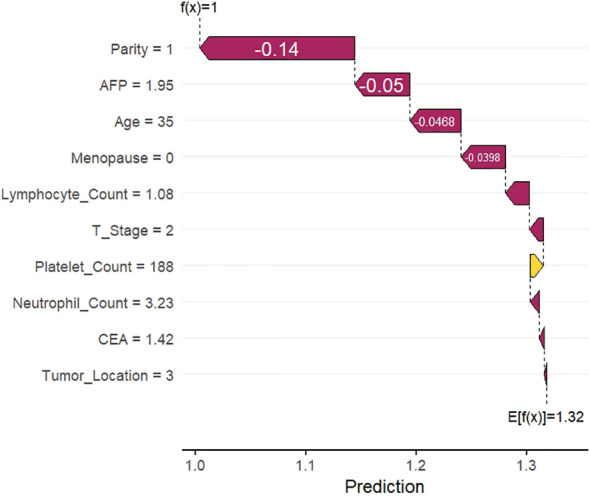 Figure 7
Peer Reviews
No public reviews on file for this paper yet. If you reviewed it on a platform where reviews are public (OpenReview, ICLR, NeurIPS, ICML), you can paste yours below so the community can read it here.
Videos
No videos yet. Explain this paper in a talk, walkthrough, or lecture? Add one.
Taxonomy
TopicsBreast Cancer Treatment Studies · AI in cancer detection · Breast Lesions and Carcinomas