Comparison of anti-human T cell globulins on immune reconstitution and early infections after autologous transplant in patients with multiple sclerosis
Johanna Richter, Nico Gagelmann, Felix Fischbach, Kristin Rathje, Lena Kristina Pfeffer, Boris Fehse, Anita Badbaran, Susanna Carolina Berger, Rolf Krause, Evgeny Klyuchnikov, Christine Wolschke, Catherina Lueck, Francis Ayuk, Manuel A. Friese, Christoph Heesen, Nicolaus Kröger

TL;DR
This study compares two types of anti-T cell globulins used in stem cell transplants for multiple sclerosis, finding differences in immune recovery and infection risks.
Contribution
The study provides novel comparative data on immune reconstitution and infection profiles between two anti-T cell globulins in multiple sclerosis patients.
Findings
ATLG leads to faster immune reconstitution of multiple T-cell subsets compared to ATG at day 30 post-transplant.
Viral reactivations occurred exclusively in patients receiving ATG.
Infection-related rehospitalization rates were similar between the two groups.
Abstract
Autologous hematopoietic stem cell transplantation is an effective therapeutic option for patients with treatment-refractory multiple sclerosis (MS) and may be considered as first line treatment in aggressive forms. Currently, a variety of conditioning and serotherapy regimens are employed across transplant centers. In this study, we compared immune reconstitution at days 30 and 100 post-transplant in MS patients undergoing AHSCT with cyclophosphamide-based conditioning, combined with in vivo T-cell depletion using either polyclonal rabbit anti-thymocyte globulin (ATG; Thymoglobulin, Genzyme-Sanofi) or rabbit anti-T-lymphocyte globulin (ATLG; Grafalon, Neovii). We observed a significantly faster immune reconstitution for CD3+, CD3+HLA-DR+, CD3+CD4+, CD4+CD45RA+, CD4+CD45RO+, CD3+CD8+, CD8+CD45RA+, CD8+CD45RO+, and CD4+CD25+CD127low cells in patients receiving ATLG compared to ATG at day…
Genes, proteins, chemicals, diseases, species, mutations and cell lines named across the full text — each resolved to its canonical identifier and authoritative record.
Click any figure to enlarge with its caption.
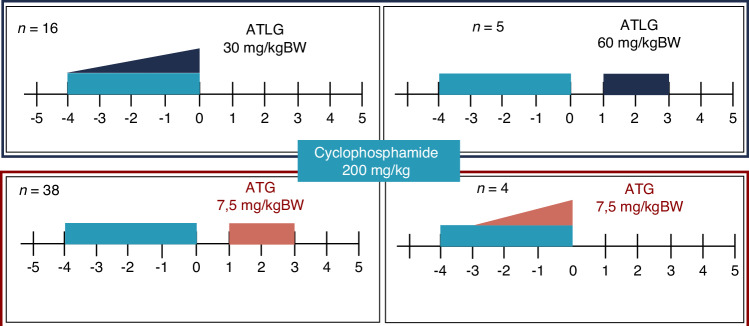 Figure 1
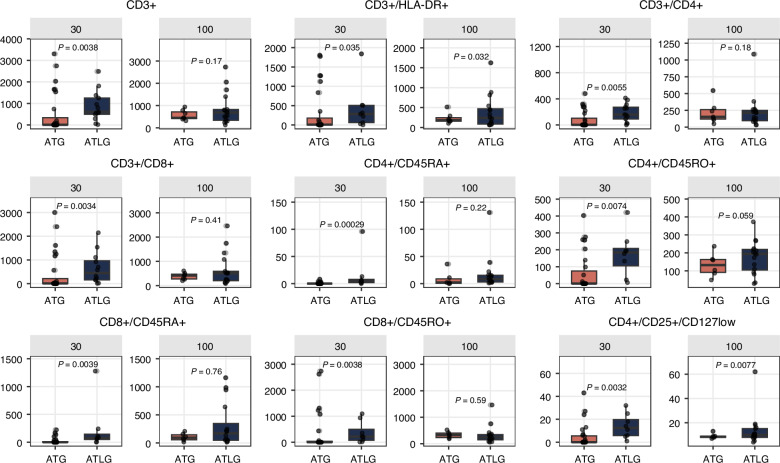 Figure 2
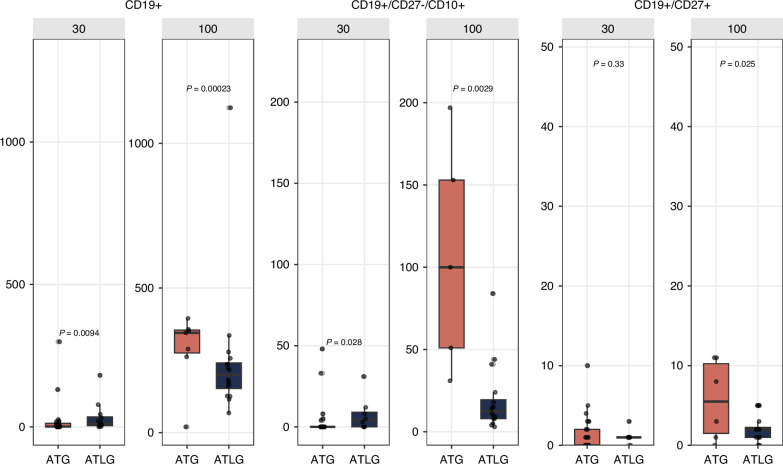 Figure 3
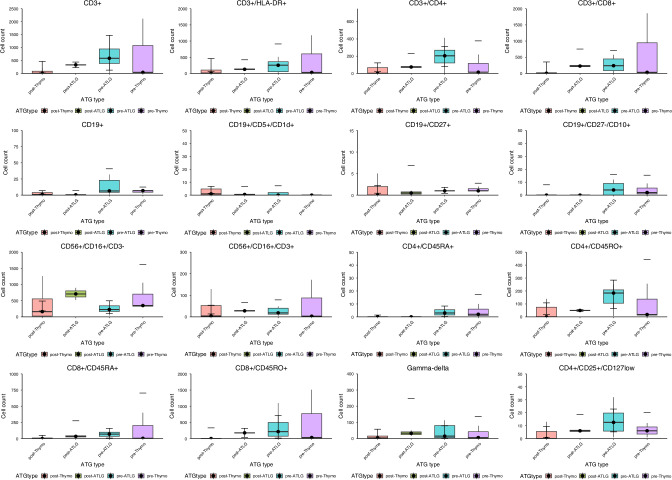 Figure 4
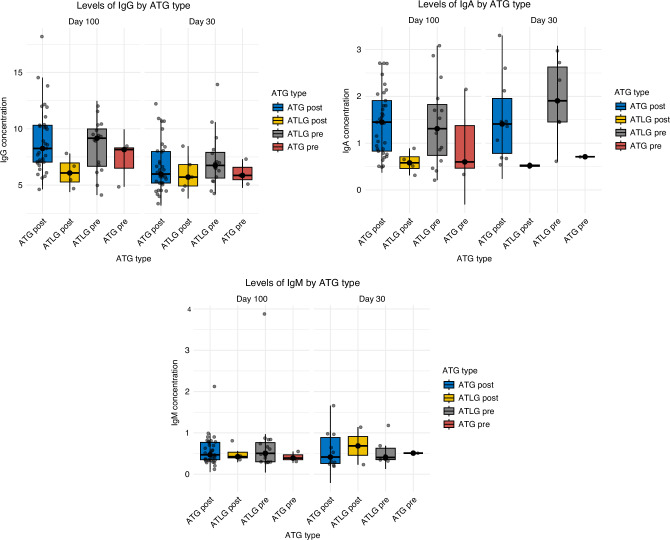 Figure 5
Peer Reviews
No public reviews on file for this paper yet. If you reviewed it on a platform where reviews are public (OpenReview, ICLR, NeurIPS, ICML), you can paste yours below so the community can read it here.
Videos
No videos yet. Explain this paper in a talk, walkthrough, or lecture? Add one.
Taxonomy
TopicsMultiple Sclerosis Research Studies · T-cell and B-cell Immunology · Polyomavirus and related diseases