The use of molecular cues to regenerate musculoskeletal tissues
Carlos Julio Peniche Silva, Martijn van Griensven, Virginie Joris

TL;DR
This paper reviews how molecular signals can be used to regenerate musculoskeletal tissues like bone and cartilage, offering new therapeutic strategies for tissue repair.
Contribution
The paper provides a comprehensive review of shared and tissue-specific molecular cues in musculoskeletal regeneration, highlighting potential therapeutic targets.
Findings
Molecular regulators like growth factors and microRNAs play key roles in musculoskeletal tissue regeneration.
Pathways such as TGF-β and NF-κB can either promote healing or cause fibrosis depending on their modulation.
Targeting these molecular cues with therapies like microRNA replacement or growth factor delivery could enhance tissue repair.
Abstract
Musculoskeletal tissues, including bone, tendon, cartilage, and muscle, are vital for movement and structural support, yet, their repair after injury remains a significant clinical challenge. Their regeneration relies on complex molecular signaling that regulates inflammation, repair, and remodeling. Understanding these cues, offers opportunities to design targeted therapeutic strategies. This review summarizes current evidence on molecular regulators of musculoskeletal tissue regeneration with emphasis on both shared and tissue-specific mechanisms across bone, tendon, cartilage and muscle. Key molecular cues include growth factors, cytokines, extracellular matrix-derived signals, and non-coding RNAs, particularly microRNAs. Critical pathways such as TGF-β, NF-κB, FGF, and YAP/TAZ can either promote healing or drive pathological fibrosis depending on their modulation. This review…
Genes, proteins, chemicals, diseases, species, mutations and cell lines named across the full text — each resolved to its canonical identifier and authoritative record.
Click any figure to enlarge with its caption.
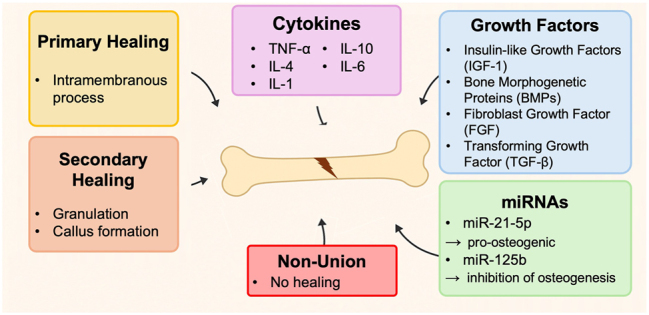 Figure 1
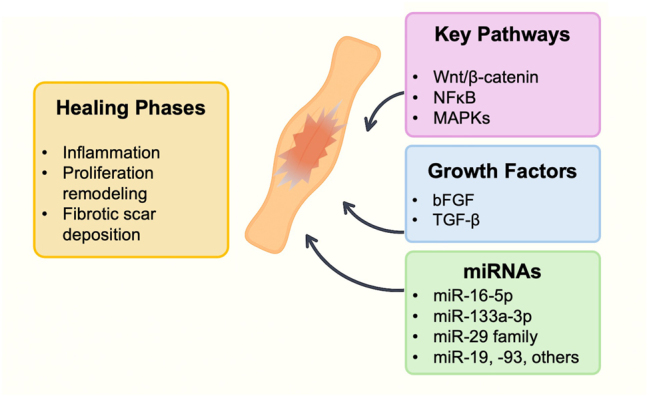 Figure 2
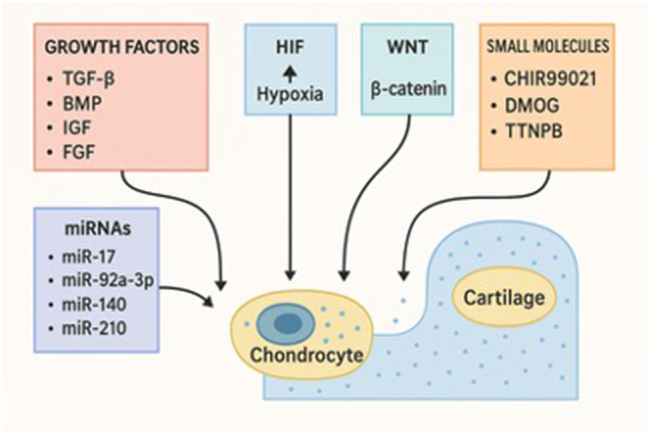 Figure 3
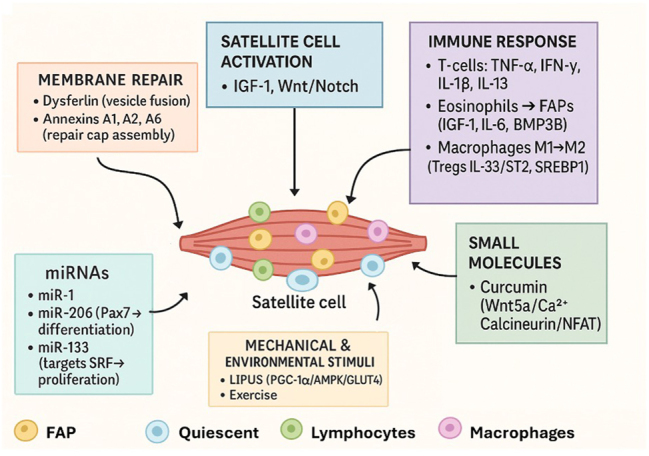 Figure 4
Peer Reviews
No public reviews on file for this paper yet. If you reviewed it on a platform where reviews are public (OpenReview, ICLR, NeurIPS, ICML), you can paste yours below so the community can read it here.
Videos
No videos yet. Explain this paper in a talk, walkthrough, or lecture? Add one.
Taxonomy
TopicsKnee injuries and reconstruction techniques · Bone fractures and treatments · Muscle Physiology and Disorders