Admixture-driven structural variation diversity and its functional implications
Haiyi Lou, Yimin Wang, Yu Chai, Zhilin Ning, Ruiqing Fu, Yan Lu, Bo Xie, Sen Ma, Yuwen Pan, Yang Gao, Dongsheng Lu, Xinyue Bai, Yajun Yang, Dolikun Mamatyusupu, Shuhua Xu

TL;DR
This study explores how population admixture influences structural variation in the Uyghur population, revealing new genomic diversity and its functional effects.
Contribution
The study identifies admixture-driven structural variation dynamics and their regulatory and evolutionary implications in a Eurasian admixed population.
Findings
Uyghurs exhibit 32% novel structural variations and 1.19-fold higher SV-transcription diversity compared to ancestral populations.
SV diversity peaks with balanced ancestry proportions and is driven by recombination at ancestry junctions via NAHR.
Admixture leads to regulatory disruptions in immune/metabolic pathways but maintains a comparable pathogenic variant burden.
Abstract
Population admixture is a potent evolutionary force shaping genomic diversity, yet its influence on the dynamics and functional consequences of structural variation (SV) remains poorly understood. Here, we present a comprehensive whole-genome sequencing analysis of SVs in the Uyghurs, a model admixed Eurasian population with distinct Western and Eastern ancestral contributions. We identified 9965 high-confidence SVs, revealing that Uyghurs exhibit 32% novel SVs and 1.19-fold greater SV-transcription diversity compared to their ancestral source populations. Crucially, SV diversity follows a non-linear parabolic relationship with ancestry proportions (r = 0.94), peaking when Western/Eastern ancestry contributions are balanced. Admixture-induced recombination at ancestry junctions creates SV hotspots via non-allelic homologous recombination (NAHR), with 60% of post-admixture SVs flanked by…
Genes, proteins, chemicals, diseases, species, mutations and cell lines named across the full text — each resolved to its canonical identifier and authoritative record.
Click any figure to enlarge with its caption.
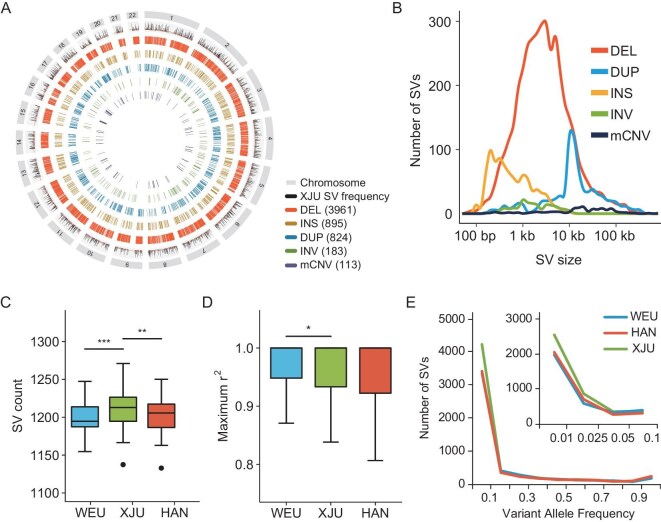 Figure 1
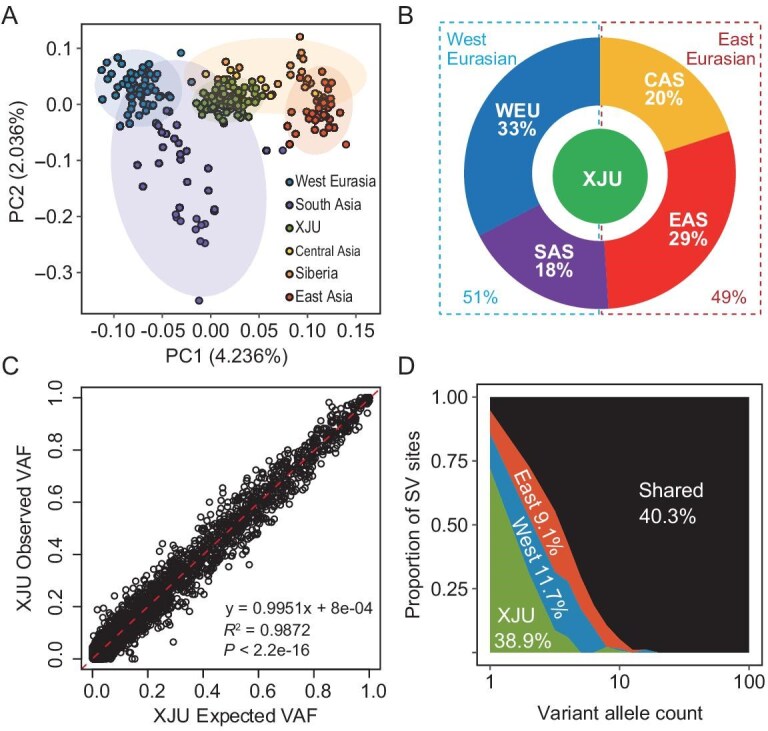 Figure 2
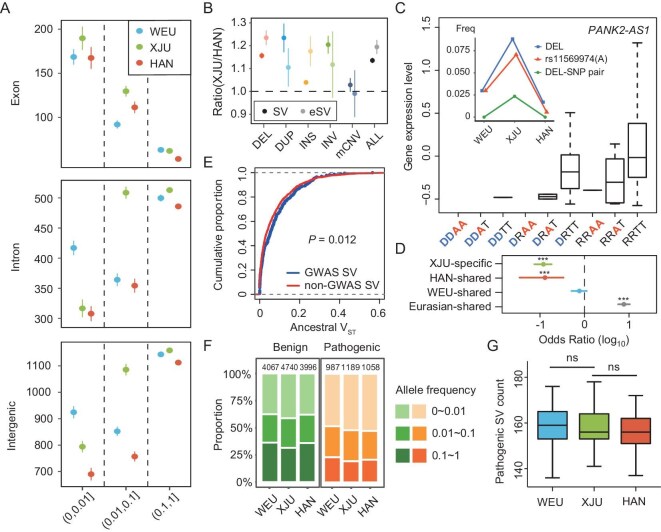 Figure 3
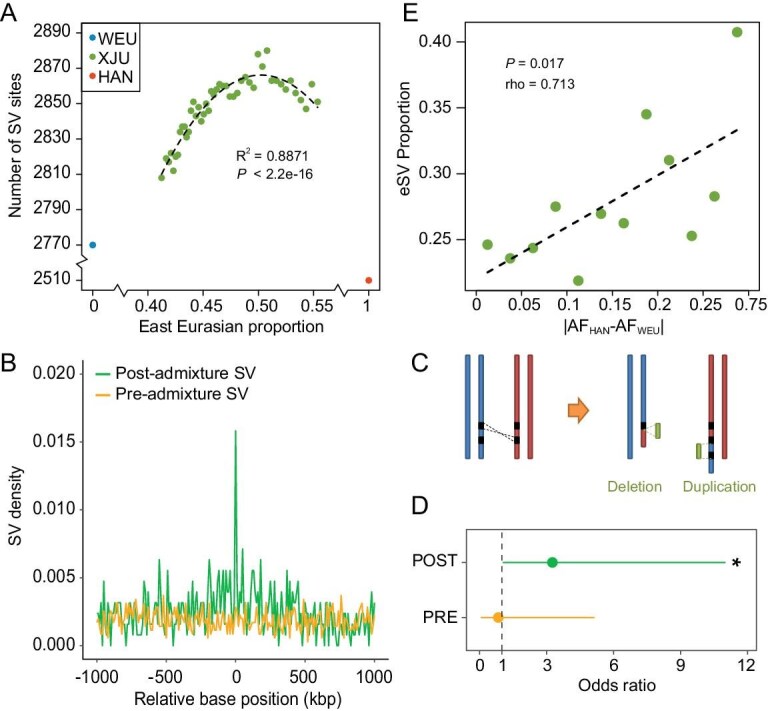 Figure 4
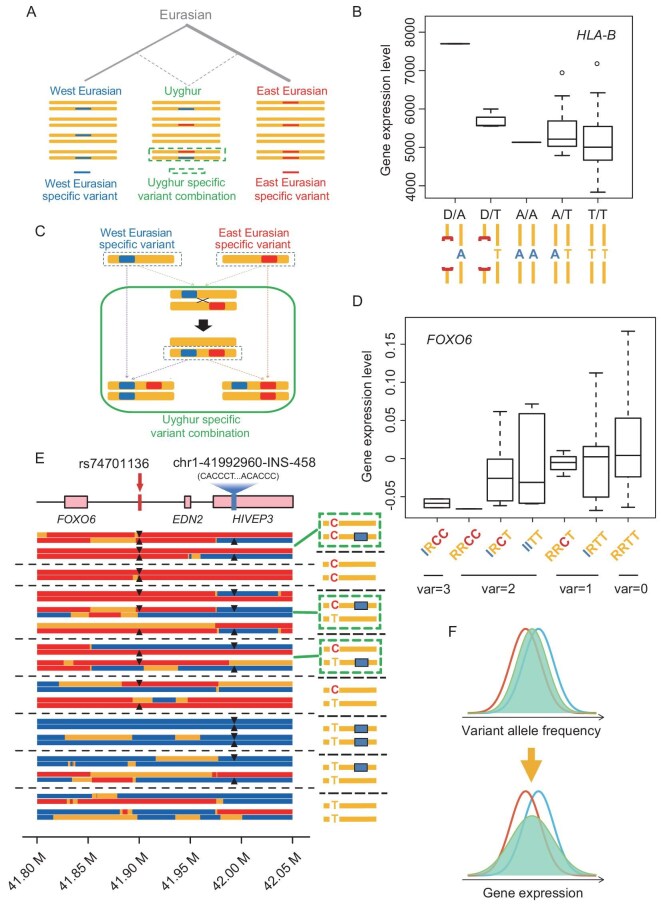 Figure 5
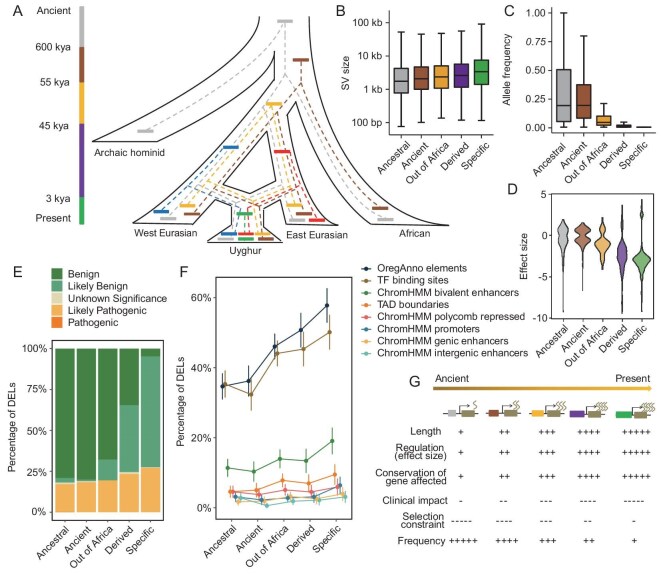 Figure 6
Peer Reviews
No public reviews on file for this paper yet. If you reviewed it on a platform where reviews are public (OpenReview, ICLR, NeurIPS, ICML), you can paste yours below so the community can read it here.
Videos
No videos yet. Explain this paper in a talk, walkthrough, or lecture? Add one.
Taxonomy
TopicsGenetic Associations and Epidemiology · Genomics and Phylogenetic Studies · Genomics and Rare Diseases