Isolation, Antiradical Activity, and Cytotoxicity of Flavonoids From Cunila angustifolia
Matheus H. O. de Sousa, Marta S. D. Freitas, Karina Cesca, Neusa F. de Moura

TL;DR
This study identifies new flavonoids in a Brazilian plant and shows they have antioxidant and cancer cell inhibitory properties.
Contribution
The first report of acacetin and acacetin-7-O-rutinoside in Cunila angustifolia, along with their antiradical and cytotoxic effects.
Findings
The ethyl acetate fraction showed the highest phenolic content and strongest radical scavenging activity.
Acacetin-7-O-rutinoside had better antiradical activity than its aglycone form, suggesting glycosylation enhances this effect.
The crude extract and chloroform fraction showed selective cytotoxicity against breast and melanoma cancer cells.
Abstract
Cunila angustifolia (“vassourinha do campo”) is a plant species native to southern Brazil that is traditionally consumed as an herbal infusion. In the present study, the hydroethanolic extract of C. angustifolia leaves, its solvent‐partitioned fractions, and the flavonoids acacetin and acacetin‐7‐O‐rutinoside, reported herein for the first time in this species, were investigated for their antiradical and cytotoxic activities. Among the fractions, the ethyl acetate fraction exhibited the highest total phenolic content (633.7 mg GAE/g) and the strongest radical scavenging activity (EC50: 2.0 µg/mL). Comparative evaluation of the isolated flavonoids revealed that acacetin‐7‐O‐rutinoside displayed superior antiradical activity relative to its aglycone, suggesting that C‐7 glycosylation may enhance radical scavenging capacity. Cytotoxic assays demonstrated that the crude extract was most…
Genes, proteins, chemicals, diseases, species, mutations and cell lines named across the full text — each resolved to its canonical identifier and authoritative record.
Click any figure to enlarge with its caption.
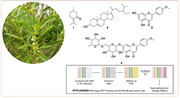 Figure 1
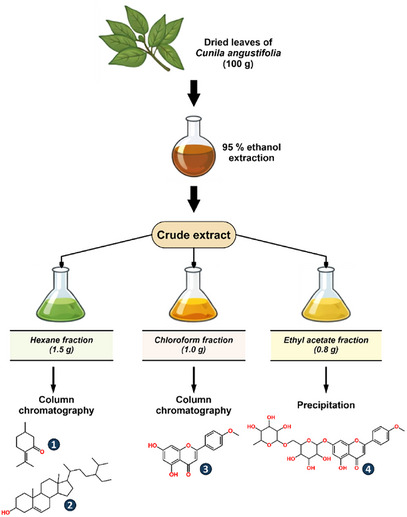 Figure 2
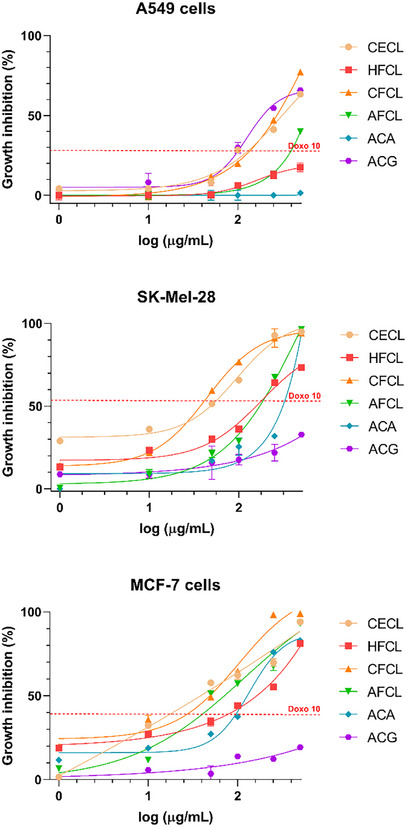 Figure 3
Peer Reviews
No public reviews on file for this paper yet. If you reviewed it on a platform where reviews are public (OpenReview, ICLR, NeurIPS, ICML), you can paste yours below so the community can read it here.
Videos
No videos yet. Explain this paper in a talk, walkthrough, or lecture? Add one.
Taxonomy
TopicsPhytochemicals and Antioxidant Activities · Phytochemistry Medicinal Plant Applications · Sesquiterpenes and Asteraceae Studies