Within‐Host Environmental Heterogeneity Is Associated With Phenotypic but Not Genomic Diversity in Wolbachia Endosymbionts
Romain Pigeault, Yann Dussert, Raphaël Jorge, Theo Ulve, Marie Panza, Maryline Raimond, Carine Delaunay, Willy Aucher, Thierry Berges, David Ogereau, Bouziane Moumen, Jean Peccoud, Richard Cordaux

TL;DR
Wolbachia bacteria show phenotypic differences based on their tissue origin, but not genetic ones, showing how host environments can shape parasite behavior without changing their DNA.
Contribution
Demonstrates that within-host tissue variation leads to phenotypic but not genomic diversity in Wolbachia.
Findings
Colonization success of Wolbachia depends on the tissue of origin.
Genome resequencing found no genetic variation linked to replication rate differences.
Phenotypic plasticity, not genetic divergence, explains Wolbachia's adaptation to host tissues.
Abstract
Hosts represent complex environments where different tissues may act as distinct ecological niches, imposing different constraints that may shape parasite ecology and evolution. Such within‐host heterogeneity can generate phenotypic diversity with consequences for virulence and transmission. Our aim was to determine whether the constraints associated with infecting different host tissues lead to the coexistence of multiple parasite sub‐populations with distinct phenotypes. We tested this hypothesis using the widespread bacterial endosymbiont Wolbachia. We injected bacteria isolated from three tissues of the common pill‐bug into uninfected individuals and tracked temporal changes in Wolbachia load in the recipient host tissues, as well as the virulence associated with each bacterial source. Our results show that colonisation success depends on the tissue of origin of the injected…
Genes, proteins, chemicals, diseases, species, mutations and cell lines named across the full text — each resolved to its canonical identifier and authoritative record.
Click any figure to enlarge with its caption.
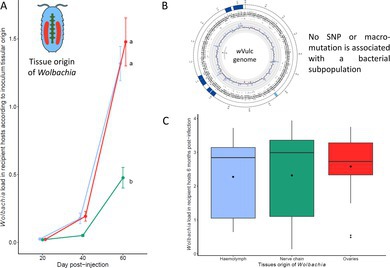 Figure 1
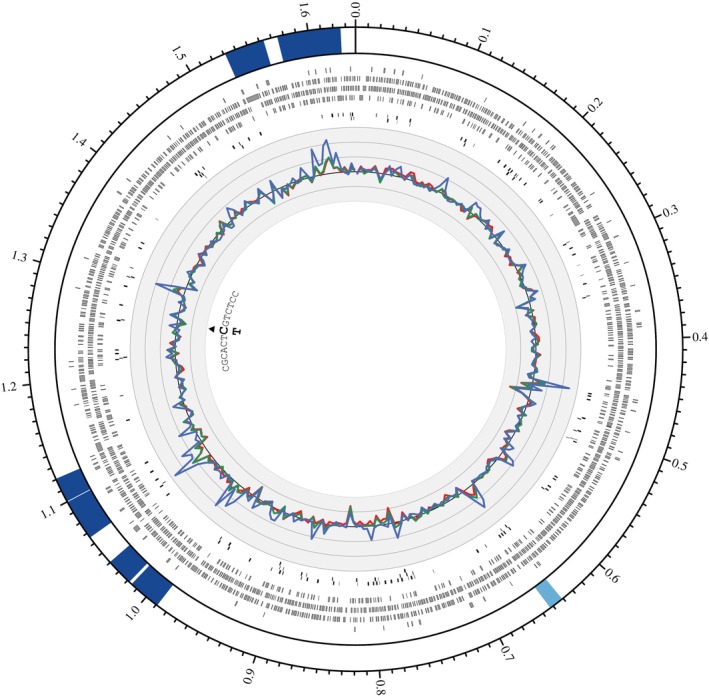 Figure 2
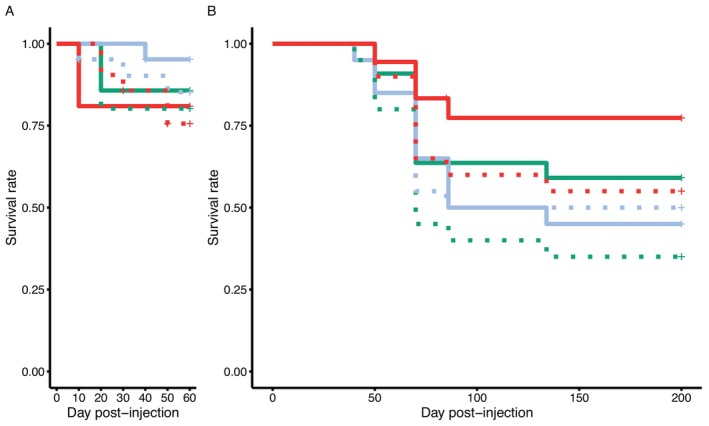 Figure 3
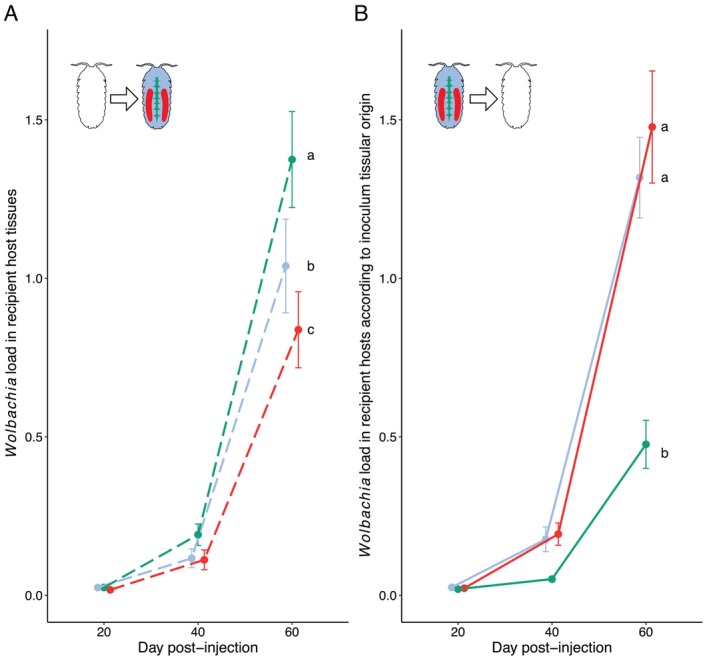 Figure 4
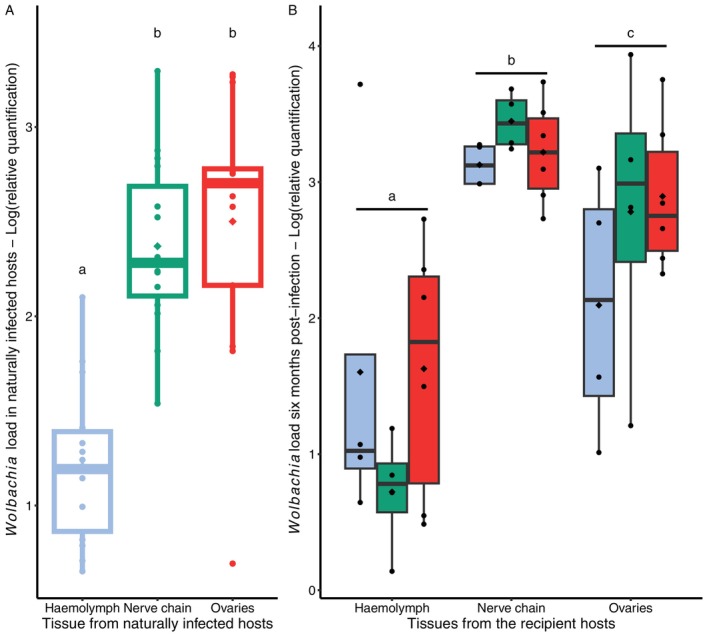 Figure 5
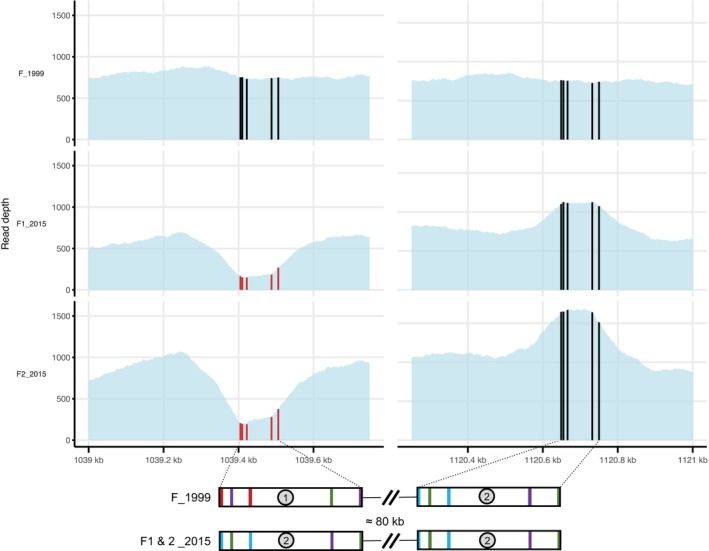 Figure 6
Peer Reviews
No public reviews on file for this paper yet. If you reviewed it on a platform where reviews are public (OpenReview, ICLR, NeurIPS, ICML), you can paste yours below so the community can read it here.
Videos
No videos yet. Explain this paper in a talk, walkthrough, or lecture? Add one.
Taxonomy
TopicsInsect symbiosis and bacterial influences · Parasitic Diseases Research and Treatment · CO2 Reduction Techniques and Catalysts