Hypertrophic cardiomyopathy is not the sole echocardiographic phenotype associated with hyperthyroidism in cats: a retrospective study in 147 cats (2005-2025)
Pierre Foulex, Benjamin Reslinger, Maxime Kurtz, Emilie Trehiou, Camille Poissonnier, Peggy Passavin, Kahina Kartout, Sarra Ghazal, Christelle Maurey, Ghita Benchekroun, Thibault Ribas, Loïc Desquilbet, Valérie Chetboul

TL;DR
This study shows that hyperthyroid cats can have different heart conditions, not just hypertrophic cardiomyopathy.
Contribution
The study identifies restrictive cardiomyopathy as a significant and more severe phenotype in hyperthyroid cats.
Findings
Most hyperthyroid cats showed one of three cardiomyopathy phenotypes, with HCMP being the most common.
Hyperthyroid cats with RCMP had higher thyroxine levels and more heart failure symptoms than those with HCMP.
Subaortic septal hypertrophy was more common in cats with primary HCM than in hyperthyroid-associated HCMP.
Abstract
A hypertrophic cardiomyopathy phenotype (HCMP) can occur in cats with hyperthyroidism. However, it remains unclear whether other cardiomyopathy phenotypes are also associated with hyperthyroidism in cats. Describe the epidemiological, clinical, and echocardiographic findings and cardiomyopathy phenotypes in a large sample of hyperthyroid cats. Compare the echocardiographic features of hyperthyroid cats with HCMP to those of a contemporaneous sample of normotensive euthyroid cats with primary hypertrophic cardiomyopathy (HCM). A total of 147 hyperthyroid cats and 112 cats with primary HCM. Retrospective study with review of internal medicine and cardiology service databases (2005-2025). Most hyperthyroid cats (117/147, 80%) exhibited 1 of the 3 cardiomyopathy phenotypes: HCMP (94/147, 64%), restrictive cardiomyopathy phenotype (RCMP; 20/147, 14%), or nonspecific (3/147, 2%).…
Genes, proteins, chemicals, diseases, species, mutations and cell lines named across the full text — each resolved to its canonical identifier and authoritative record.
Click any figure to enlarge with its caption.
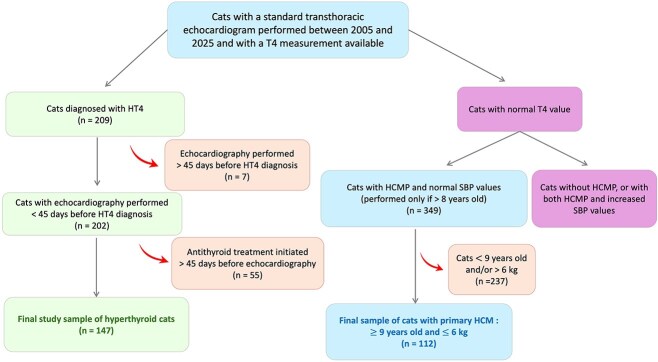 Figure 1
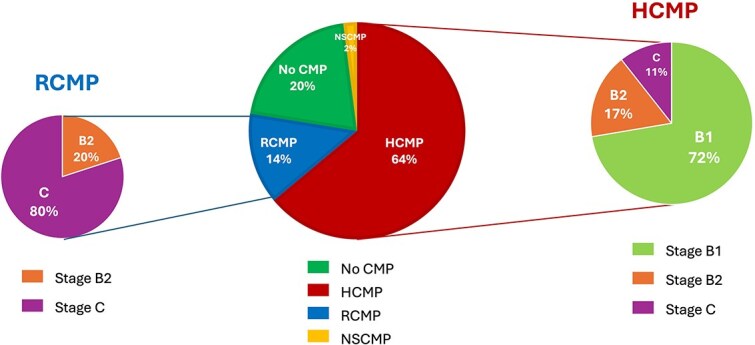 Figure 2
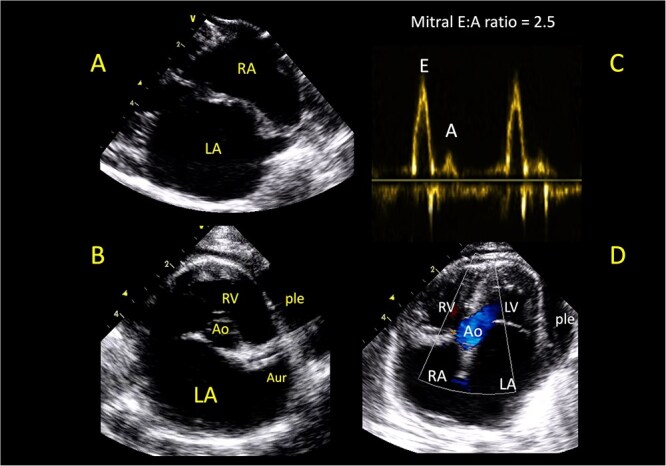 Figure 3
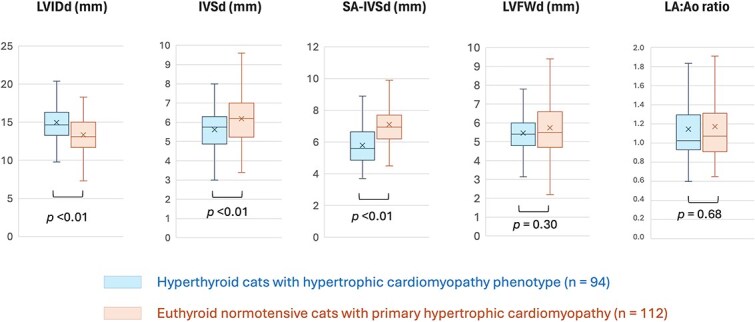 Figure 4
Peer Reviews
No public reviews on file for this paper yet. If you reviewed it on a platform where reviews are public (OpenReview, ICLR, NeurIPS, ICML), you can paste yours below so the community can read it here.
Videos
No videos yet. Explain this paper in a talk, walkthrough, or lecture? Add one.
Taxonomy
TopicsCardiovascular Conditions and Treatments · Veterinary Medicine and Surgery · Thyroid Disorders and Treatments