Organohalide respiration by a Desulforhopalus-dominated community
Chen Zhang, Siavash Atashgahi, Tom N P Bosma, Hauke Smidt

TL;DR
This study explores how a community of bacteria in marine sediments can break down brominated chemicals using a unique respiratory process.
Contribution
The discovery of a thiolytic reductive dehalogenase in an anaerobic sulfate-reducing bacterium expands known biochemical pathways for organohalide respiration.
Findings
A Desulforhopalus-dominated consortium transformed 2,6-dibromophenol to phenol under sulfate-reducing conditions.
The consortium includes multiple populations encoding reductive dehalogenase genes, with transcription induced by 2,6-DBP.
Genome analysis shows the potential for vitamin B12 biosynthesis, enabling dehalogenation without external B12.
Abstract
Marine sediments harbor diverse organohalide-respiring bacteria (OHRB), but their functional roles and metabolic interactions remains poorly understood. To investigate these interactions, we obtained and characterized a debrominating consortium from Aarhus Bay marine sediments. The consortium transformed 2,6-dibromophenol (2,6-DBP) to phenol under sulfate-reducing conditions, with bacterial growth demonstrating respiratory energy conservation. Metagenomic analysis and binning revealed five new species-level populations (>85% complete, <3% contaminated) dominated by Desulforhopalus (bin.5). Critically, bin.5 encodes a thiolytic tetrachloro-p-hydroquinone reductive dehalogenase (RDase), previously characterized only in aerobic bacteria, representing evidence of this enzyme functioning in a strictly anaerobic sulfate-reducing bacterium. Two additional populations (Desulfoplanes bin.3 and…
Genes, proteins, chemicals, diseases, species, mutations and cell lines named across the full text — each resolved to its canonical identifier and authoritative record.
Click any figure to enlarge with its caption.
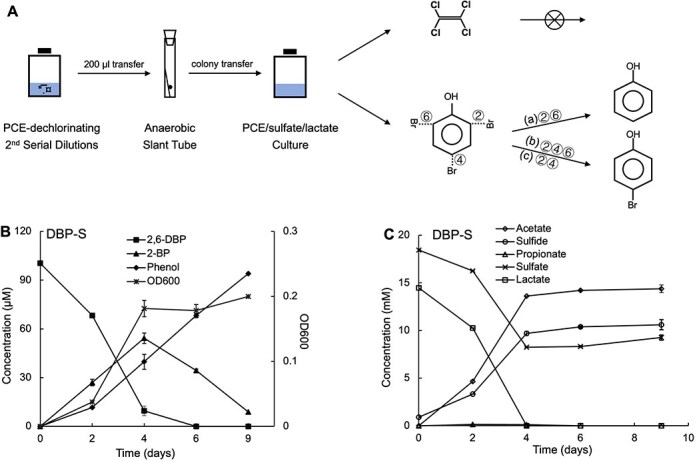 Figure 1
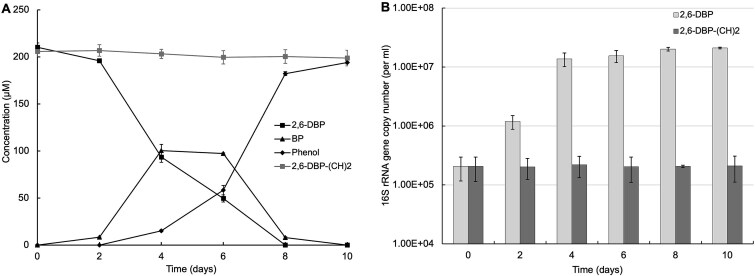 Figure 2
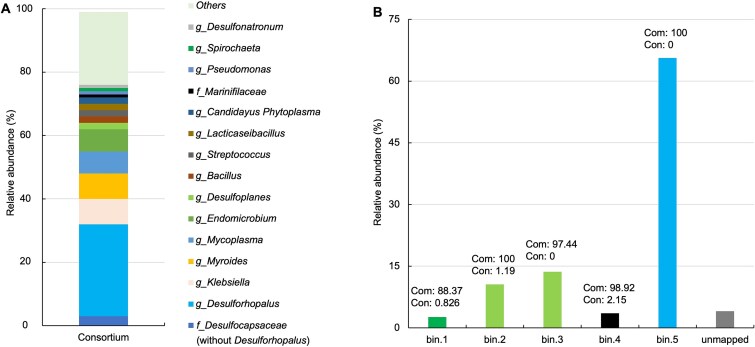 Figure 3
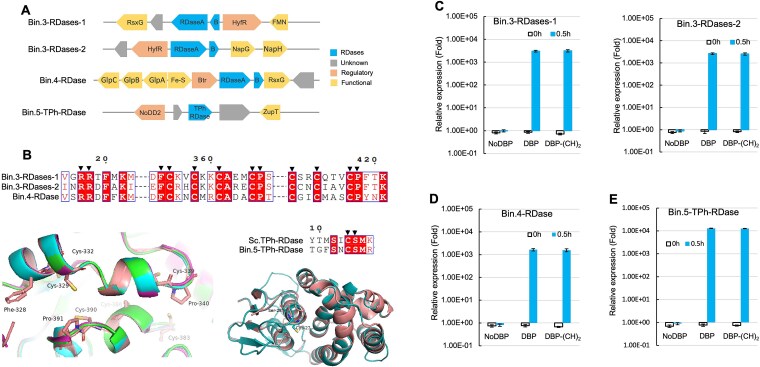 Figure 4
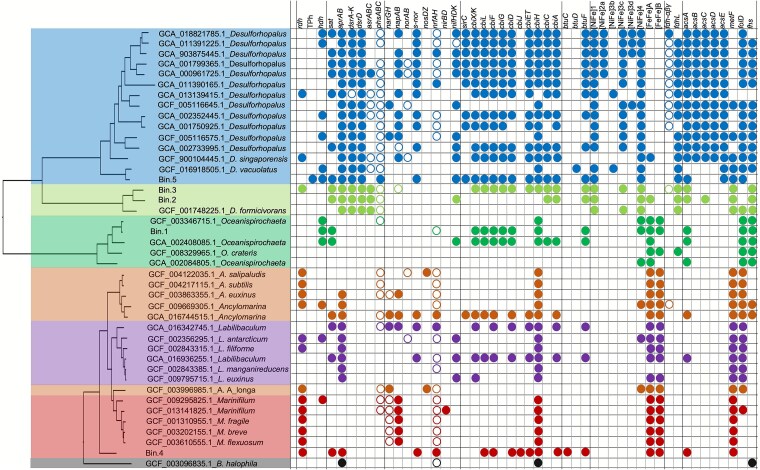 Figure 5
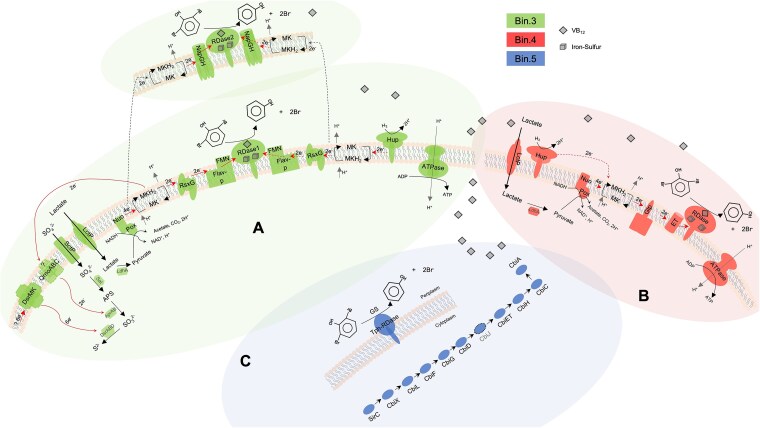 Figure 6
Peer Reviews
No public reviews on file for this paper yet. If you reviewed it on a platform where reviews are public (OpenReview, ICLR, NeurIPS, ICML), you can paste yours below so the community can read it here.
Videos
No videos yet. Explain this paper in a talk, walkthrough, or lecture? Add one.
Taxonomy
TopicsMicrobial bioremediation and biosurfactants · Chemical Analysis and Environmental Impact · Pesticide and Herbicide Environmental Studies