Optical control of Cas9 activity through visible-light cleavable crRNAs
Vanessa Hanff, Stepan Jerabek, Kim A. Langer, Robin Klimek, Janik Kaufmann, Jimin Kim, Dieter Egli, Alexander Heckel

TL;DR
This paper introduces a method to control Cas9 activity using visible light to cleave crRNAs, allowing precise and non-invasive genome editing.
Contribution
The novel contribution is the development of visible-light cleavable crRNAs for spatial and temporal control of Cas9 activity.
Findings
Visible-light cleavable crRNAs efficiently inhibit Cas9 activity in vitro.
The method allows precise downregulation of Cas9 activity using visible light.
This approach enables non-invasive and safe genome editing.
Abstract
In this work, we present several visible-light cleavable crRNAs targeting two different genes for regulating Cas9 activity. The crRNAs contain a total of three different photocleavable linker (PL) which induce a bond break when irradiated with a suitable wavelength. Cleavage of the crRNAs efficiently inhibits Cas9 activity, as demonstrated by the in vitro Cas9 assay developed in this work. By using visible light, our approach will enable precise downregulation of Cas9 activity in terms of location and timing, thereby enabling non-invasive and harm free control over genome editing for safer application. Visible-light-cleavable crRNAs enable precise and non-invasive deactivation of Cas9 activity for safer genome editing.
Genes, proteins, chemicals, diseases, species, mutations and cell lines named across the full text — each resolved to its canonical identifier and authoritative record.
Click any figure to enlarge with its caption.
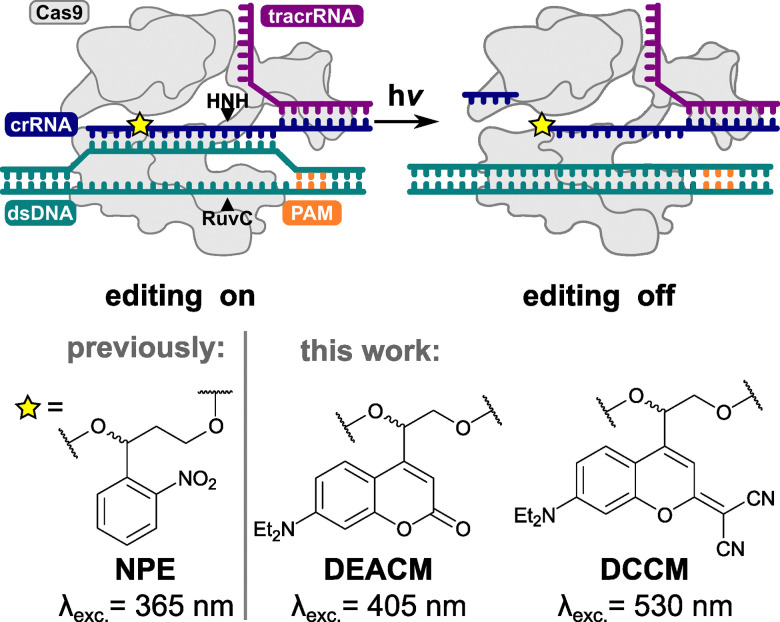 Figure 1
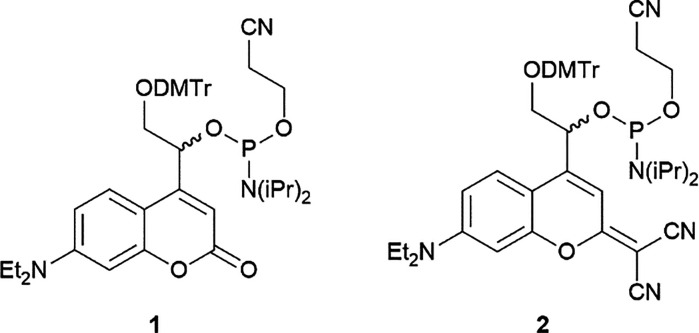 Figure 2
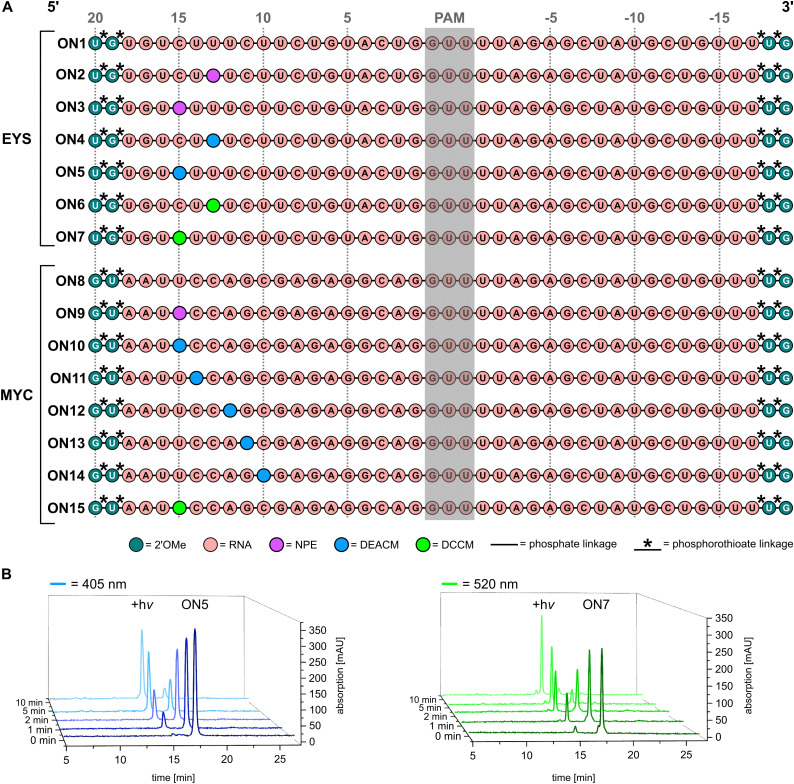 Figure 3
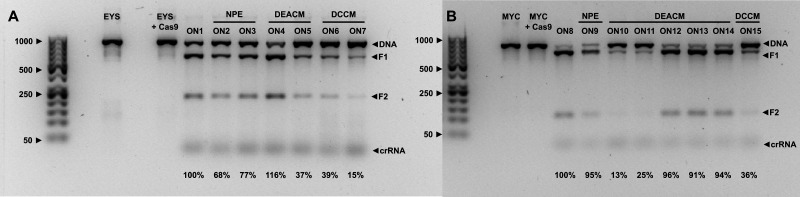 Figure 4
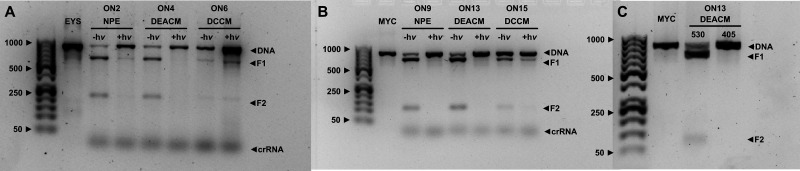 Figure 5
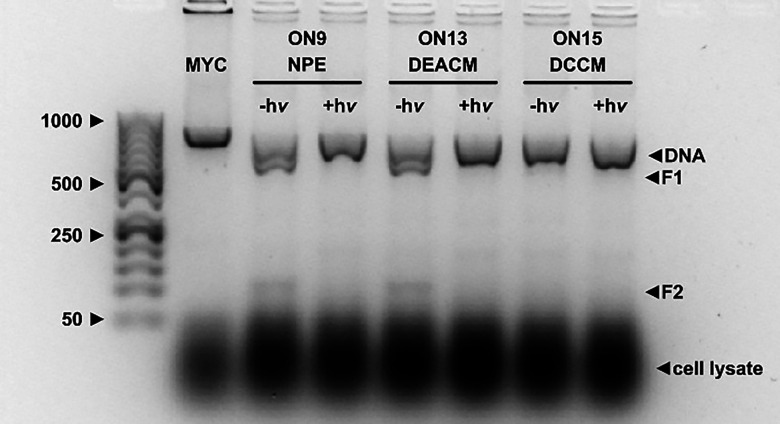 Figure 6
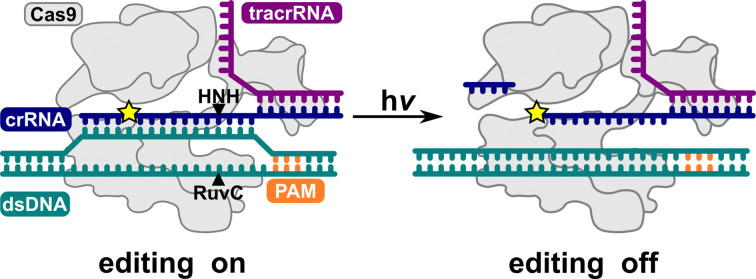 Figure 7
Peer Reviews
No public reviews on file for this paper yet. If you reviewed it on a platform where reviews are public (OpenReview, ICLR, NeurIPS, ICML), you can paste yours below so the community can read it here.
Videos
No videos yet. Explain this paper in a talk, walkthrough, or lecture? Add one.
Taxonomy
TopicsPhotochromic and Fluorescence Chemistry · Retinal Development and Disorders · CRISPR and Genetic Engineering