A Case of Roof‐Dependent Atrial Flutter With an Endocardial Narrow Channel Successfully Visualized by the Peak Frequency Analysis
Tokuma Kawabata, Yoshimori An, Kazuhiro Ogura, Shiho Enomoto, Toshiaki Izumi

TL;DR
This paper presents a case where peak frequency analysis helped identify a narrow heart channel during a difficult atrial flutter treatment.
Contribution
The paper introduces the use of peak frequency analysis to visualize narrow endocardial channels in atrial flutter.
Findings
Peak frequency analysis successfully visualized a narrow endocardial channel in a case of roof-dependent atrial flutter.
The technique helped physicians select an optimal therapeutic target for a transmural line of block.
Abstract
Roof‐dependent atrial flutter (AFL) can sometimes be challenging to treat with endocardial catheter ablation due to the thickness of the atrial myocardium and the separation of outer epicardial conductive fibers from the endocardial myocardium. This case highlights the utility of peak frequency (PF) analysis during the AFL, which can visualize a narrow endocardial channel and help physicians select an optimal therapeutic target to achieve a transmural line of block.
Genes, proteins, chemicals, diseases, species, mutations and cell lines named across the full text — each resolved to its canonical identifier and authoritative record.
Click any figure to enlarge with its caption.
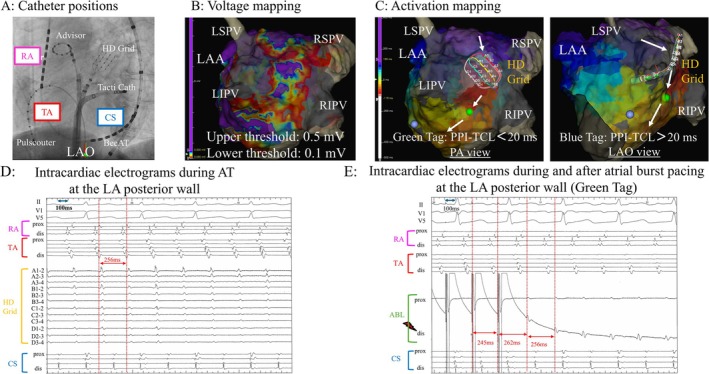 Figure 1
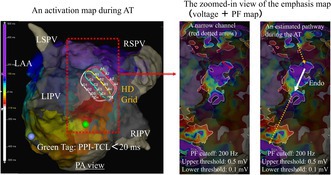 Figure 2
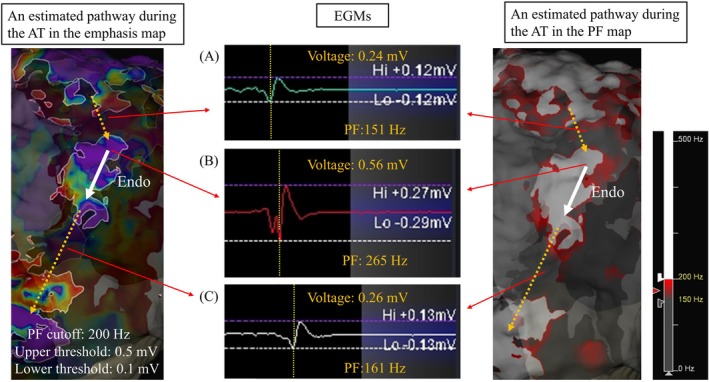 Figure 3
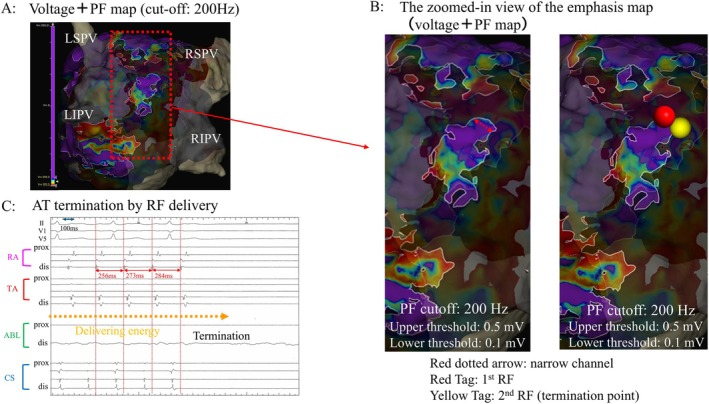 Figure 4
Peer Reviews
No public reviews on file for this paper yet. If you reviewed it on a platform where reviews are public (OpenReview, ICLR, NeurIPS, ICML), you can paste yours below so the community can read it here.
Videos
No videos yet. Explain this paper in a talk, walkthrough, or lecture? Add one.
Taxonomy
TopicsCardiac Arrhythmias and Treatments · Atrial Fibrillation Management and Outcomes · Cardiac electrophysiology and arrhythmias