Characteristics and evolution of pelvic floor structures in female patients aged over 40 years with constipation—a retrospective cohort study
Jiarong You, Ying Chen, Rongpu Liang, Li Lu, Jianming Yang, Jiannan Ren, Guangchun Jiang, Yuan Wang, Runze Wu, Xinling Zhang, Bo Wei

TL;DR
This study examines how pelvic floor structures change in women over 40 with constipation, finding that rectocele and uterine descent are linked to constipation and that these structures worsen over time.
Contribution
The study identifies specific pelvic floor structural changes associated with constipation and tracks their progression over two years in affected women.
Findings
Rectocele and uterine descent at maximal Valsalva maneuver are positively associated with constipation.
Pelvic floor structures in constipated women show progressive descent of the bladder, uterus, and rectum over two years.
Perineal hypermobility and enlarged levator ani hiatus area are observed in constipated patients.
Abstract
Pelvic floor dysfunction (PFD) is a common cause of chronic constipation which can reciprocally exacerbate pelvic floor burden. However, the characteristics and evolution of pelvic floor structures in patients with constipation remain unclear. This study investigates the characteristics and evolution of pelvic floor structures in constipated women aged over 40 years. Clinical data were collected from female patients undergoing pelvic floor ultrasound at the Third Affiliated Hospital of Sun Yat-sen University from December 2020 to August 2023. Propensity score matching (PSM) minimized confounders between the constipation (n = 247) and non-constipation (n = 898) groups. We analyzed intergroup differences in ultrasound data and changes in pelvic floor structure over time among constipated patients. Significant intergroup differences emerged in uterine prolapse (P = 0.042), rectocele (P =…
Genes, proteins, chemicals, diseases, species, mutations and cell lines named across the full text — each resolved to its canonical identifier and authoritative record.
Click any figure to enlarge with its caption.
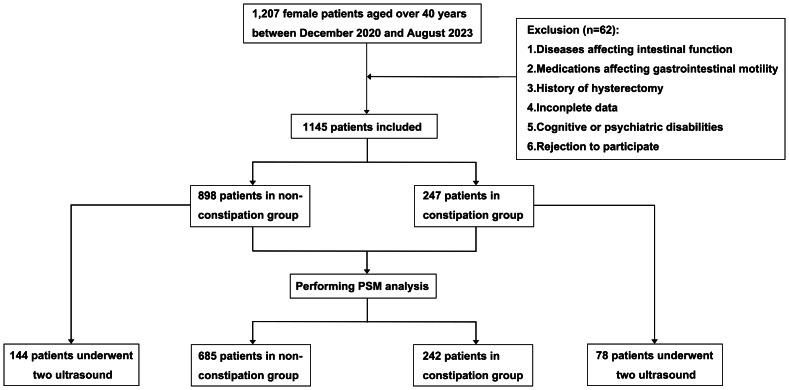 Figure 1
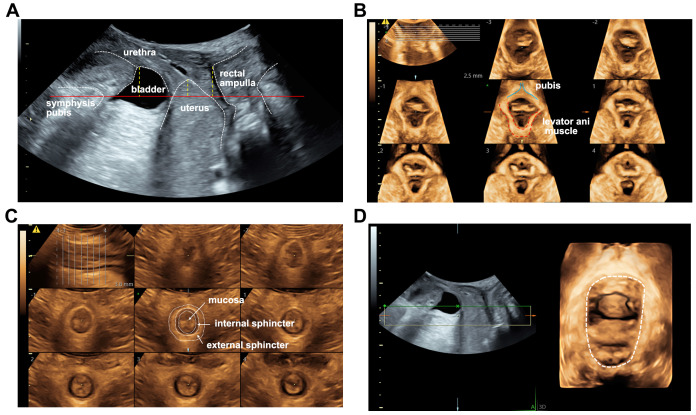 Figure 2
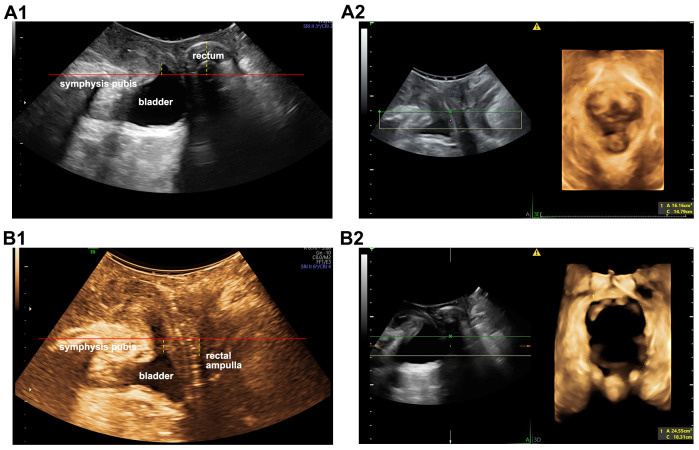 Figure 3
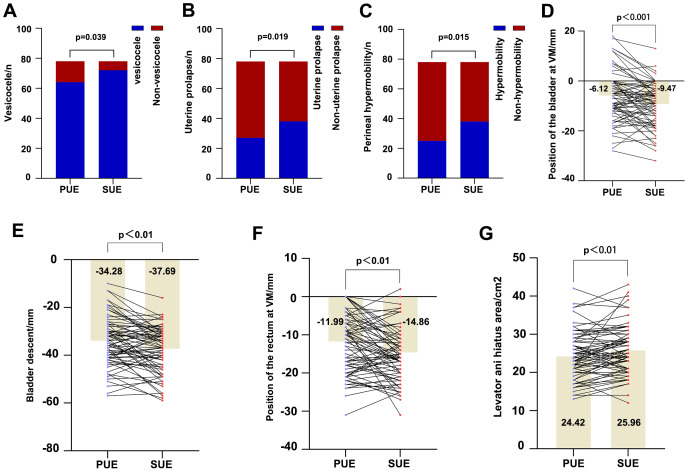 Figure 4
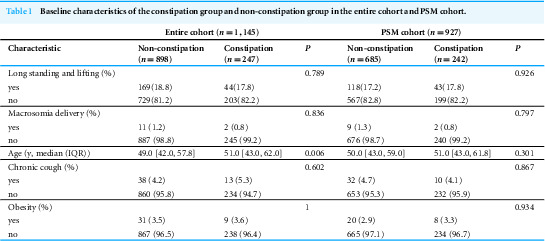 Figure 5
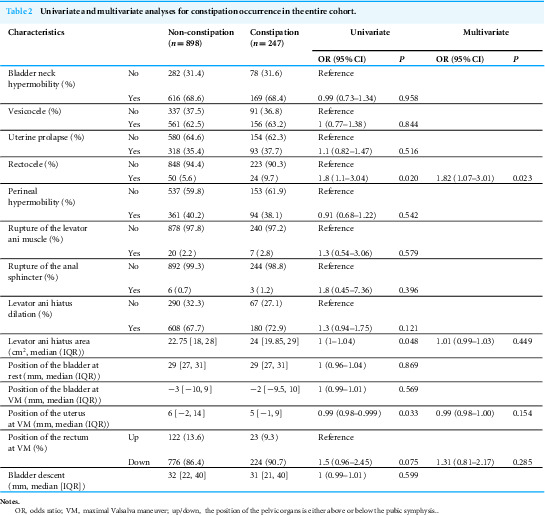 Figure 6
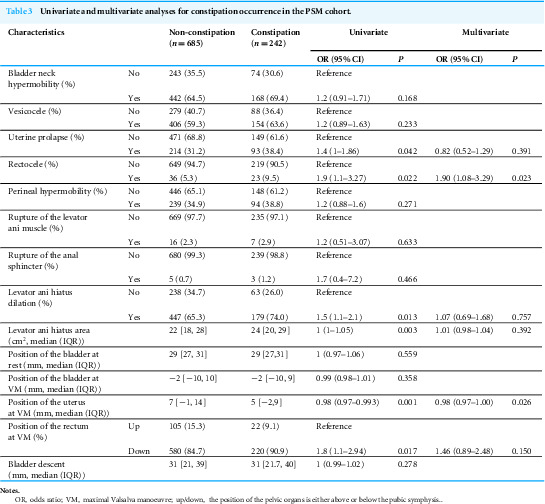 Figure 7
Peer Reviews
No public reviews on file for this paper yet. If you reviewed it on a platform where reviews are public (OpenReview, ICLR, NeurIPS, ICML), you can paste yours below so the community can read it here.
Videos
No videos yet. Explain this paper in a talk, walkthrough, or lecture? Add one.
Taxonomy
TopicsPelvic floor disorders treatments · Gastrointestinal motility and disorders · Urinary Bladder and Prostate Research