The skin color and gender of high-fidelity simulation manikins in US simulation centers and their use in cultural humility training
Marie Anderson Wofford, Cortlyn Brown, Bernard Walston, Heidi Whiteside, Joseph Rigdon, Philip Turk

TL;DR
This study finds that while most US simulation centers use high-fidelity manikins to teach cultural humility, the manikins' skin color and gender distribution do not match the US population's diversity.
Contribution
The study provides the first empirical analysis of manikin diversity in simulation centers and its alignment with cultural humility training goals.
Findings
Most simulation centers use manikins for cultural humility training, but skin color and gender proportions differ from US Census data.
Manikin skin color proportions were 51.5% light, 30.9% medium, and 17.6% dark, deviating from the hypothesized 60/20/20 split.
Manikin gender proportions were 64% male and 36% female, rejecting the 50/50 null hypothesis.
Abstract
Our objectives were to evaluate what proportion of simulation centers use high-fidelity simulation manikins to teach cultural humility, and to evaluate if manikin skin color and sex breakdown are representative of the USA population. Surveys were sent to simulation centers from our simple random sample. Key outcomes included skin color and gender of manikins and if cultural humility was taught via simulation. Point and interval estimates were calculated for the proportion of light-, medium-, and dark-colored manikins, the proportion of female and male manikins, and the proportion of centers using simulation to teach cultural humility. Confidence intervals were employed to test the null hypothesis that light/medium/dark skin color was 60/20/20 and female/male was 50/50 which is extrapolated from the US Census data. Our response rate was 75% (41/55). All of the 41 responding simulation…
Genes, proteins, chemicals, diseases, species, mutations and cell lines named across the full text — each resolved to its canonical identifier and authoritative record.
Click any figure to enlarge with its caption.
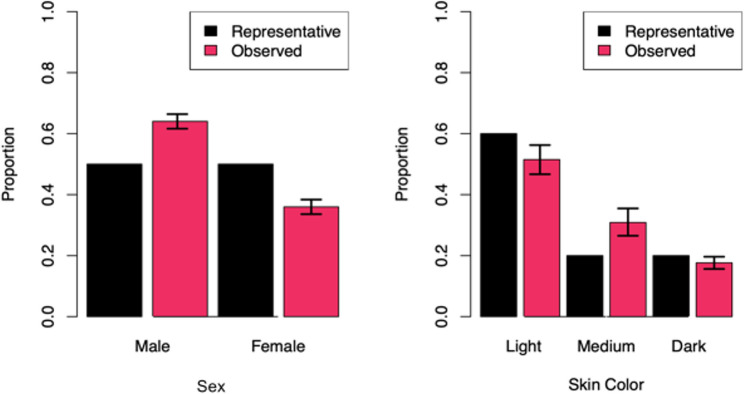 Figure 1
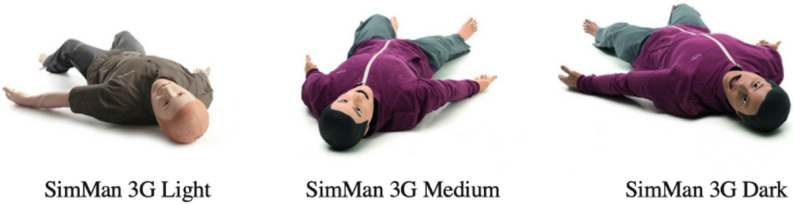 Figure 2
Peer Reviews
No public reviews on file for this paper yet. If you reviewed it on a platform where reviews are public (OpenReview, ICLR, NeurIPS, ICML), you can paste yours below so the community can read it here.
Videos
No videos yet. Explain this paper in a talk, walkthrough, or lecture? Add one.
Taxonomy
TopicsDeath Anxiety and Social Exclusion · Cultural Competency in Health Care · Cultural Differences and Values