Participatory design of built environment strategies to enhance movement, wellbeing, and quality of life among incarcerated men
M. Giné-Garriga, C. Palma, S. Signo, C. Isanta, R. Romeva, S. A. Portillo, A. C. King, M. A. Cortés, D. Ballester, E. M. Sebastiani

TL;DR
This study explores how involving incarcerated men in designing prison environments can help reduce sedentary behavior and improve health and well-being.
Contribution
The paper introduces a participatory community science approach to co-create built environment solutions for physical activity in prisons.
Findings
Six major themes influencing movement opportunities were identified, including activities, spaces, and staff support.
Participants proposed 39 strategies, with 31 rated as high priority for reducing sedentary behavior.
Low-difficulty actions like improved maintenance and flexible space use were emphasized as feasible solutions.
Abstract
The global prison population has grown by 5% since 2020, intensifying existing challenges to inmate health and well-being. Incarcerated individuals experience disproportionately high levels of sedentary behaviour (SB), which increases their risk of physical and mental health problems. Although regular physical activity (PA) can mitigate these risks, correctional settings often present environmental and institutional barriers that limit opportunities for movement. While modifying built environments has shown promise for promoting PA in community settings, limited research has explored these strategies in prisons. This study applied a community science, co-creation approach to identify inmate-informed, context-specific solutions to reduce SB and enhance PA within a prison setting. The study was conducted in a Spanish male prison with 26 adult inmates. Based on facility-use records and…
Genes, proteins, chemicals, diseases, species, mutations and cell lines named across the full text — each resolved to its canonical identifier and authoritative record.
Click any figure to enlarge with its caption.
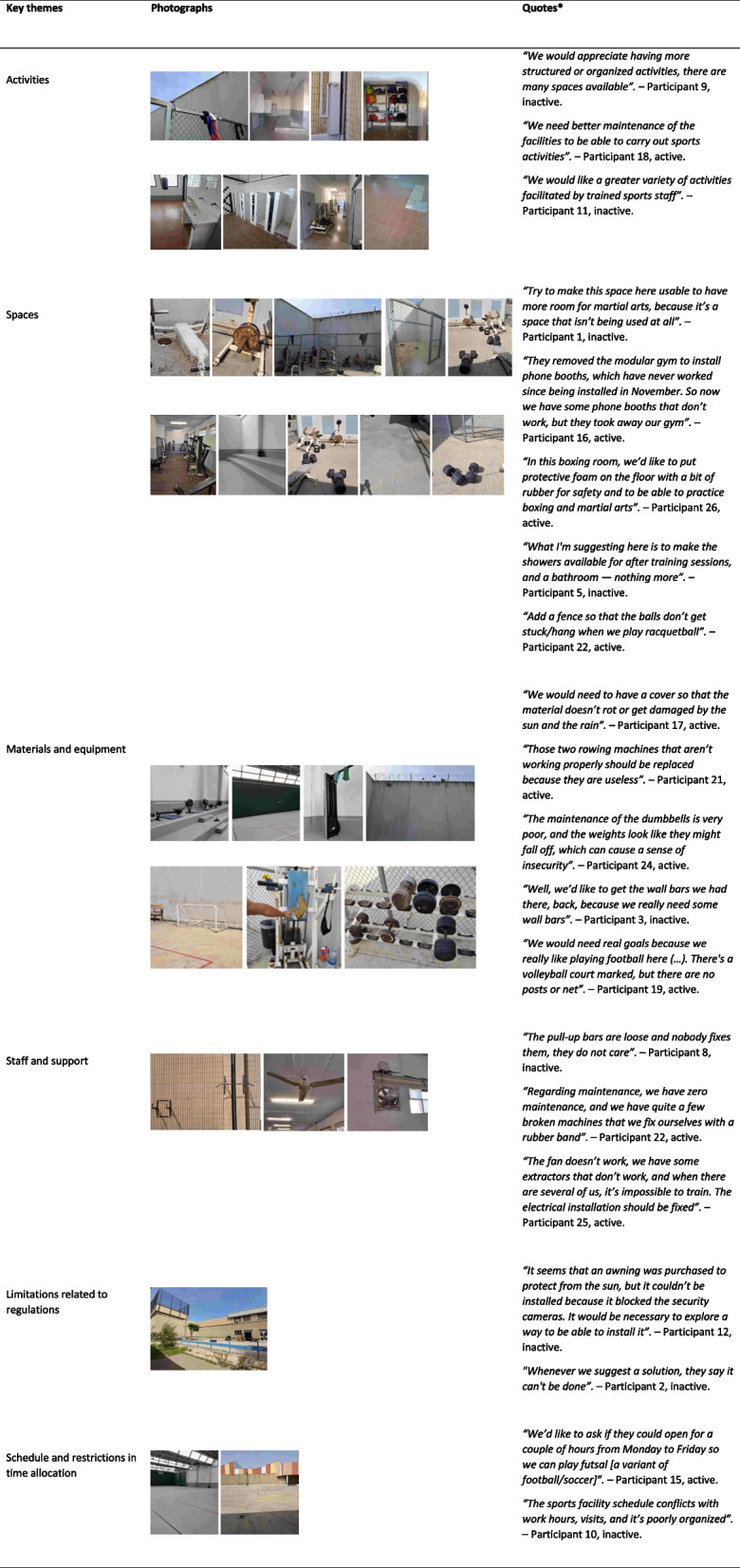 Figure 1
Peer Reviews
No public reviews on file for this paper yet. If you reviewed it on a platform where reviews are public (OpenReview, ICLR, NeurIPS, ICML), you can paste yours below so the community can read it here.
Videos
No videos yet. Explain this paper in a talk, walkthrough, or lecture? Add one.
Taxonomy
TopicsUrban Transport and Accessibility · Physical Activity and Health · Criminal Justice and Corrections Analysis