Triazine‐Trione Thermosets with High Processability for Scaffold Applications in Bone Tissue Engineering
Åshild Johansen, Shuntaro Yamada, Daniel J. Hutchinson, Mohammed A. Yassin, Samih Mohamed‐Ahmed, Cecilie Gjerde, Michael Malkoch, Kamal Mustafa

TL;DR
New biocompatible materials called TATO thermosets support bone cell growth and can be processed at mild temperatures, making them promising for bone tissue engineering.
Contribution
The development of novel photo-clickable triazine-trione thermosets with high processability and osteogenic potential for bone tissue engineering.
Findings
TATO materials showed biocompatibility comparable to polycaprolactone (PCL) in cell behavior and CAM assays.
Transcriptomic analysis revealed upregulated mitotic processes in cells on T-ene compared to T-yne and PCL.
Osteogenic gene expression patterns differed on TATO materials compared to PCL, though differentiation assays showed no significant differences.
Abstract
Despite advances in scaffold development, many current biomaterials suffer from limited processability or poor biological performance. To address this, we previously introduced two novel triazine‐trione (TATO)‐based thermosets, T‐ene and T‐yne, as candidates for tissue engineering applications. In the present study, we aim to comprehensively evaluate the initial cellular response of bone marrow mesenchymal stem/stromal cells (BMSC) on TATO materials and their osteogenic potential, with a particular focus on their suitability for bone tissue engineering applications. Both T‐ene and T‐yne demonstrated biocompatibility comparable to polycaprolactone (PCL), as assessed by in vitro cell behavior and the chorioallantoic membrane (CAM) assay. Transcriptomic profiling via RNA sequencing of BMSC cultured on the materials revealed upregulation of mitotic processes in cells on T‐ene compared to…
Genes, proteins, chemicals, diseases, species, mutations and cell lines named across the full text — each resolved to its canonical identifier and authoritative record.
Click any figure to enlarge with its caption.
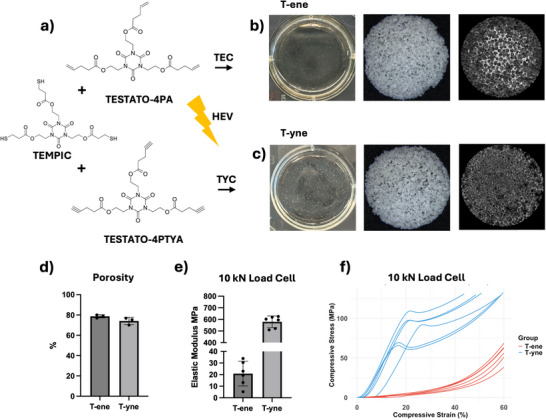 Figure 1
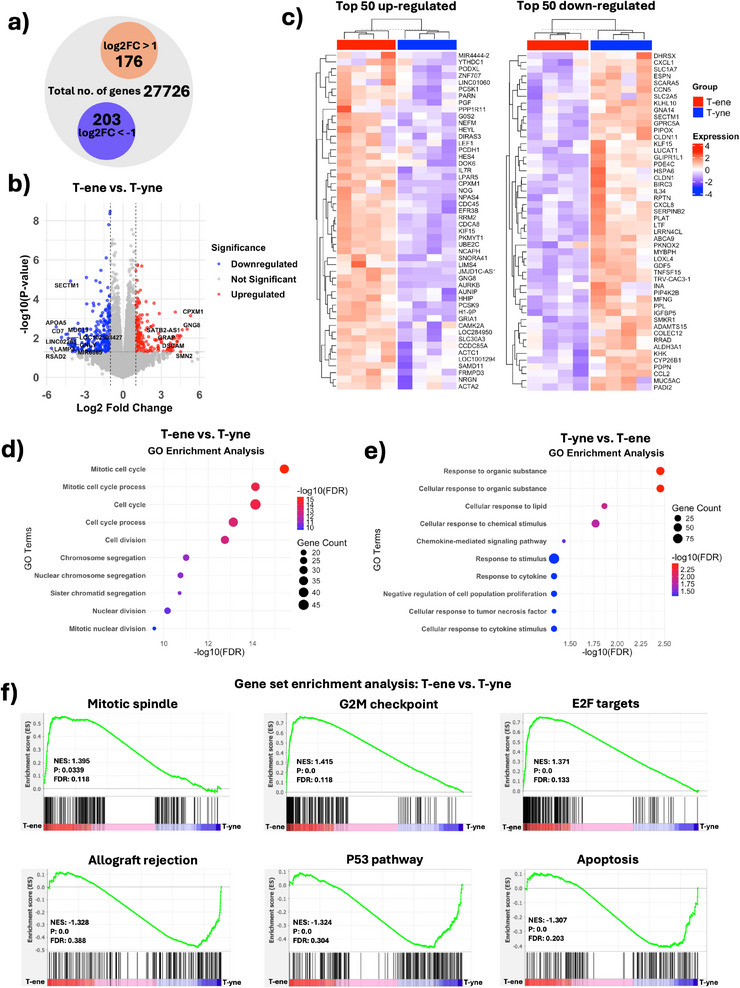 Figure 2
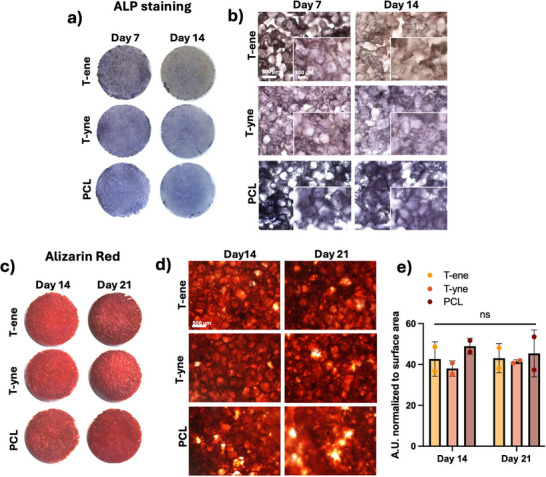 Figure 3
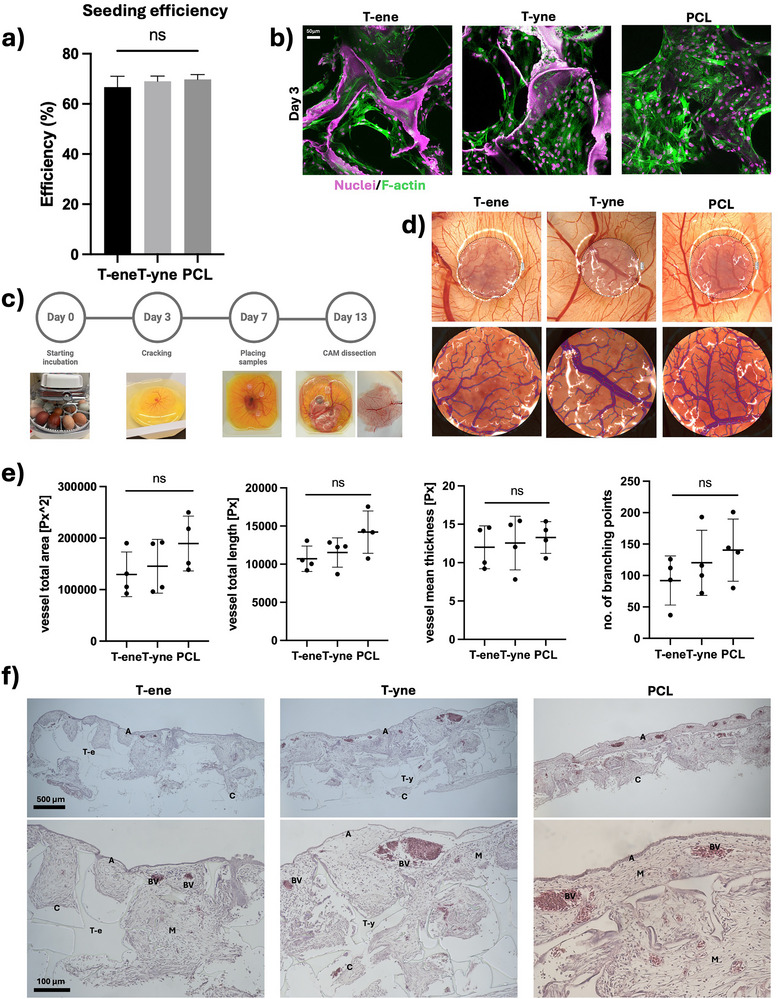 Figure 4
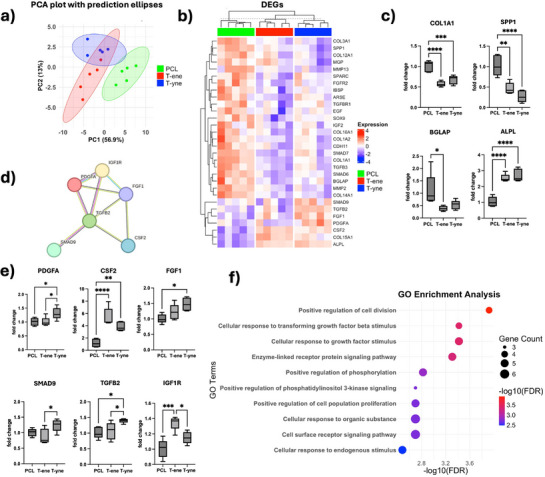 Figure 5
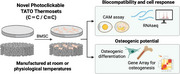 Figure 6
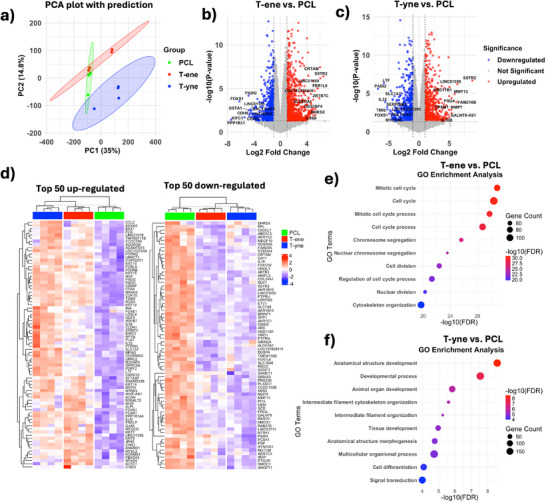 Figure 7
Peer Reviews
No public reviews on file for this paper yet. If you reviewed it on a platform where reviews are public (OpenReview, ICLR, NeurIPS, ICML), you can paste yours below so the community can read it here.
Videos
No videos yet. Explain this paper in a talk, walkthrough, or lecture? Add one.
Taxonomy
TopicsSynthesis and Characterization of Heterocyclic Compounds · Covalent Organic Framework Applications · Bone and Joint Diseases