An Ultra‐Flexible Neural Electrode with Bioelectromechanical Compatibility and Brain Micromotion Detection
Donglei Chen, Yu Lu, Shuo Zhang, Wenqi Zhang, Zejie Yu, Shuideng Wang, Zhi Qu, Mingxing Cheng, Yiqing Yao, Deheng Wang, Zhan Yang, Lixin Dong

TL;DR
Researchers developed an ultra-flexible neural electrode that moves with brain tissue, improving signal quality and sensing brain micromotion.
Contribution
The study introduces a bioelectromechanical coupling strategy with an ultra-flexible electrode matching brain tissue stiffness for synchronized motion.
Findings
The electrode achieves an equivalent stiffness of 0.023 N m−1, matching brain tissue micromotion stiffness.
It demonstrates interfacial forces of 575 nN and piezoresistive sensitivities of 6.4 pA mm−1 and 10.2 pA µm−1.
The design enables dual functionality for signal acquisition and micromotion sensing.
Abstract
Neural electrodes, as core components of brain‐computer interfaces(BCIs), face critical challenges in achieving stable mechanical coupling with brain tissue to ensure high‐quality signal acquisition. Current flexible electrodes, including semi‐invasive meningeal‐attached types and implantable cantilever designs, exhibit significant mechanical mismatches (elastic modulus 5–6 orders higher than brain tissue) due to material/structural limitations, leading to interfacial slippage. While thread‐like implants (e.g., Neuralink's electrodes) improve compliance via elongated structures, quantitative characterization of mechano‐bioelectric interactions remains unexplored. This study proposes a bioelectromechanical coupling strategy, emphasizing synchronized motion between the electrode and the brain tissue through exposed‐end deformation. A 4‐channel ultra‐flexible electrode (40 mm in length,…
Genes, proteins, chemicals, diseases, species, mutations and cell lines named across the full text — each resolved to its canonical identifier and authoritative record.
Click any figure to enlarge with its caption.
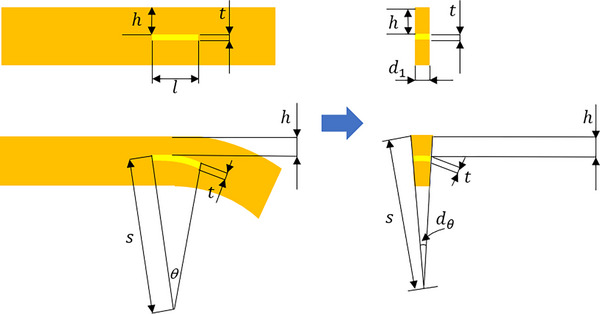 Figure 1
 Figure 2
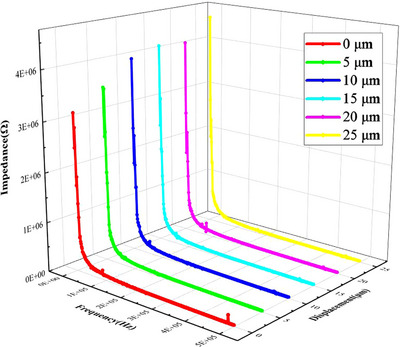 Figure 3
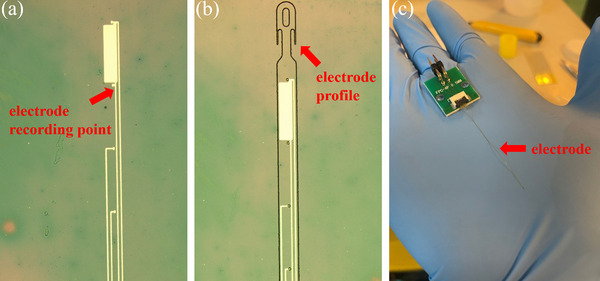 Figure 4
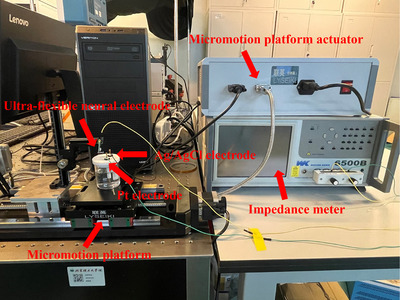 Figure 5
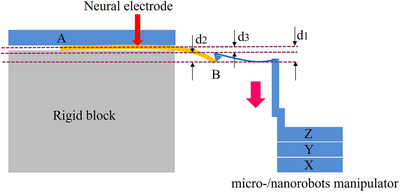 Figure 6
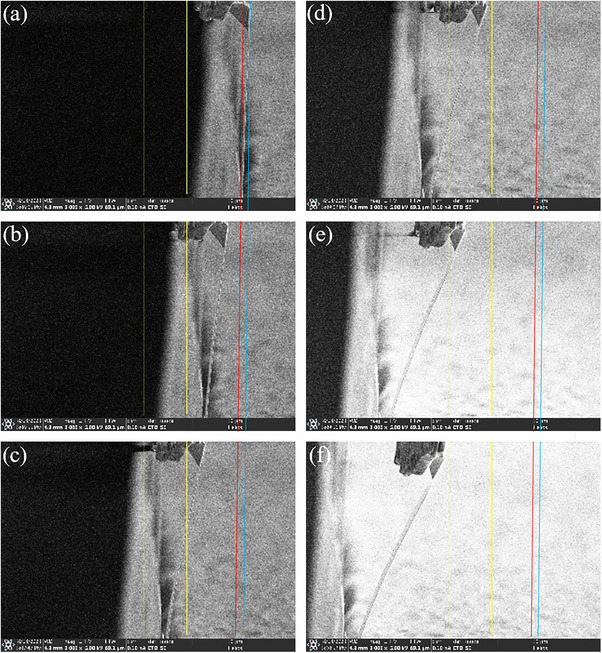 Figure 7
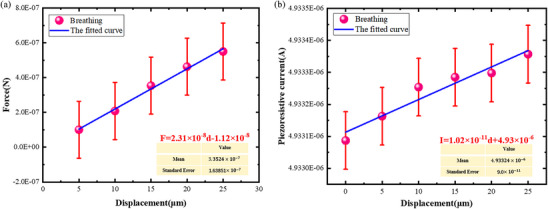 Figure 8
 Figure 9
 Figure 10
 Figure 11
 Figure 12
 Figure 13
 Figure 14
Peer Reviews
No public reviews on file for this paper yet. If you reviewed it on a platform where reviews are public (OpenReview, ICLR, NeurIPS, ICML), you can paste yours below so the community can read it here.
Videos
No videos yet. Explain this paper in a talk, walkthrough, or lecture? Add one.
Taxonomy
TopicsNeuroscience and Neural Engineering · EEG and Brain-Computer Interfaces · Muscle activation and electromyography studies