Antimicrobial Efficacy of a Taurolidine‐Based Antimicrobial Compound on Contaminated Surfaces Simulated in a Standardized 4‐Field Test
Benito Baldauf, Hendrik Bonnemeier, Ernest W. Lau, Jana Hummel, Reinhard Vonthein, Ojan Assadian

TL;DR
This study shows taurolidine is highly effective at killing bacteria and fungi on surfaces during simulated implant procedures, offering a new way to prevent device-related infections.
Contribution
Taurolidine's enzyme-independent antimicrobial mechanism and efficacy in short-contact, organic-load conditions are newly demonstrated for intraoperative surface disinfection.
Findings
Taurolidine achieved >5 log10 reductions in Staphylococcus aureus, Pseudomonas aeruginosa, and Candida albicans.
It showed >4 log10 reduction in Enterococcus hirae under simulated clinical conditions.
The antimicrobial activity involves reactive N-methylol groups disrupting microbial membranes.
Abstract
Implantable medical devices, including cardiac electronic implants, joint prostheses, and breast implants, are essential to modern healthcare but remain susceptible to infection from microbial contamination during placement. Staphylococcus spp. and Candida albicans are the predominant pathogens, often causing severe complications, increased mortality, and substantial healthcare costs. With antibiotic resistance on the rise, intraoperative surface disinfection has emerged as a critical yet underutilized preventive strategy. Taurolidine, a broad‐spectrum antimicrobial with a strong safety profile and no known resistance, can be applied directly to both tissues and device surfaces. To replicate intraoperative decontamination, taurolidine‐saturated swabs are tested under standardized mechanical wiping using the European Norm EN 16615 “4‐field test.” The model reproduced short contact times…
Genes, proteins, chemicals, diseases, species, mutations and cell lines named across the full text — each resolved to its canonical identifier and authoritative record.
Click any figure to enlarge with its caption.
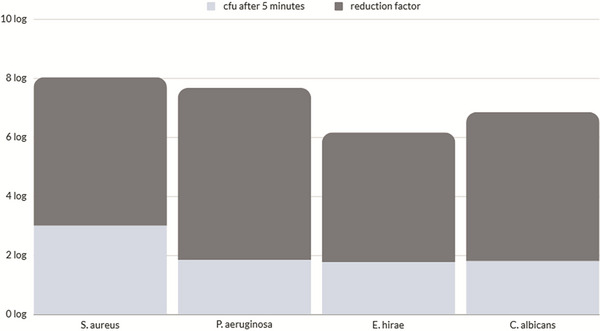 Figure 1
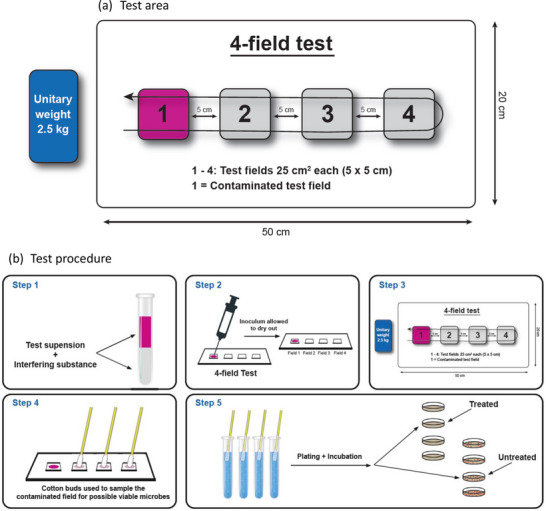 Figure 2
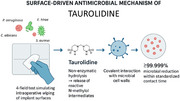 Figure 3
Peer Reviews
No public reviews on file for this paper yet. If you reviewed it on a platform where reviews are public (OpenReview, ICLR, NeurIPS, ICML), you can paste yours below so the community can read it here.
Videos
No videos yet. Explain this paper in a talk, walkthrough, or lecture? Add one.
Taxonomy
TopicsSurgical site infection prevention · Infectious Aortic and Vascular Conditions · Medical Device Sterilization and Disinfection