Bidirectional ventricular tachycardia caused by occlusion myocardial infarction—a case report
Magnus Nossen, Mathis Korseberg Stokke

TL;DR
A rare case of bidirectional ventricular tachycardia is linked to a heart attack, highlighting the importance of ECG criteria in diagnosing acute ischaemia.
Contribution
This case report presents a rare instance of bidirectional ventricular tachycardia caused by occlusion myocardial infarction.
Findings
Bidirectional ventricular tachycardia was associated with acute myocardial ischaemia confirmed by coronary angiography.
ECG analysis showed excessively discordant ST changes consistent with occlusion myocardial infarction.
Both original and modified Sgarbossa criteria were positive, aiding in the diagnosis of acute ischaemia.
Abstract
Bidirectional ventricular tachycardia (BdVT) is an uncommon form of ventricular arrhythmia typically associated with digoxin toxicity or catecholaminergic polymorphic ventricular tachycardia. BdVT in the setting of acute myocardial ischaemia is limited to case reports. We present an example of BdVT caused by occlusion myocardial infarction with original and modified Sgarbossa criteria being positive. An elderly male with known coronary artery disease presented with chest pain. The initial ECG demonstrated a regular wide QRS complex tachycardia with alternating frontal plane axis, consistent with BdVT. No apparent cause of the arrhythmia was identified from the patient's medication history or family history. Detailed ECG analysis revealed that during tachycardia, the QRS complexes exhibited excessively discordant ST segment elevation and depression. ST segment concordance was observed…
Genes, proteins, chemicals, diseases, species, mutations and cell lines named across the full text — each resolved to its canonical identifier and authoritative record.
Click any figure to enlarge with its caption.
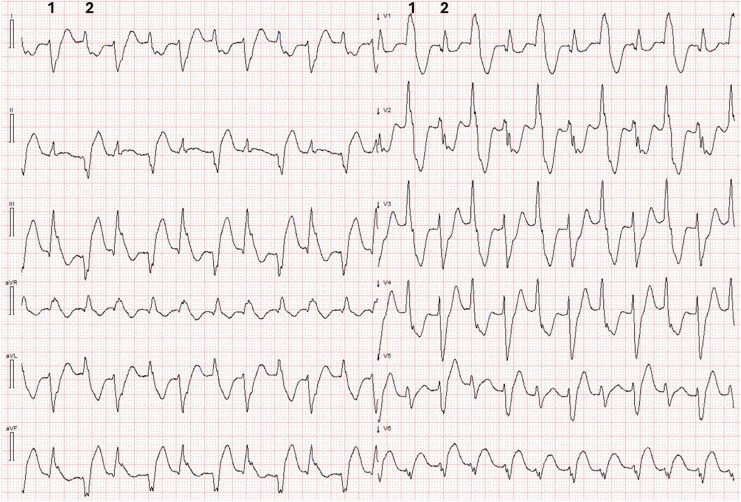 Figure 1
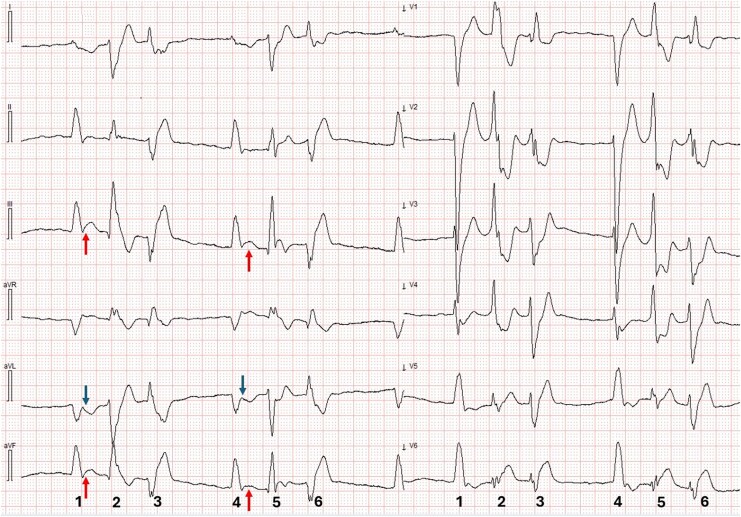 Figure 2
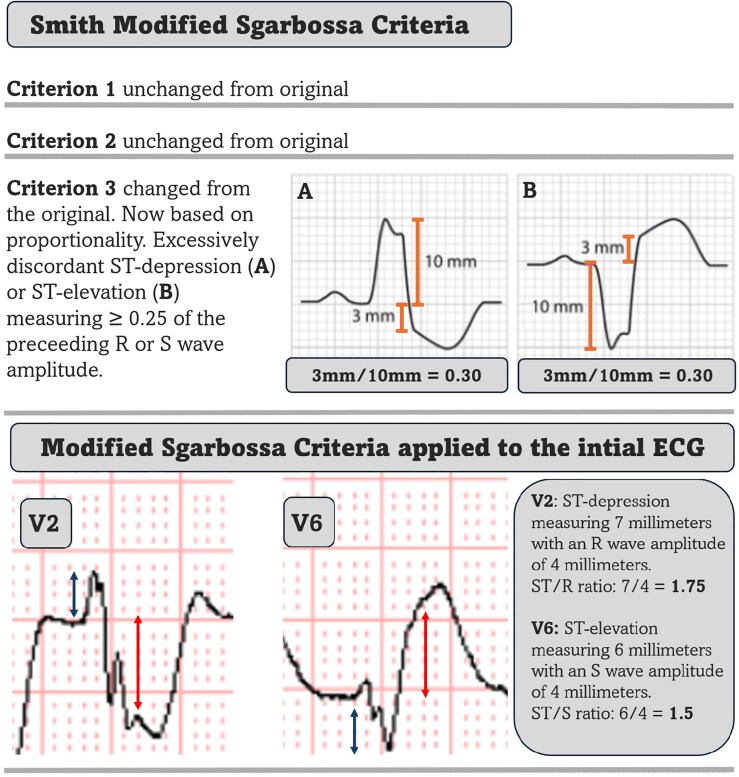 Figure 3
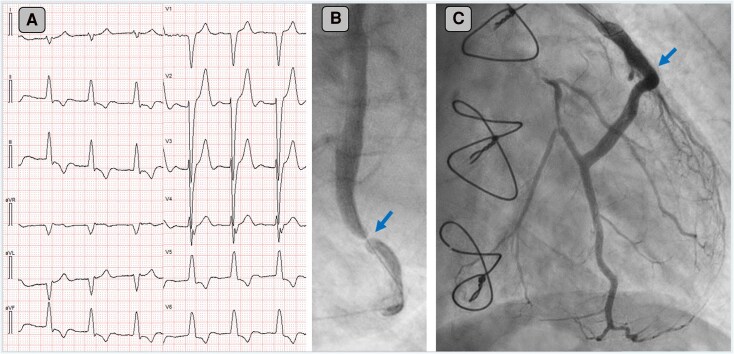 Figure 4
 Figure 5
 Figure 6
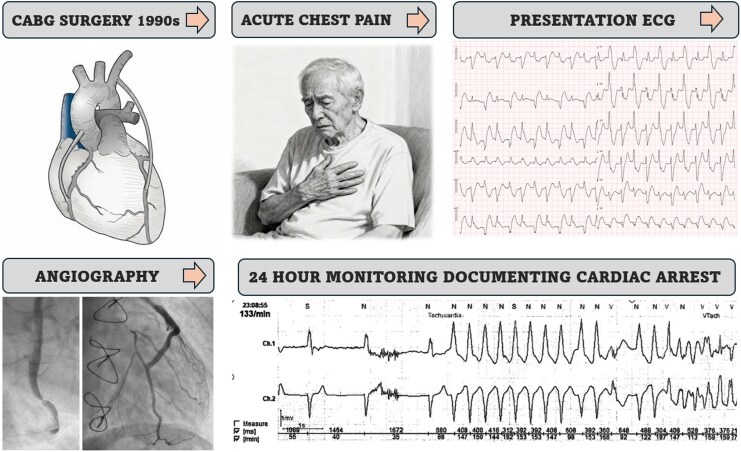 Figure 7
Peer Reviews
No public reviews on file for this paper yet. If you reviewed it on a platform where reviews are public (OpenReview, ICLR, NeurIPS, ICML), you can paste yours below so the community can read it here.
Videos
No videos yet. Explain this paper in a talk, walkthrough, or lecture? Add one.
Taxonomy
TopicsCardiac electrophysiology and arrhythmias · Cardiac Arrhythmias and Treatments · Poisoning and overdose treatments