Efficient Implementation of the Spin-Free Renormalized Internally-Contracted Multireference Coupled Cluster Theory
Kalman Szenes, Riya Kayal, Kantharuban Sivalingam, Robin Feldmann, Frank Neese, Markus Reiher

TL;DR
This paper presents an efficient implementation of a multireference coupled cluster method in the ORCA program, enabling accurate quantum chemistry calculations on large systems.
Contribution
An efficient, parallelized implementation of RIC-MRCCSD using a spin-free formulation and code generation tools.
Findings
The RIC-MRCCSD implementation achieves substantial efficiency gains and runs in parallel with speedups on multiple cores.
The method scales well to large systems, demonstrated by computing the ground state of a vitamin B12 model with a CAS(12,12) active space.
RIC-MRCCSD is more efficient than alternative methods like IC-MRCCSD, which require higher-order density matrices.
Abstract
In this paper, an efficient implementation of the renormalized internally contracted multireference coupled cluster with singles and doubles (RIC-MRCCSD) into the ORCA quantum chemistry program suite is reported. To this end, Evangelista’s Wick&d equation generator was combined with ORCA’s native AGE code generator in order to implement the many-body residuals required for the RIC-MRCCSD method. Substantial efficiency gains are realized by deriving a spin-free formulation instead of the previously reported spin–orbital version developed by some of us. Since AGE produces parallelized code, the resulting implementation can directly be run in parallel with substantial speedups when executed on multiple cores. In terms of runtime, the cost of RIC-MRCCSD is shown to be between single-reference RHF-CCSD and UHF-CCSD, even when active space spaces as large as CAS(14,14) are considered. This…
Genes, proteins, chemicals, diseases, species, mutations and cell lines named across the full text — each resolved to its canonical identifier and authoritative record.
Click any figure to enlarge with its caption.
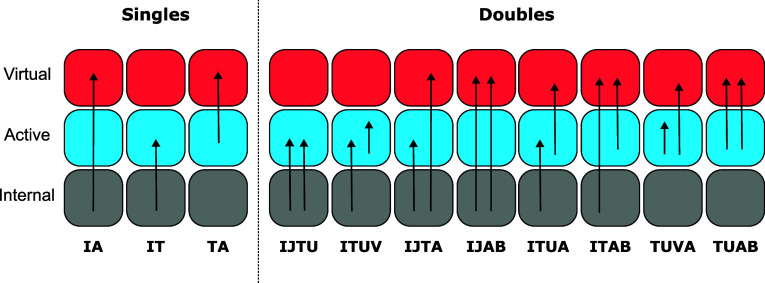 Figure 1
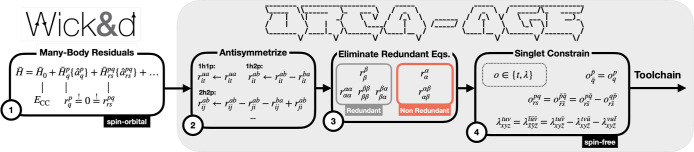 Figure 2
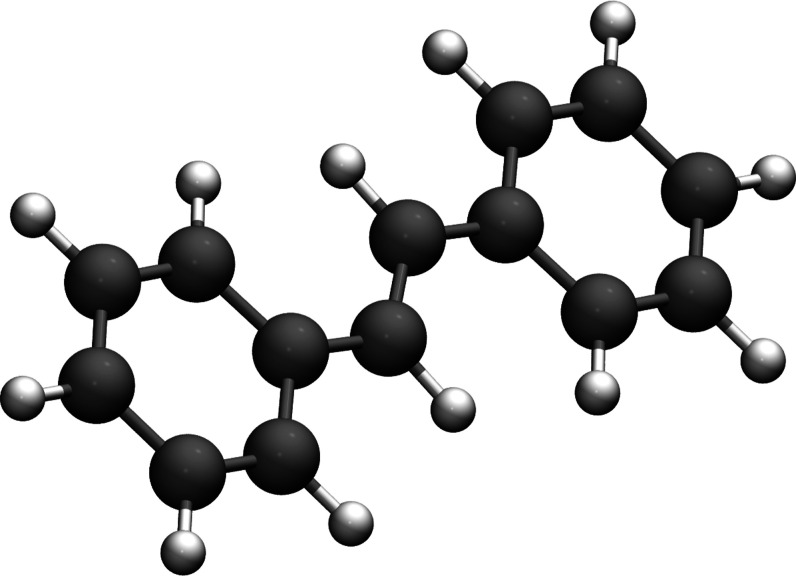 Figure 3
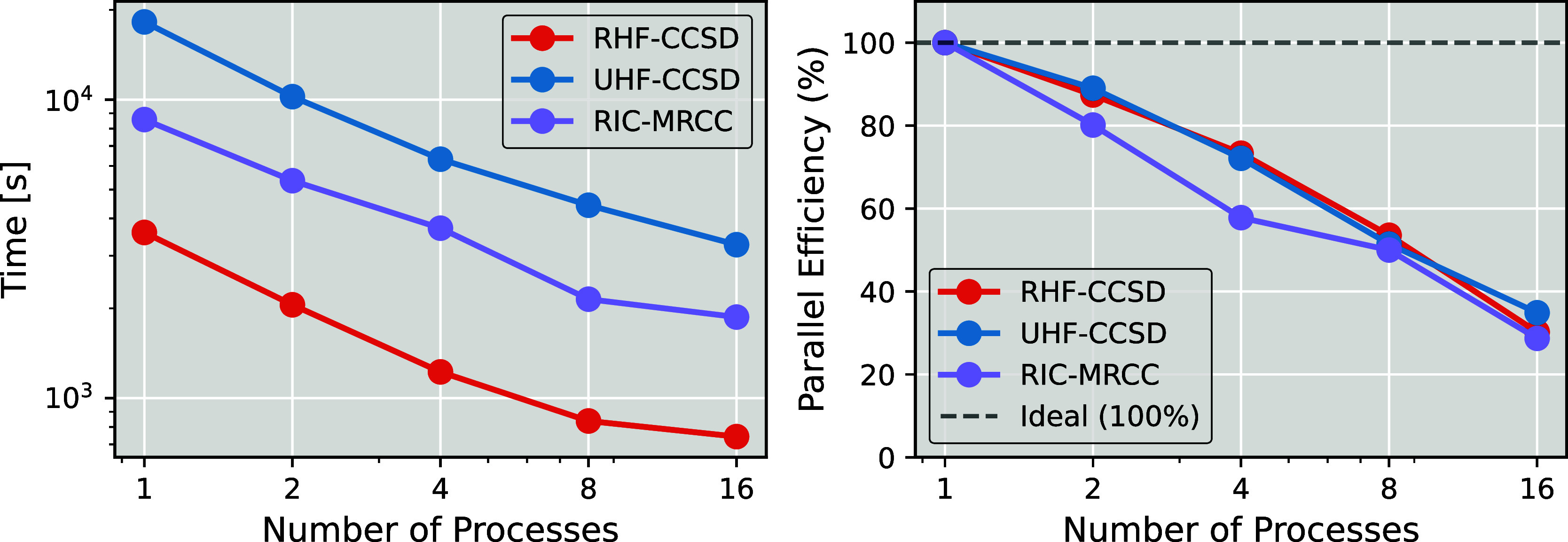 Figure 4
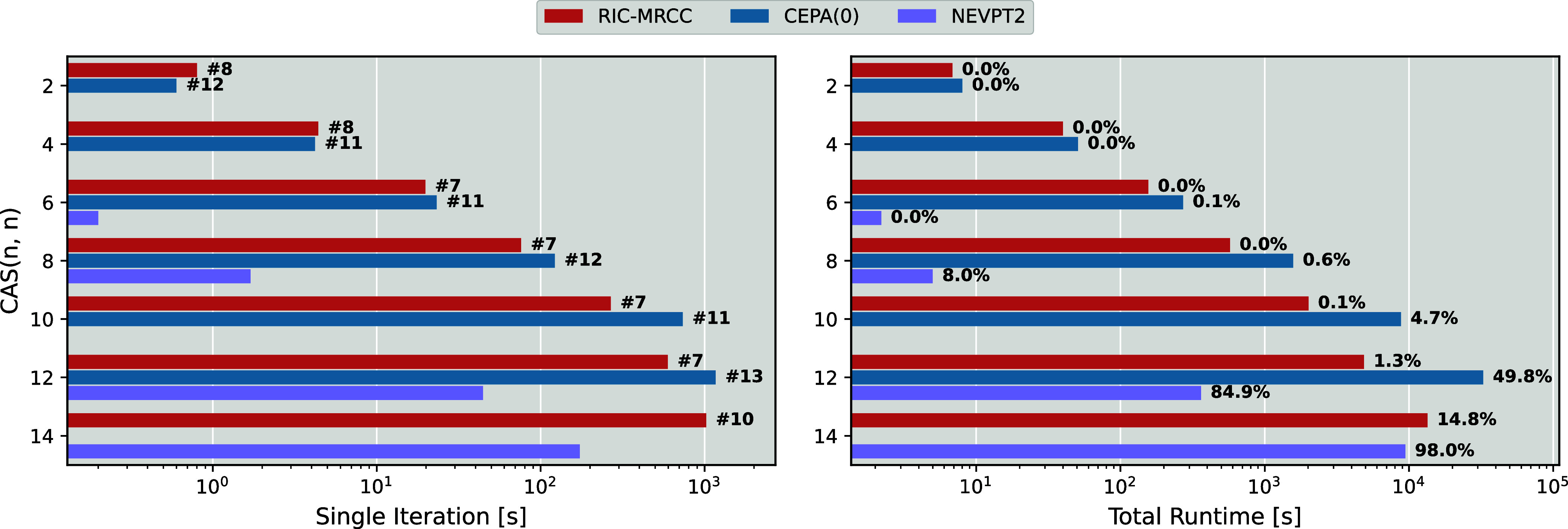 Figure 5
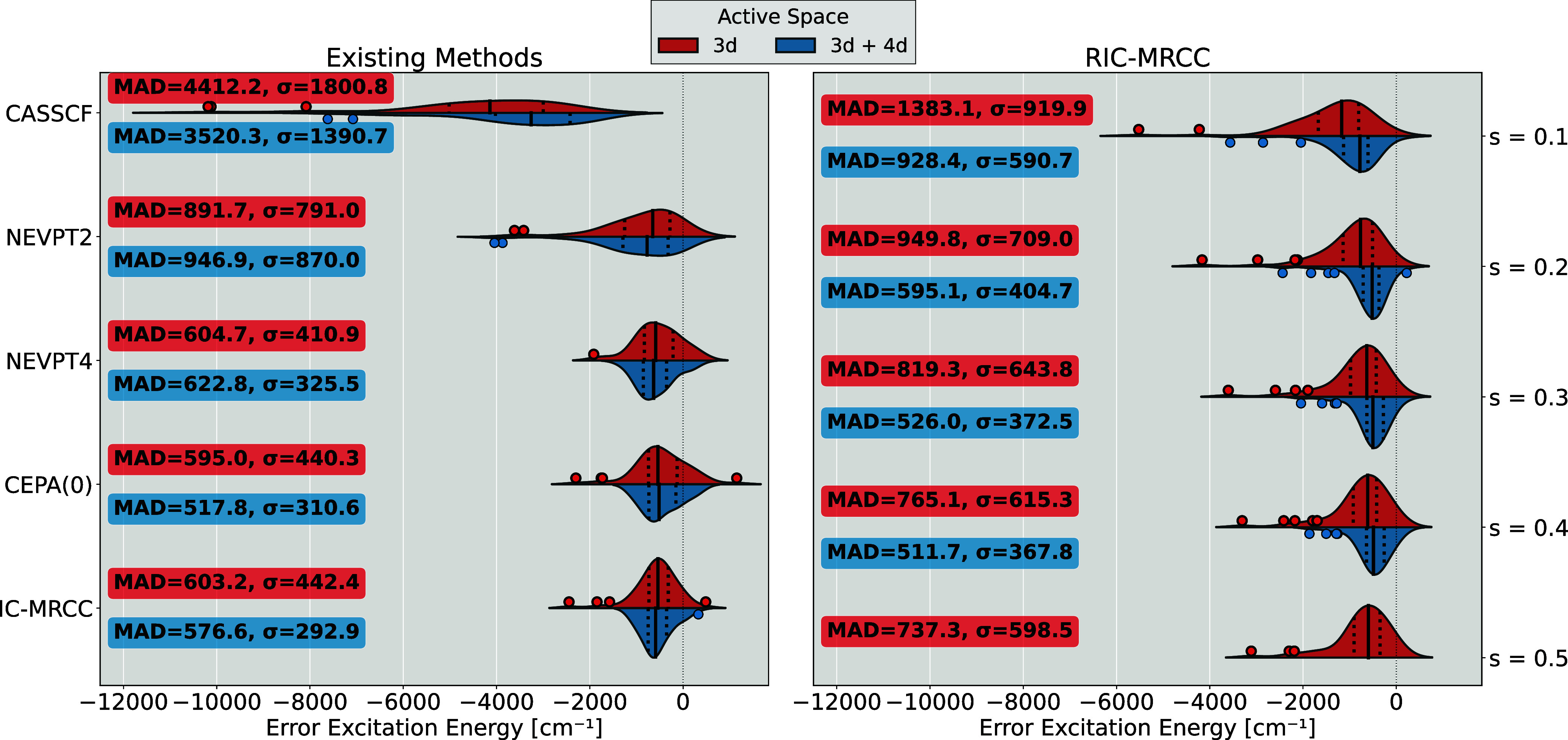 Figure 6
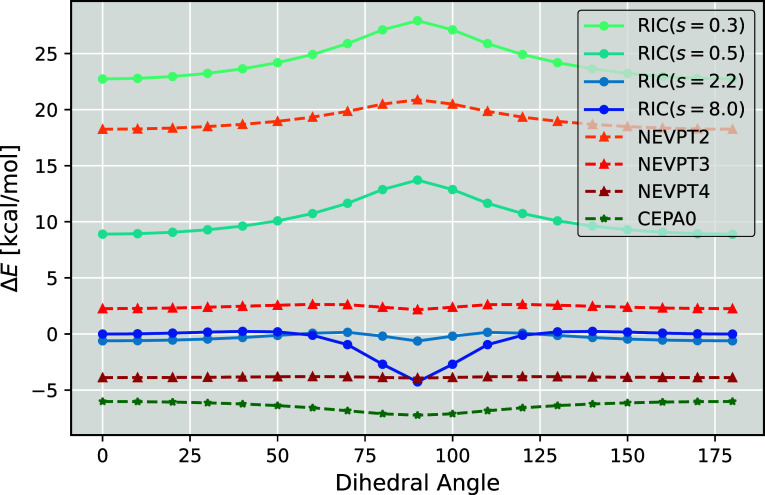 Figure 7
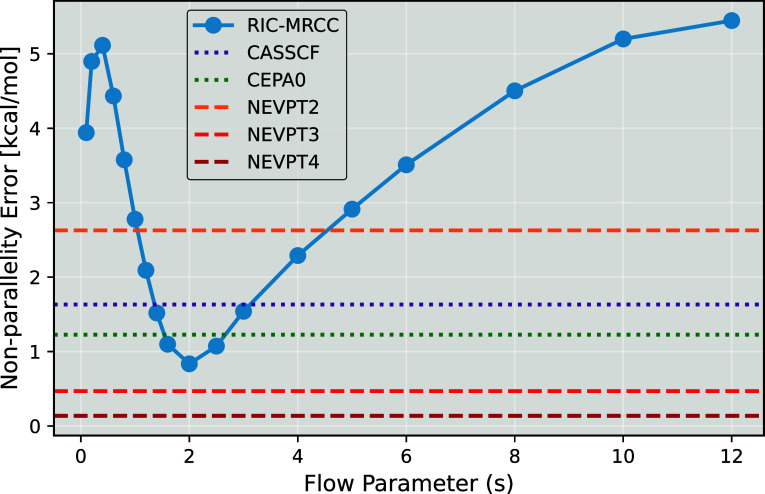 Figure 8
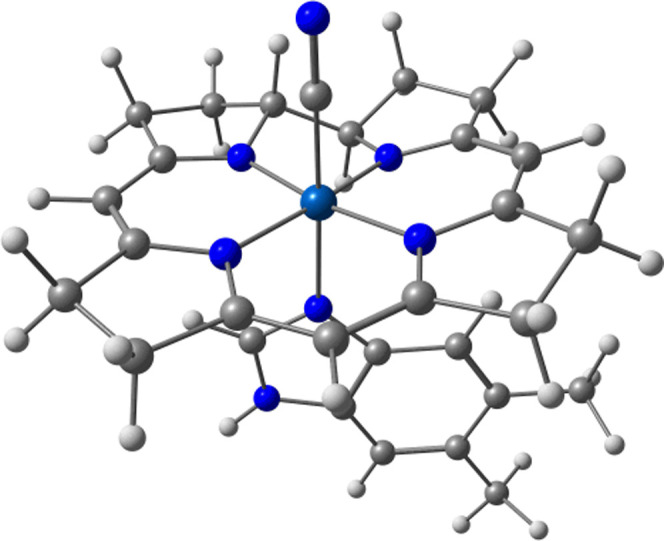 Figure 9
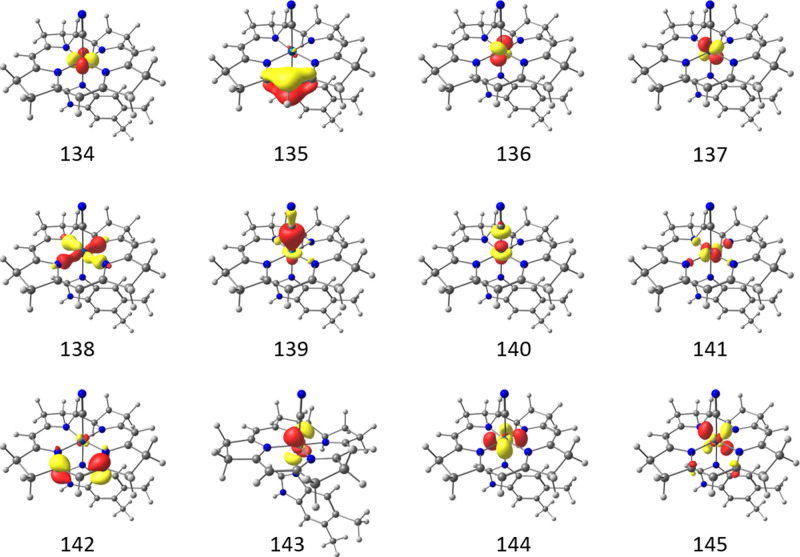 Figure 10
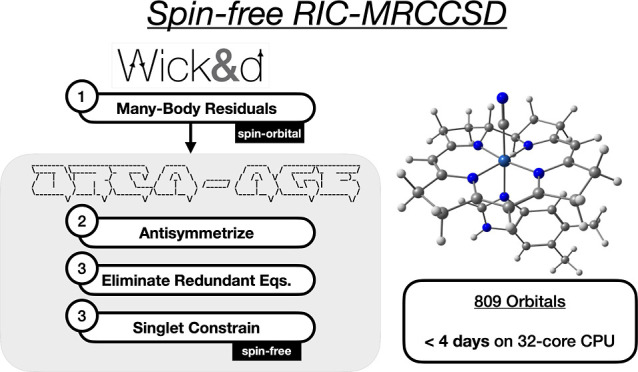 Figure 11
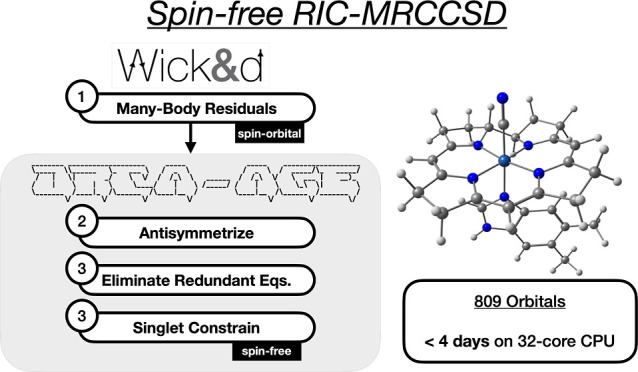 Figure 12
 Figure 13
 Figure 14
 Figure 15
 Figure 16
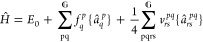 Figure 17
 Figure 18
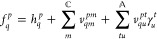 Figure 19
 Figure 20
 Figure 21
 Figure 22
 Figure 23
 Figure 24
 Figure 25
 Figure 26
 Figure 27
 Figure 28
 Figure 29
 Figure 30
 Figure 31
 Figure 32
 Figure 33
 Figure 34
 Figure 35
 Figure 36
 Figure 37
 Figure 38
 Figure 39
 Figure 40
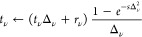 Figure 41
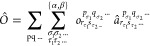 Figure 42
 Figure 43
 Figure 44
 Figure 45
 Figure 46
 Figure 47
 Figure 48
 Figure 49
 Figure 50
Peer Reviews
No public reviews on file for this paper yet. If you reviewed it on a platform where reviews are public (OpenReview, ICLR, NeurIPS, ICML), you can paste yours below so the community can read it here.
Videos
No videos yet. Explain this paper in a talk, walkthrough, or lecture? Add one.
Taxonomy
TopicsAdvanced Chemical Physics Studies · Spectroscopy and Quantum Chemical Studies · Magnetism in coordination complexes