Induction of J Aggregate-like Optical Transitions in Dihydroxyquinone by Coordination with Al(III)
José Roberto Granado Neto, Antonio Gustavo Sampaio de Oliveira-Filho, Marcelo Henrique Gehlen

TL;DR
This study shows that forming metal complexes with Al(III) induces J-aggregate-like optical effects in dihydroxyquinone compounds, enhancing their fluorescence.
Contribution
The paper demonstrates J-aggregate-like behavior in Al(III) complexes of dihydroxyquinones through experimental and computational methods.
Findings
Al(III) complexation causes red-shifts in UV–vis and fluorescence spectra of QNZ and DHN.
Fluorescence quantum yield and lifetime increase significantly for DHN upon Al(III) complexation.
Computational analysis supports a head-to-tail chromophore arrangement with stronger J-type coupling in Al(III)2DHN2.
Abstract
The metal-complex formation of 1,4-dihydroxyanthraquinone (quinizarin, QNZ) and 6,11-dihydroxy-5,12-naphthacenedione (DHN) with Al(III) ions is investigated by stationary and time-resolved emission spectroscopy combined with quantum chemical calculations of optical properties. UV–vis and fluorescence spectra revealed small red-shifts of 200 and 60 meV for the QNZ and DHN metal complexes, respectively. The fluorescence quantum yield increases from 0.08 to 0.23 for QNZ, while for DHN it changes from 0.24 to 0.79 upon complexation, suggesting the presence of J-aggregate-like exciton coupling within the coordination structure. The average fluorescence lifetime of QNZ varies from 0.65 ns of the free ligand to 2.77 ns, and in the case of DHN it goes from 1.57 to 2.61 ns after Al(III) complexation. These results are consistent with formation of a more rigid molecular structure which…
Genes, proteins, chemicals, diseases, species, mutations and cell lines named across the full text — each resolved to its canonical identifier and authoritative record.
Click any figure to enlarge with its caption.
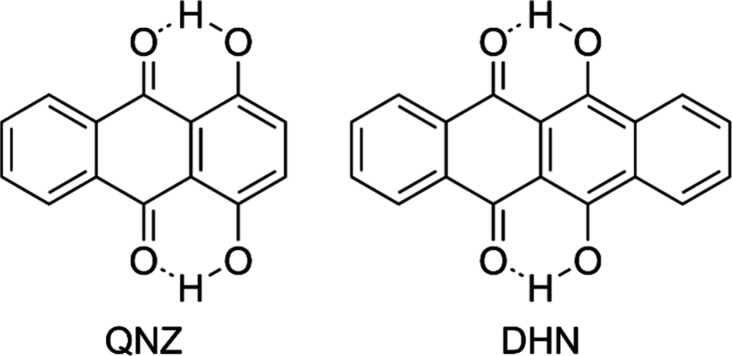 Figure 1
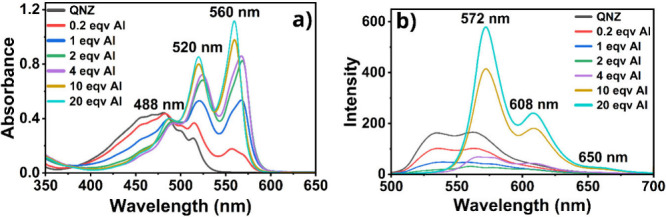 Figure 2
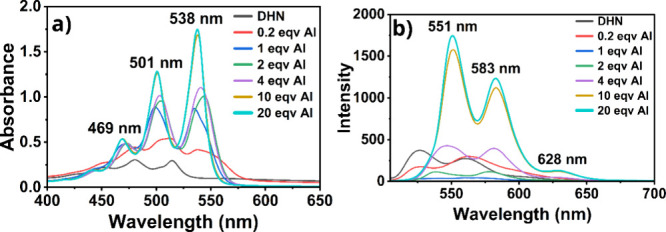 Figure 3
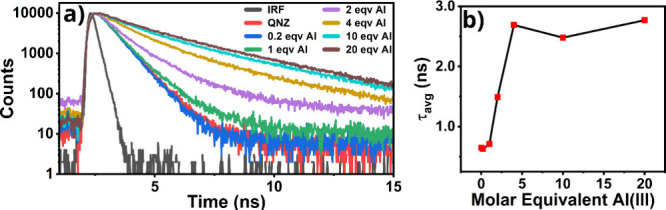 Figure 4
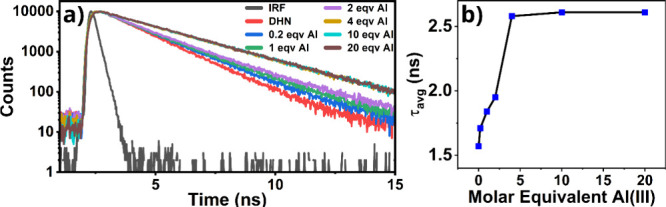 Figure 5
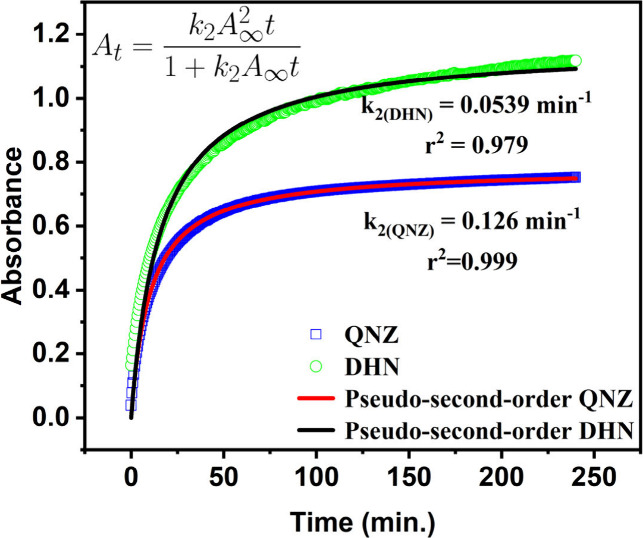 Figure 6
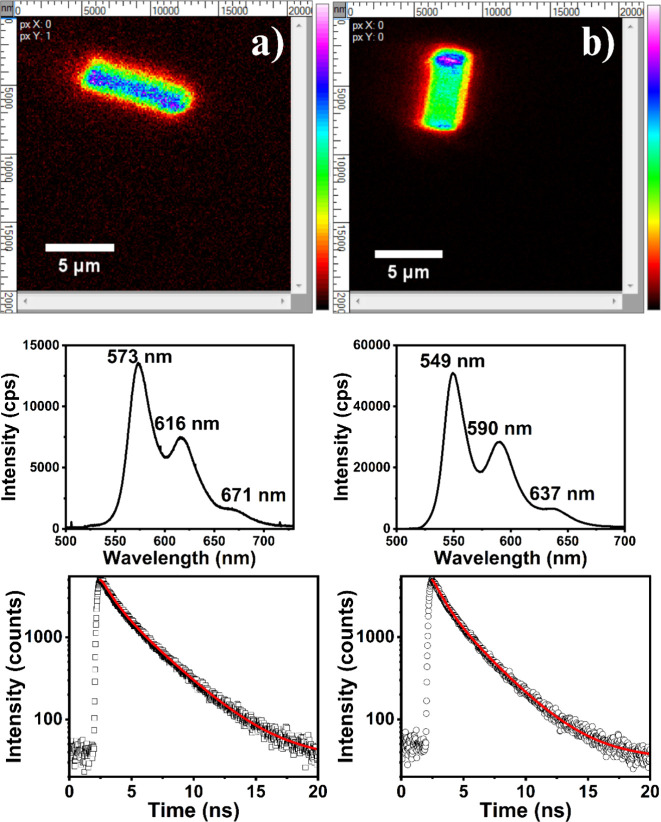 Figure 7
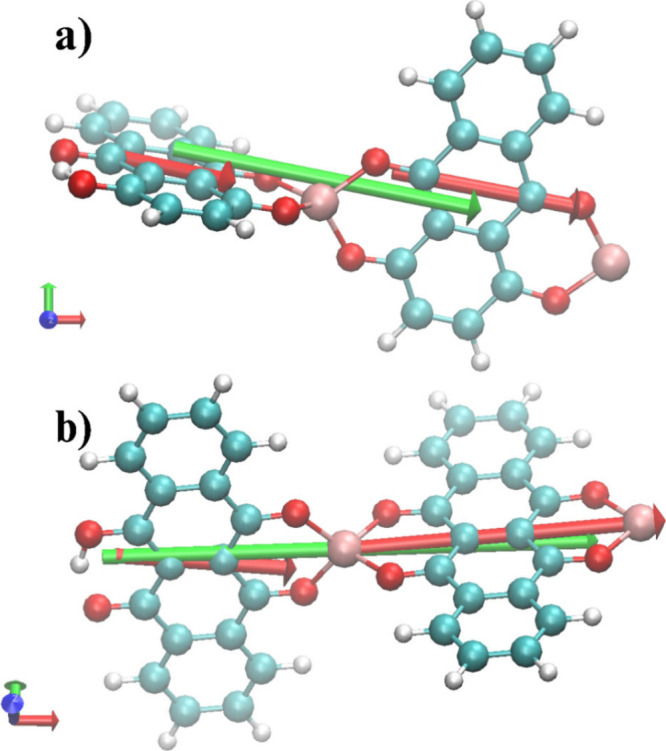 Figure 8
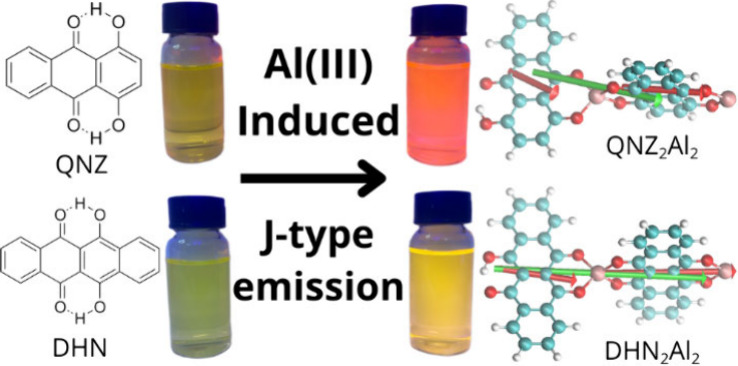 Figure 9
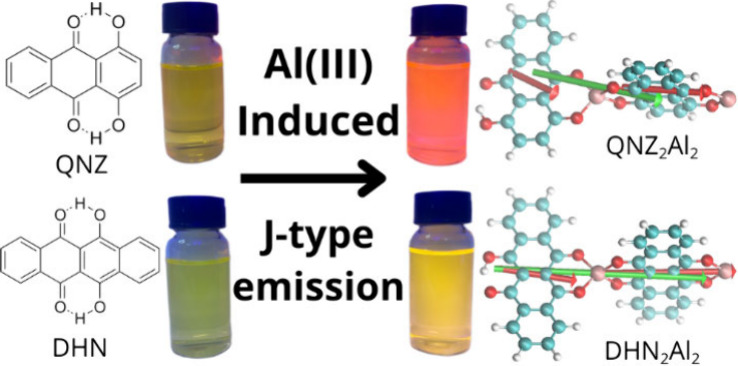 Figure 10
 Figure 11
 Figure 12
 Figure 13
 Figure 14
Peer Reviews
No public reviews on file for this paper yet. If you reviewed it on a platform where reviews are public (OpenReview, ICLR, NeurIPS, ICML), you can paste yours below so the community can read it here.
Videos
No videos yet. Explain this paper in a talk, walkthrough, or lecture? Add one.
Taxonomy
TopicsAluminum toxicity and tolerance in plants and animals · Spectroscopy and Quantum Chemical Studies · Photochemistry and Electron Transfer Studies