Catalytic Ammonia Synthesis over Pure, Defective, and Metal-Doped Rutile TiO2: A Periodic DFT Study
Francisco Núñez-Zarur, Andrés Camilo Muñoz Peña, Michael L. Ariza-Gómez, José Rodríguez, Elizabeth Flórez Yepes

TL;DR
This study uses computational methods to explore how metal-doped titanium dioxide surfaces can efficiently produce ammonia from nitrogen and water.
Contribution
The novel contribution is identifying that doping vacant sites with Mo or Ta significantly lowers reaction energy barriers for ammonia synthesis.
Findings
Doping TiO2 surfaces with Mo or Ta reduces the energy of reaction intermediates, improving catalytic efficiency.
Doping vacant Ti6c sites has a stronger effect on reaction energetics than exposed Ti5c sites.
Higher dopant concentration on vacant sites further decreases intermediate energies, enhancing ammonia synthesis.
Abstract
In this work, we aim to describe the energetics associated with the formation of ammonia from N2 interacting with doped hydroxylated rutile TiO2(110) surfaces with the vacant O2c site, following the reaction N2 + 3H2O → 2NH3 + 3/2O2. The water molecules interact with the surface, creating exposed Ti–OH groups that can transfer hydrogen to the adsorbed N2 molecule. Two metal dopants are evaluated: Mo and Ta. For both metals, calculations show a dramatic decrease in the energy of most intermediates during the entire mechanism, leading to more favorable reaction mechanisms. Nonetheless, it is worth noting that when the Ti6c site of the vacant site is doped with either Mo or Ta, there is a stronger effect on the energetics than doping on the exposed Ti5c sites. The effect of increasing the concentration of metal dopants on the vacant site was also investigated. In this case, calculations…
Genes, proteins, chemicals, diseases, species, mutations and cell lines named across the full text — each resolved to its canonical identifier and authoritative record.
Click any figure to enlarge with its caption.
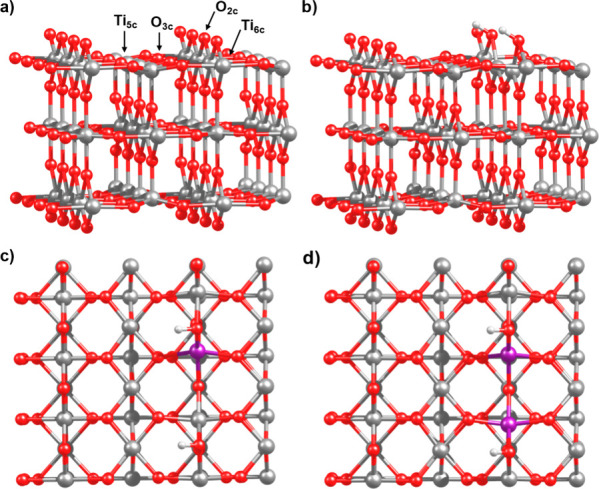 Figure 1
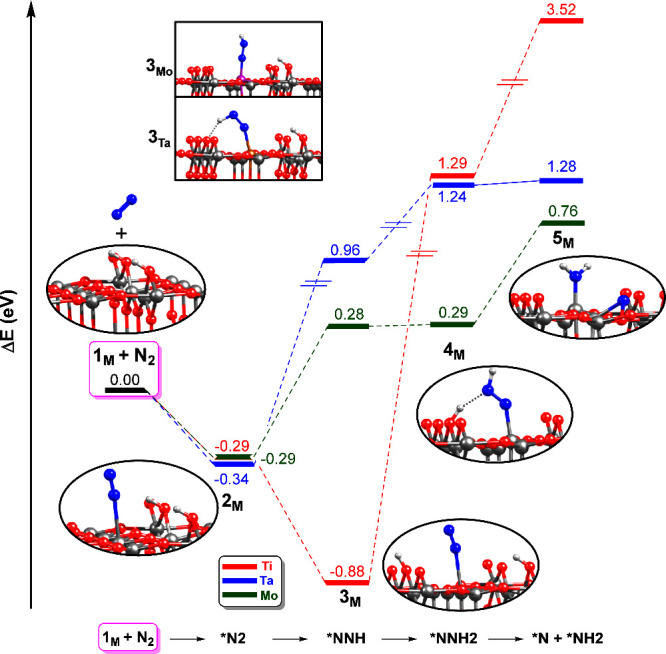 Figure 2
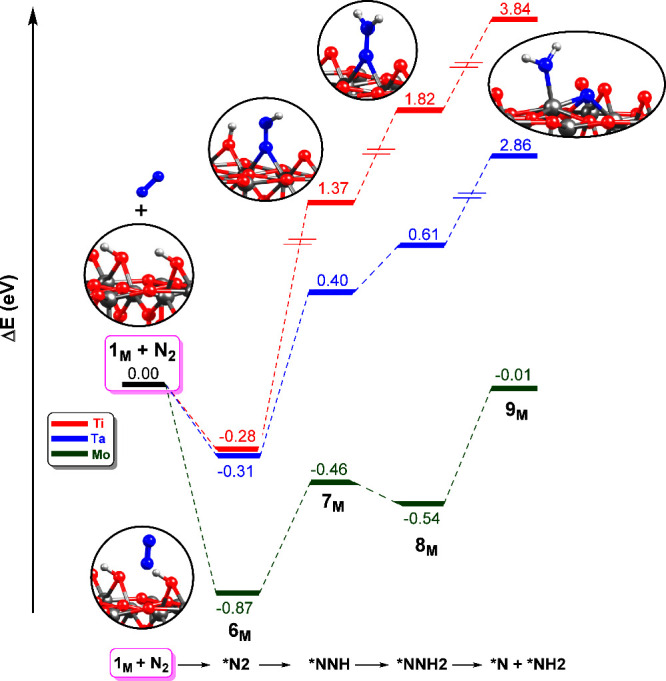 Figure 3
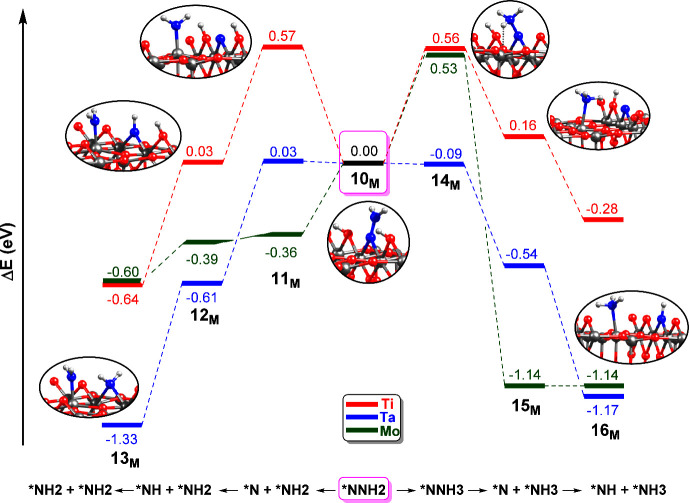 Figure 4
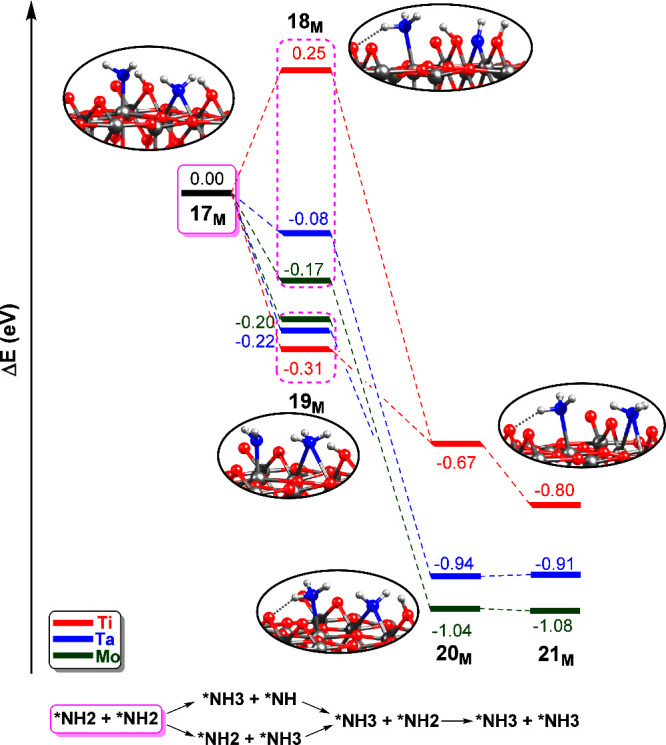 Figure 5
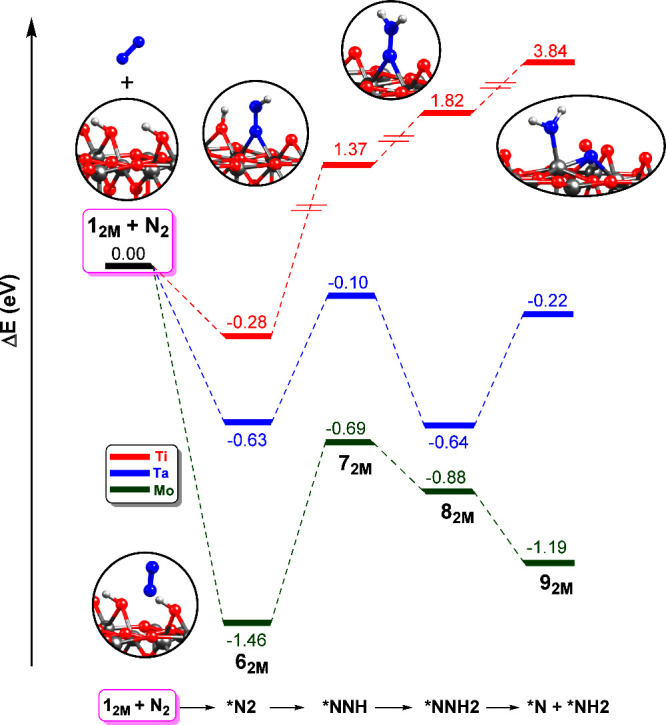 Figure 6
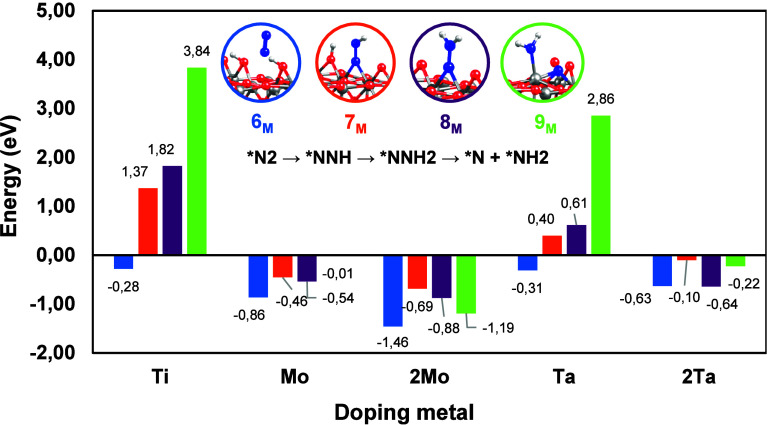 Figure 7
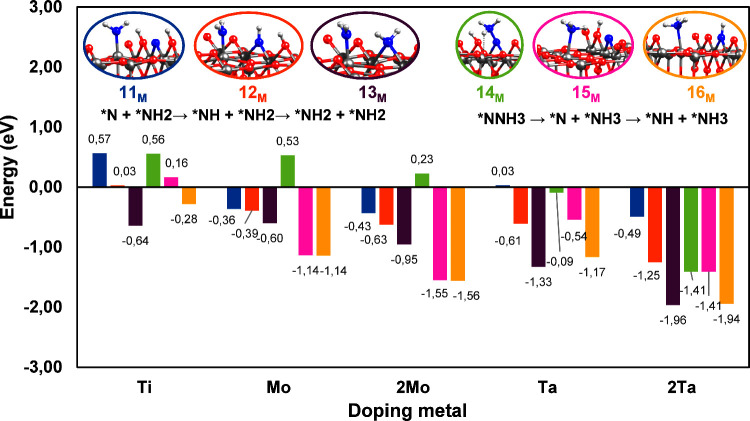 Figure 8
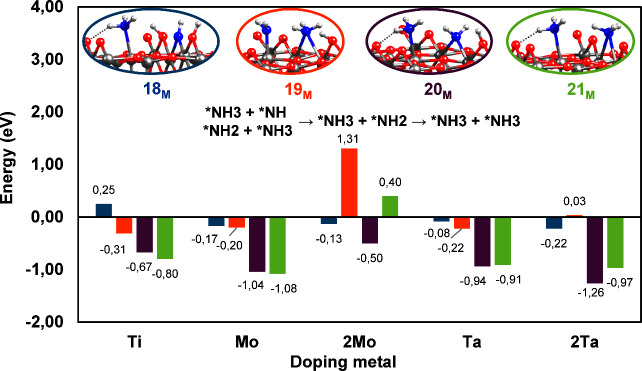 Figure 9
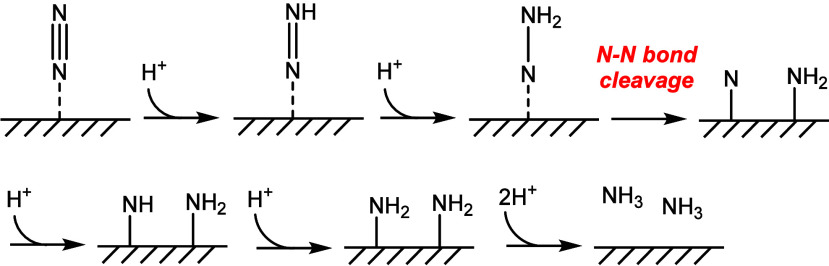 Figure 10
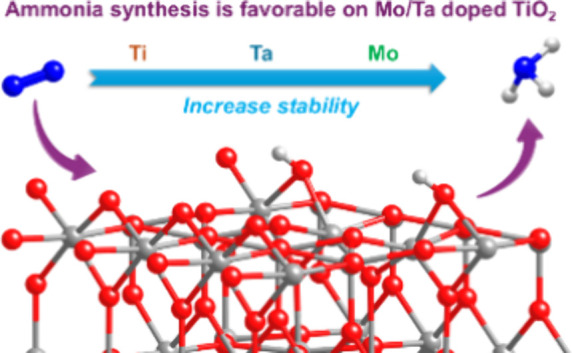 Figure 11
 Figure 12
 Figure 13
 Figure 14
Peer Reviews
No public reviews on file for this paper yet. If you reviewed it on a platform where reviews are public (OpenReview, ICLR, NeurIPS, ICML), you can paste yours below so the community can read it here.
Videos
No videos yet. Explain this paper in a talk, walkthrough, or lecture? Add one.
Taxonomy
TopicsAmmonia Synthesis and Nitrogen Reduction · Environmental remediation with nanomaterials · Phosphorus and nutrient management