Topological Advantage for Adsorbate Chemisorption on Conjugated Chains
Luis Martinez-Gomez, Raphael F. Ribeiro

TL;DR
This paper explores how topological properties of a polyacetylene chain affect chemisorption and electronic interactions with adsorbates.
Contribution
The study reveals how topological phases influence adsorbate behavior through electronic phase transitions and localized midgap states.
Findings
Localized midgap states at edges and solitons enhance electron donation compared to metallic and trivial phases.
Electronic friction is highest in the metallic phase and suppressed in gapped regions.
Topological boundaries show robustness to disorder and could be used in molecular catalysis and sensing.
Abstract
Topological matter offers opportunities for control of charge and energy flow with implications for chemistry still incompletely understood. In this work, we study an ensemble of adsorbates with an empty frontier level (LUMO) coupled to the edges, domain walls (solitons), and bulk of a Su–Schrieffer–Heeger polyacetylene chain across its trivial insulator, metallic, and topological insulator phases. We find that two experimentally relevant observables, charge donation into the LUMO and the magnitude of adsorbate electronic friction, are significantly impacted by the electronic phase of the SSH chain and show clear signatures of the topological phase transition. Localized, symmetry-protected midgap states at edges and solitons strongly enhance electron donation relative to both the metallic and trivial phases, whereas, by contrast, the metal’s extended states, despite larger total DOS…
Genes, proteins, chemicals, diseases, species, mutations and cell lines named across the full text — each resolved to its canonical identifier and authoritative record.
Click any figure to enlarge with its caption.
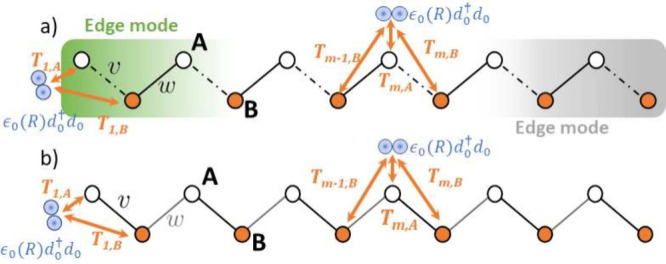 Figure 1
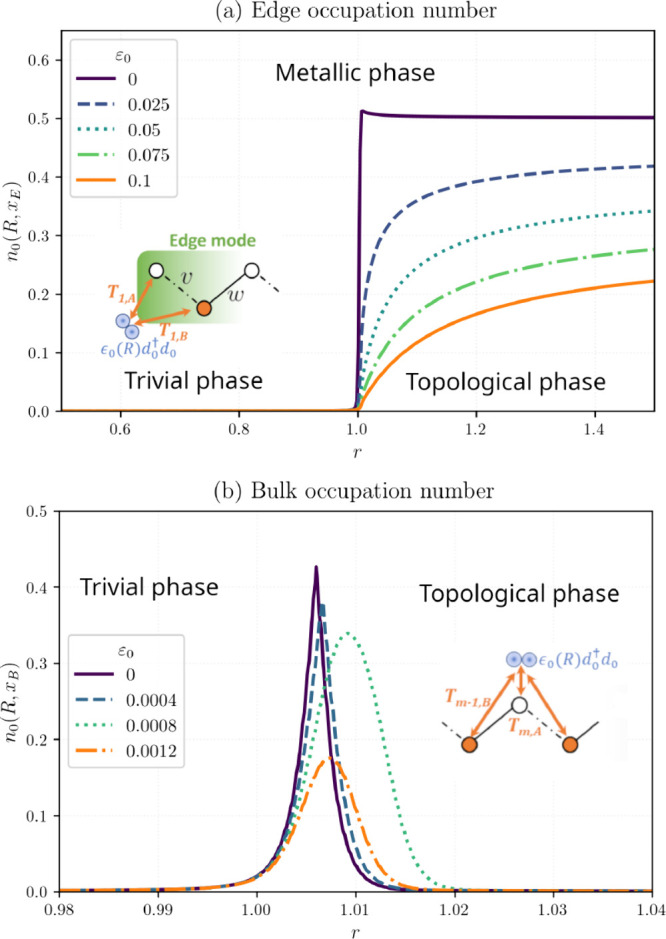 Figure 2
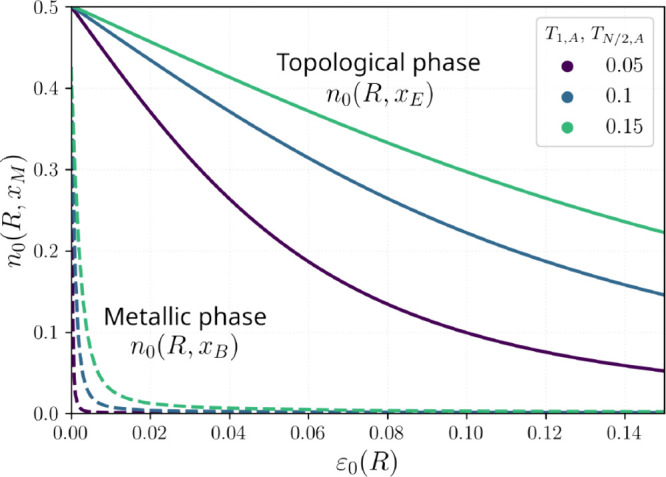 Figure 3
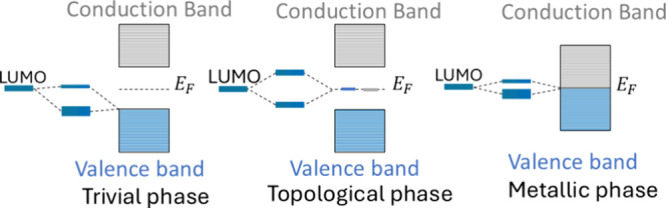 Figure 4
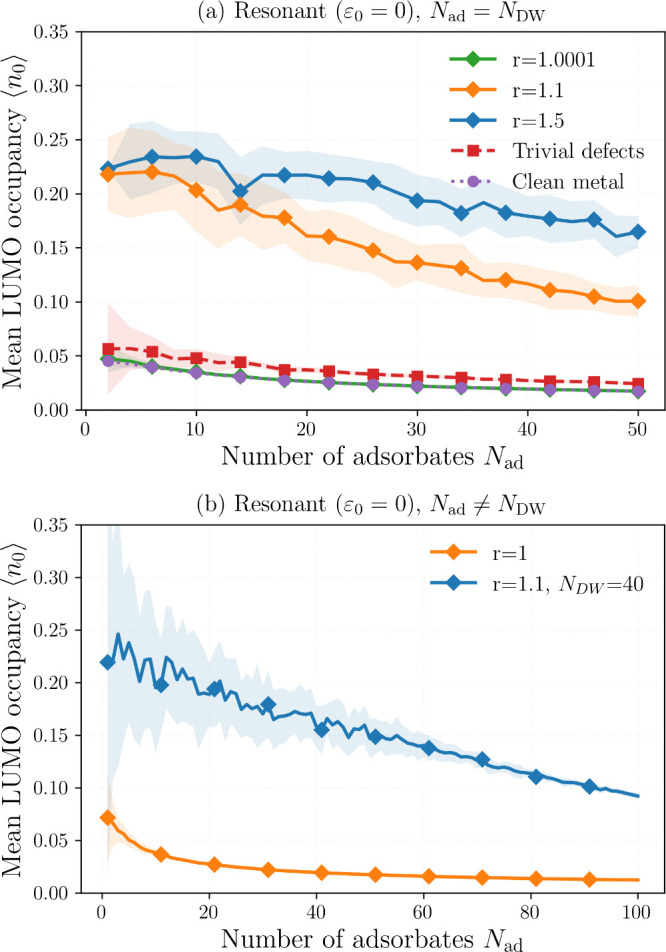 Figure 5
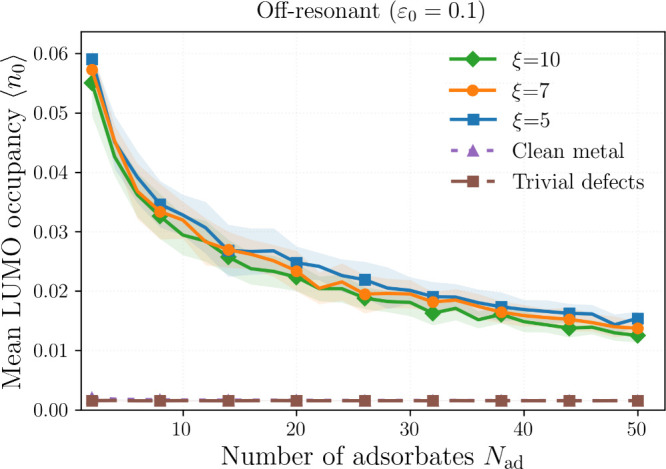 Figure 6
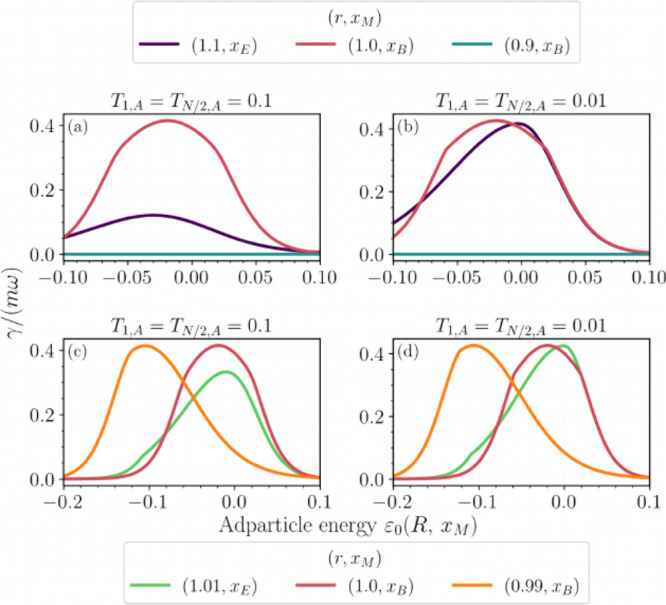 Figure 7
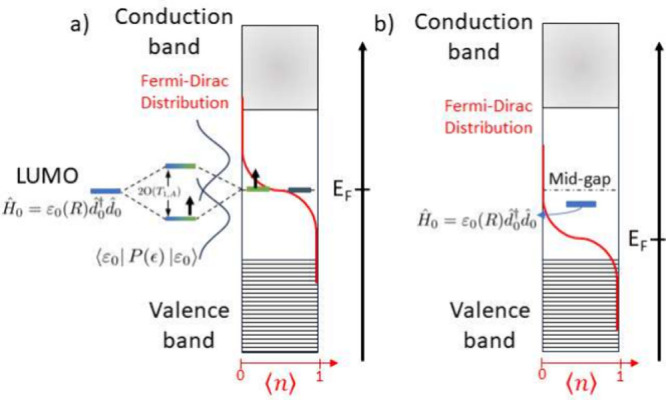 Figure 8
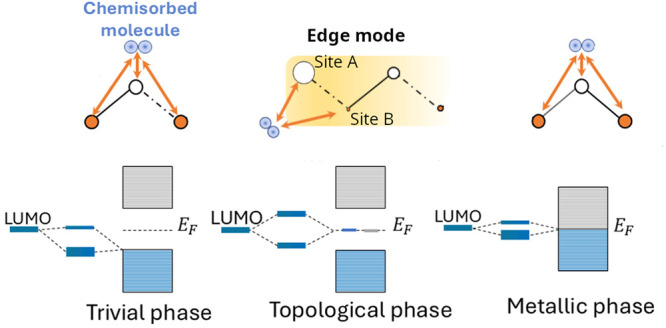 Figure 9
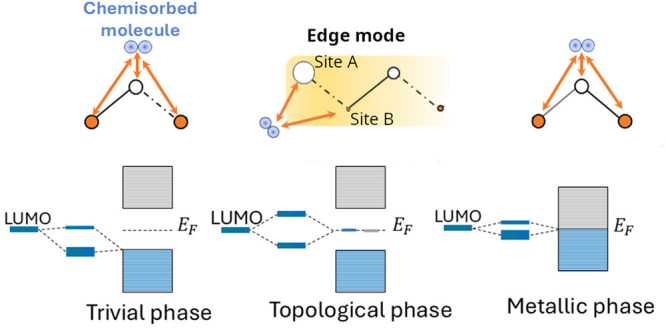 Figure 10
 Figure 11
 Figure 12
 Figure 13
 Figure 14
 Figure 15
 Figure 16
 Figure 17
 Figure 18
 Figure 19
 Figure 20
 Figure 21
 Figure 22
 Figure 23
 Figure 24
 Figure 25
 Figure 26
 Figure 27
 Figure 28
 Figure 29
 Figure 30
 Figure 31
 Figure 32
 Figure 33
 Figure 34
 Figure 35
 Figure 36
 Figure 37
 Figure 38
 Figure 39
 Figure 40
 Figure 41
 Figure 42
 Figure 43
 Figure 44
 Figure 45
 Figure 46
 Figure 47
 Figure 48
 Figure 49
 Figure 50
Peer Reviews
No public reviews on file for this paper yet. If you reviewed it on a platform where reviews are public (OpenReview, ICLR, NeurIPS, ICML), you can paste yours below so the community can read it here.
Videos
No videos yet. Explain this paper in a talk, walkthrough, or lecture? Add one.
Taxonomy
TopicsSurface Chemistry and Catalysis · Chemical Synthesis and Analysis · Molecular Junctions and Nanostructures