Evolution of Structure and Magnetism in FeCl2 and FeCl3: From Clusters to Monolayers
Mehmet Emin Kilic, Manish Kumar Mohanta, Puru Jena

TL;DR
This paper studies how the structure and magnetism of iron-chloride clusters change as they grow into monolayers, revealing how magnetic properties evolve.
Contribution
The study provides new insights into the evolution of magnetic properties from clusters to monolayers in iron-chloride systems.
Findings
FeCl2 and FeCl3 clusters show magnetic properties, while their dimers are antiferromagnetic.
Li-functionalization can switch antiferromagnetic dimers to ferromagnetic states.
FeCl2 monolayers are ferromagnetic, while FeCl3 monolayers have nearly degenerate magnetic states.
Abstract
In this work, we address one of the most fundamental questions in cluster sciencehow do the structure and properties evolve from clusters to crystals? Using density functional theory (DFT), we focus our study on the evolution of structure and magnetism in iron-chloride systems, from clusters to monolayers. The choice of this system is motivated by the recent experimental confirmation of one of the author’s earlier theoretical prediction that the FeCl2 cluster is magnetic with a spin magnetic moment of 4 μB localized at the Fe site, while its dimer, Fe2Cl4, is antiferromagnetic. Similarly, FeCl3 cluster is magnetic with a total spin magnetic moment of 5 μB, with 4 μB localized at the Fe site and 1 μB distributed over the Cl sites. The dimer clusters Fe2Cl4 and Fe2Cl6 have an antiferromagnetic ground state, and upon Li-functionalization, both can be magnetically transformed from…
Genes, proteins, chemicals, diseases, species, mutations and cell lines named across the full text — each resolved to its canonical identifier and authoritative record.
Click any figure to enlarge with its caption.
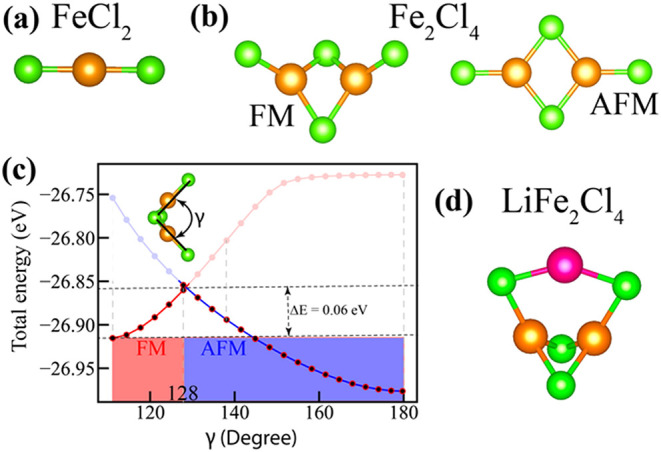 Figure 1
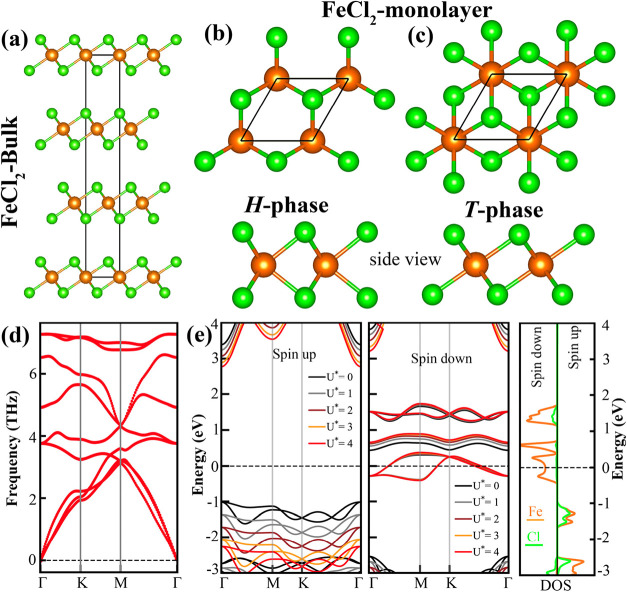 Figure 2
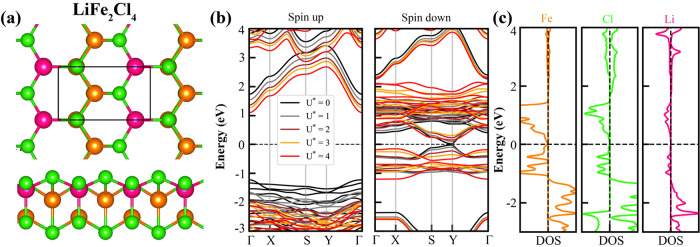 Figure 3
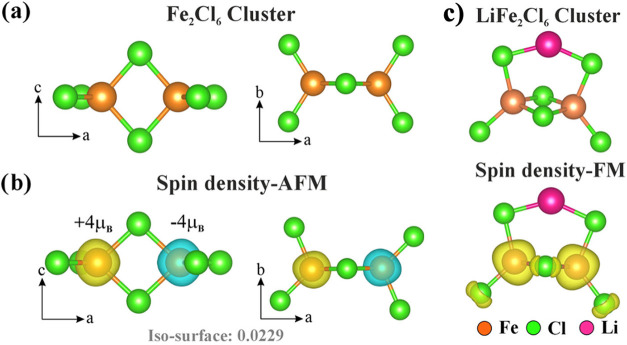 Figure 4
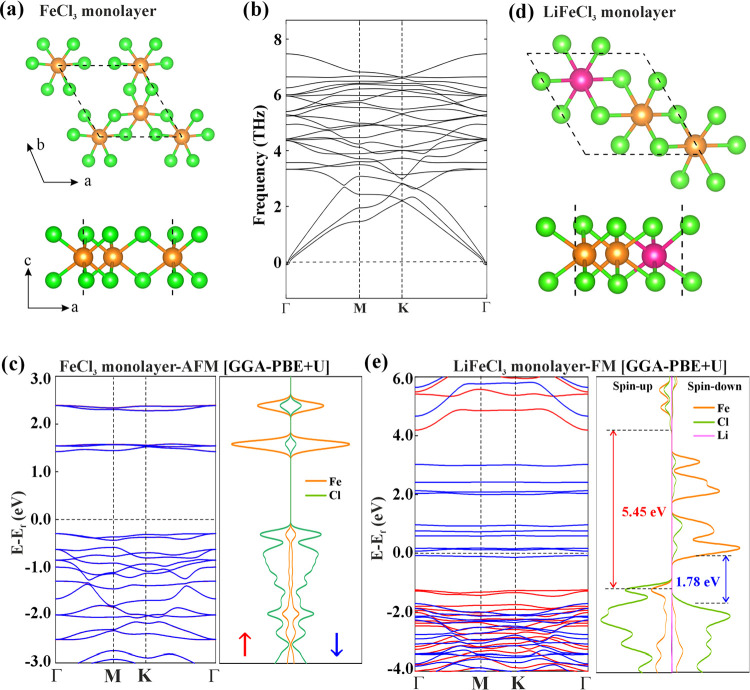 Figure 5
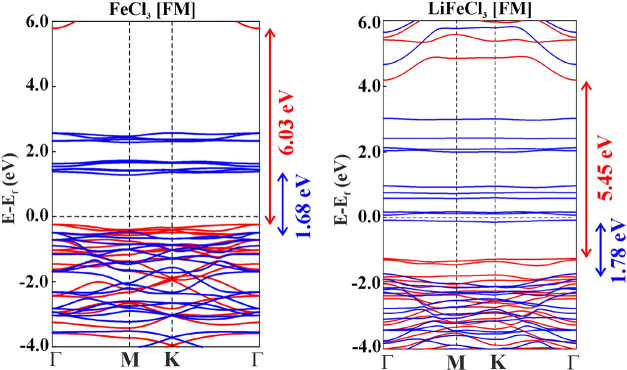 Figure 6
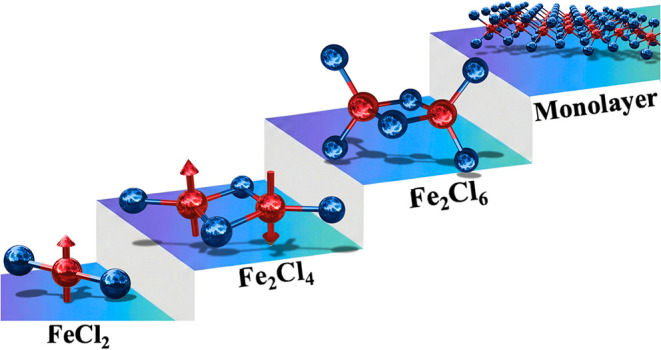 Figure 7
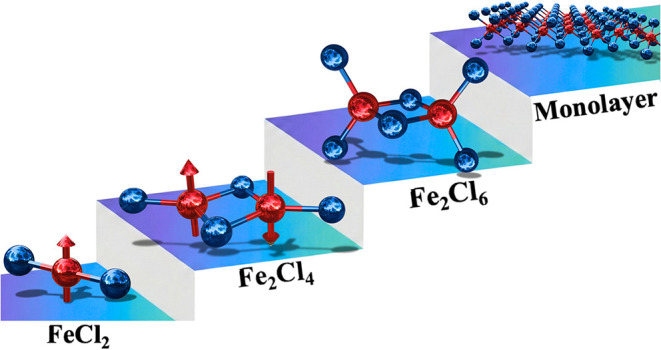 Figure 8
 Figure 9
Peer Reviews
No public reviews on file for this paper yet. If you reviewed it on a platform where reviews are public (OpenReview, ICLR, NeurIPS, ICML), you can paste yours below so the community can read it here.
Videos
No videos yet. Explain this paper in a talk, walkthrough, or lecture? Add one.
Taxonomy
TopicsInorganic Fluorides and Related Compounds · Magnetism in coordination complexes · Ammonia Synthesis and Nitrogen Reduction