The long-term revision risk of RSA-tested and non-RSA-tested TKA implants in The Netherlands: a Dutch arthroplasty register study
Thies J N VAN DER LELIJ, Bart G PIJLS, Bart L KAPTEIN, Liza N VAN STEENBERGEN, Rob G H H NELISSEN, Perla J MARANG-VAN DE MHEEN

TL;DR
This study compares the long-term risk of needing to replace knee implants that were tested with a specific imaging technique (RSA) versus those that were not, using data from thousands of surgeries in the Netherlands.
Contribution
The study provides new evidence on the long-term revision risk of RSA-tested versus non-RSA-tested TKA implants in a large national registry.
Findings
RSA-tested TKAs had a slightly lower 5-year all-cause revision risk but a higher 10-year all-cause revision risk compared to non-RSA-tested TKAs.
RSA-tested TKAs showed a higher 10-year revision risk due to loosening compared to non-RSA-tested TKAs.
Results remained consistent after adjusting for patient characteristics and stricter implant classifications.
Abstract
Radiostereometric analysis (RSA) of total knee arthroplasty (TKA) is used as an early safeguard during the phased evidence-based introduction of new implants. The goal of our study was to compare the long-term revision risk between RSA-tested implants and non-RSA-tested implants in the Netherlands using patient-level data. All primary TKAs between 2007 and 2016 from the Dutch Arthroplasty Register were included, and procedures with an RSA-tested implant were identified. Both all-cause major revision risk and revision risk because of loosening were calculated at 5 and 10 years postoperatively using Kaplan–Meier analyses. Sensitivity analyses were performed with stricter definitions of implant characteristics to classify procedures as RSA-tested, to avoid camouflage of different subdesigns within the same brand implant portfolio. 83,638 RSA-tested and 104,105 non-RSA-tested TKAs were…
Genes, proteins, chemicals, diseases, species, mutations and cell lines named across the full text — each resolved to its canonical identifier and authoritative record.
Click any figure to enlarge with its caption.
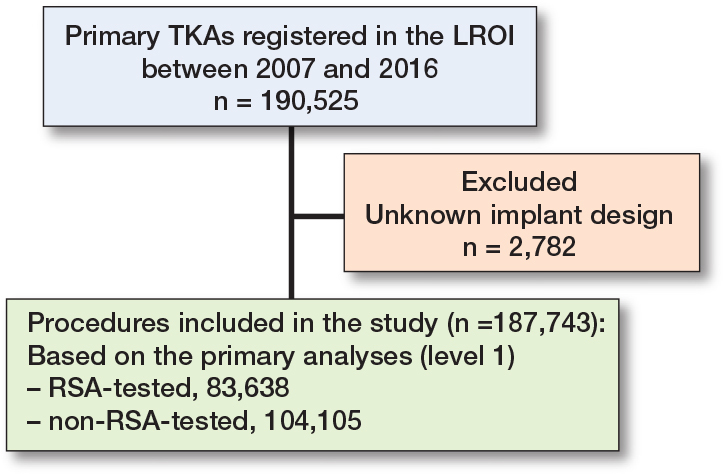 Figure 1
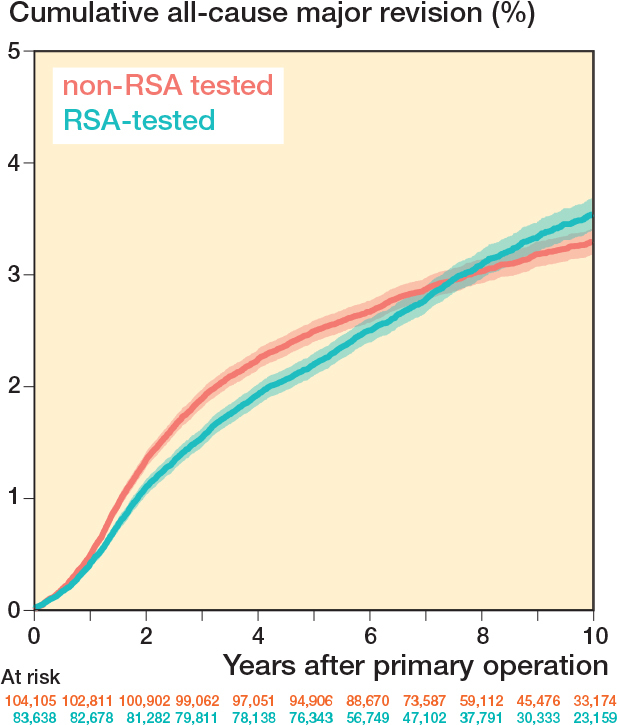 Figure 2
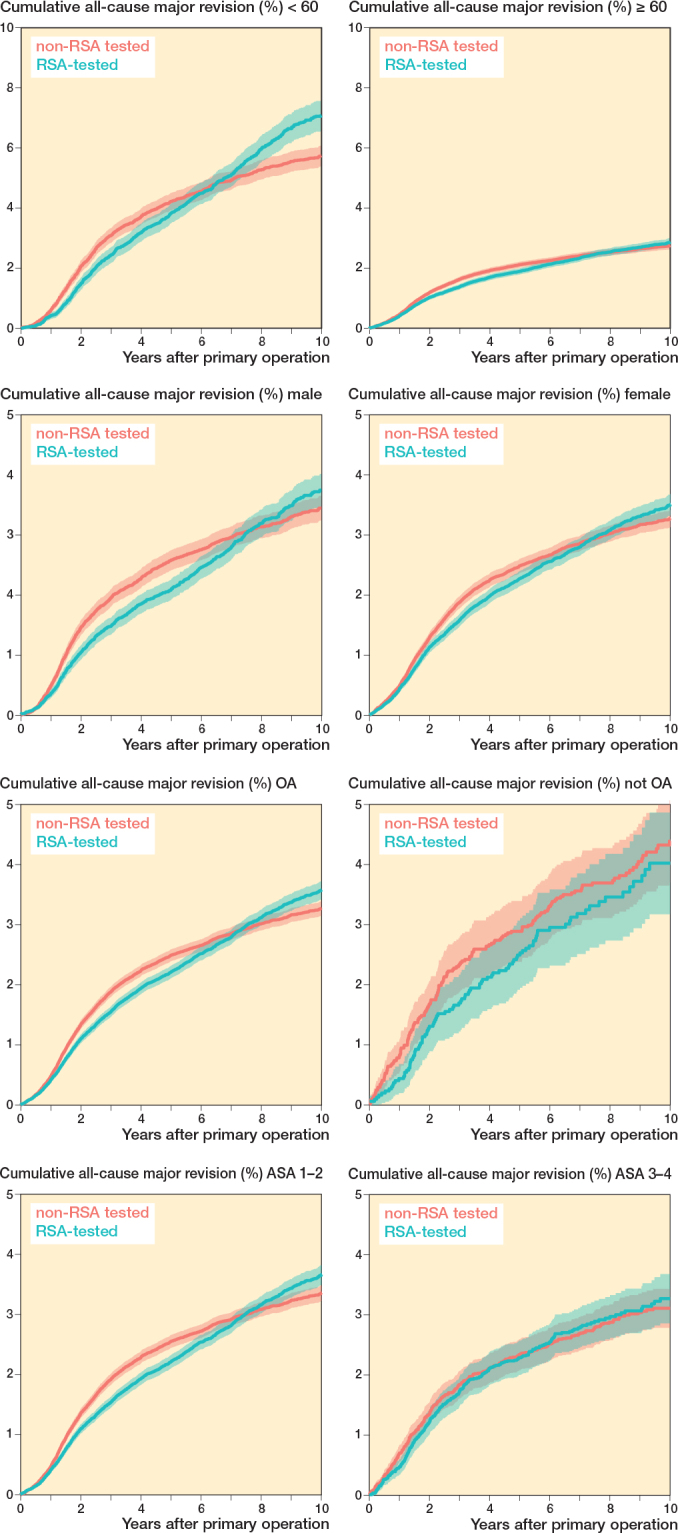 Figure 3
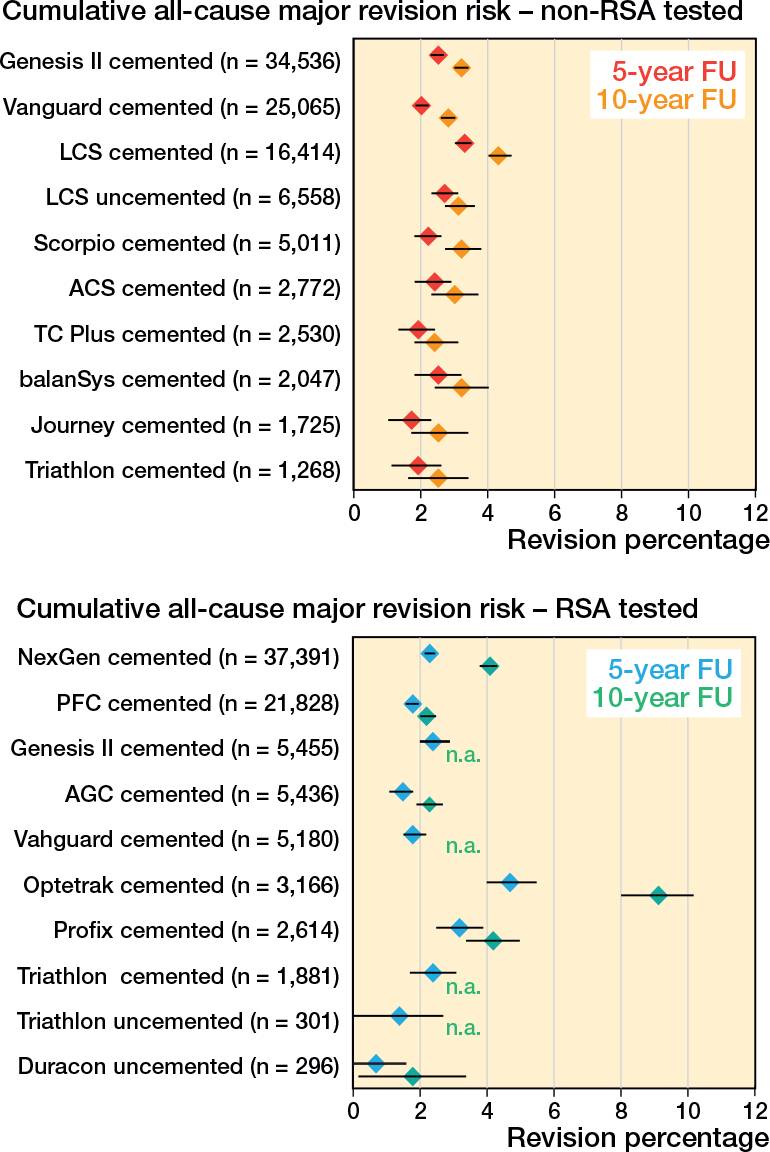 Figure 4
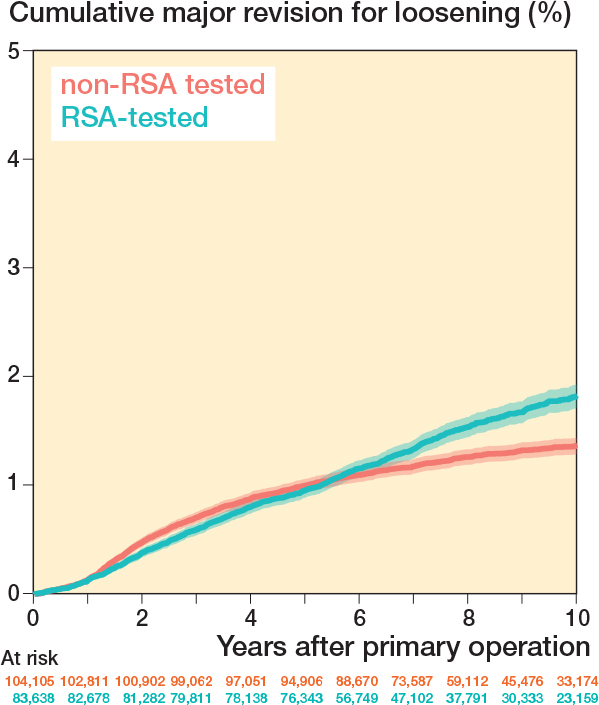 Figure 5
Peer Reviews
No public reviews on file for this paper yet. If you reviewed it on a platform where reviews are public (OpenReview, ICLR, NeurIPS, ICML), you can paste yours below so the community can read it here.
Videos
No videos yet. Explain this paper in a talk, walkthrough, or lecture? Add one.
Taxonomy
TopicsTotal Knee Arthroplasty Outcomes · Orthopaedic implants and arthroplasty · Orthopedic Infections and Treatments