Evidence for Photoinduced Polaron Generation in a High Persistence Length Low Bandgap Conjugated Polymer in Solution
Mohammed Azzouzi, Elham Rezasoltani, Matthew J. Bird, Jack F. Coker, Jarvist M. Frost, Garrett S. LeCroy, Anthony W. Parker, Igor V. Sazanovich, Gregory M. Greetham, Michael Towrie, Alise Virbule, Michelle S. Vezie, Despoina Heracleous, Hugo Bronstein, Alberto Salleo

TL;DR
The study shows that a specific polymer in solution efficiently generates polarons when exposed to light, with detailed insights into the process.
Contribution
Demonstrates efficient photoinduced polaron generation in a conjugated polymer with a high persistence length and low bandgap.
Findings
Polaron pairs form within 10 ps and decay over 4 ns after band gap excitation.
A three-state kinetic model explains the dynamic equilibrium between polarons and excitons.
Polaron-generation efficiency exceeds 50%, with dissociation and reformation occurring on picosecond time scales.
Abstract
Using ultrafast time-resolved infrared (TRIR) spectroscopy, we studied the solution-phase excited-state structural evolution of an indacenodithiophene-co-benzothiadiazole polymer (C8-IDTBT). Following band gap excitation, the TRIR spectra reveal vibrational features that develop within 10 ps and decay over 4 ns. Using pulse radiolysis measurements, charge-modulation spectroscopy, and quantum-chemical calculations, the IR features are assigned to polaron pairs. Interestingly, these features appear on an evolving broad mid-IR electronic absorption background, with kinetics correlating with the formation and decay of the cation-radical vibrational bands. A three-state kinetic model successfully reproduces the spectral evolution, revealing that the polaron and exciton populations exist in dynamic equilibrium on picosecond time scales, with time constants for exciton dissociation in the…
Genes, proteins, chemicals, diseases, species, mutations and cell lines named across the full text — each resolved to its canonical identifier and authoritative record.
Click any figure to enlarge with its caption.
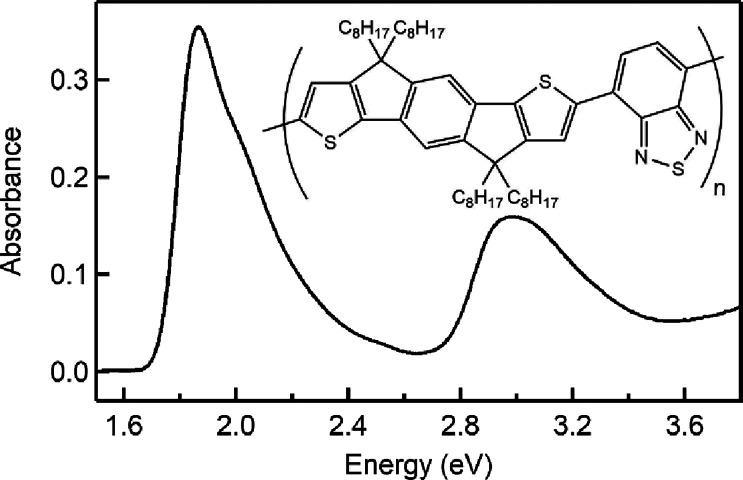 Figure 1
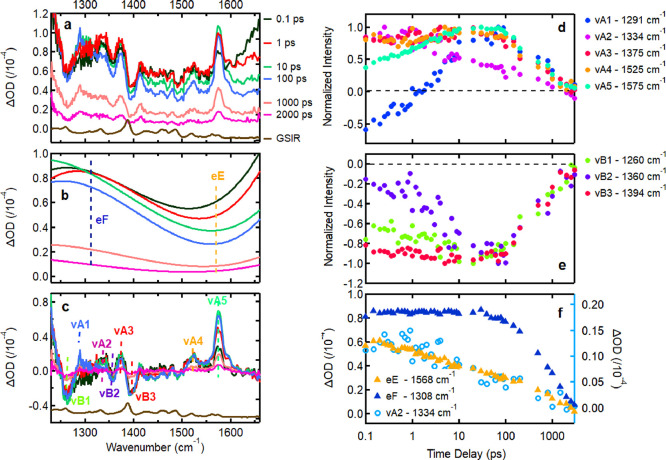 Figure 2
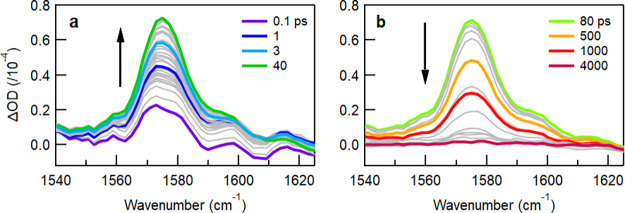 Figure 3
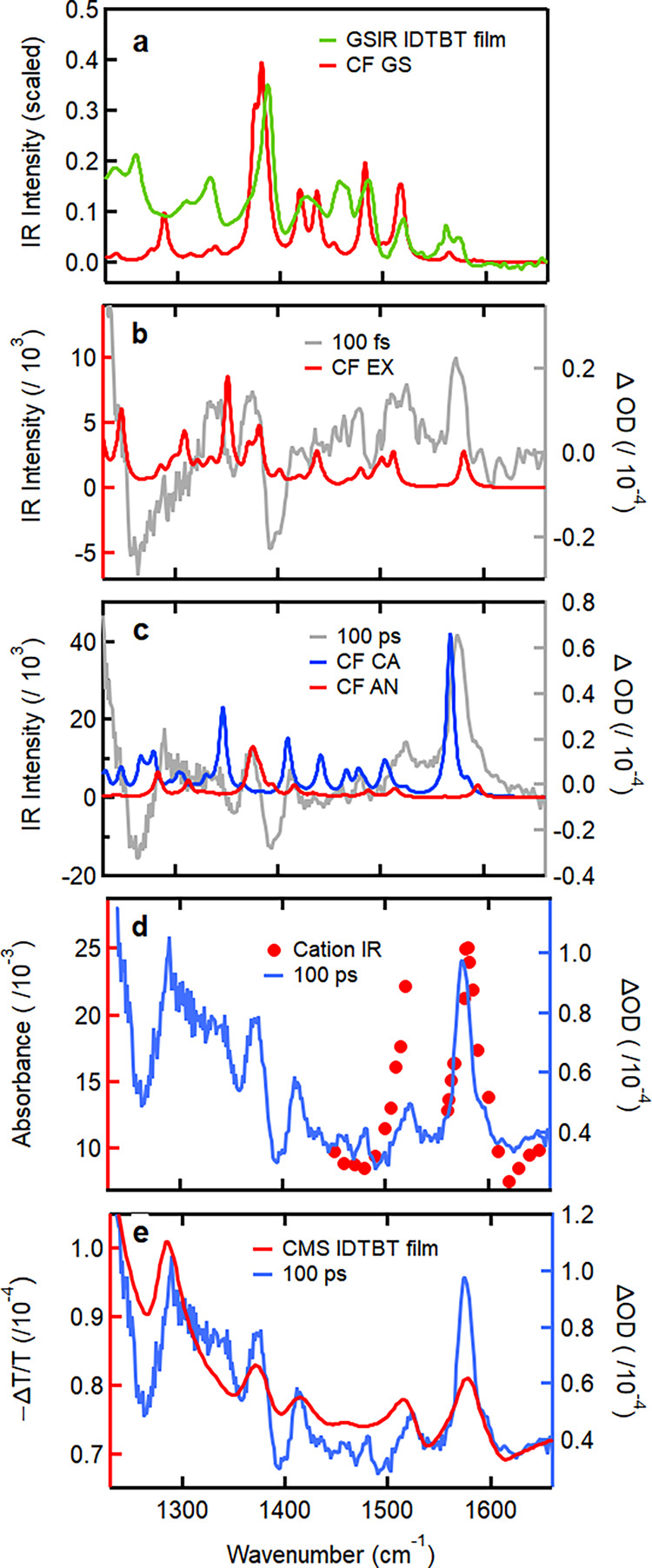 Figure 4
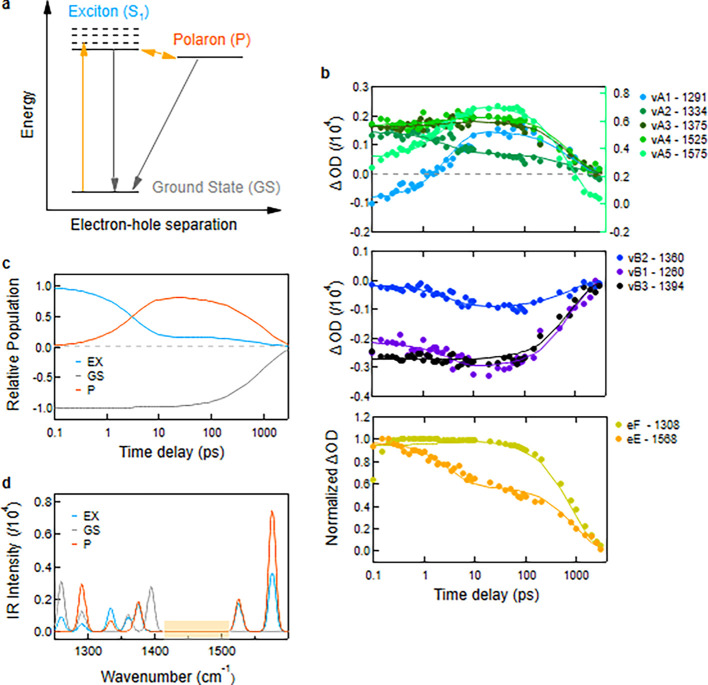 Figure 5
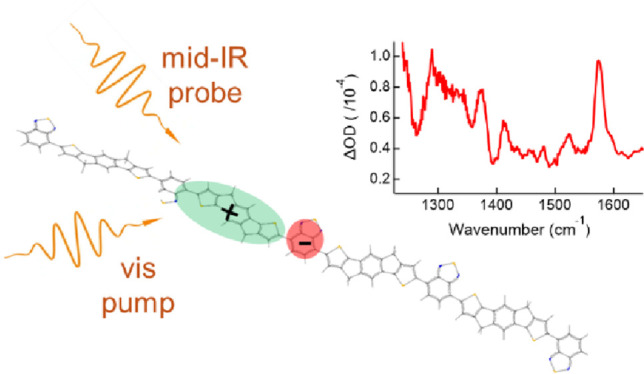 Figure 6
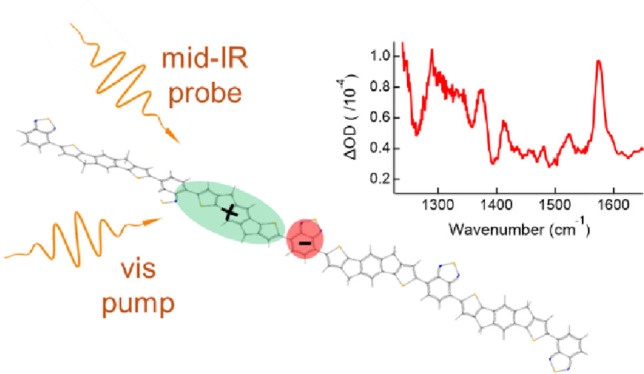 Figure 7
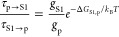 Figure 8
Peer Reviews
No public reviews on file for this paper yet. If you reviewed it on a platform where reviews are public (OpenReview, ICLR, NeurIPS, ICML), you can paste yours below so the community can read it here.
Videos
No videos yet. Explain this paper in a talk, walkthrough, or lecture? Add one.
Taxonomy
TopicsOrganic Electronics and Photovoltaics · Nonlinear Optical Materials Research · Conducting polymers and applications