Electrodeficient Diborane (4) Converted into an Extraordinary Proton Sponge
Manuel Yáñez, M. Merced Montero-Campillo, Otilia Mó, Ibon Alkorta

TL;DR
Diborane(4) becomes an extremely strong proton acceptor when combined with nitrogen bases, surpassing known proton sponges in basicity.
Contribution
The study reveals that diborane(4) complexes with nitrogen bases exhibit unprecedented proton affinity, making them extraordinary proton sponges.
Findings
Diborane(4) complexes with nitrogen bases show proton affinities exceeding 1000 kJ·mol–1.
The B2H4–1,2,5-trimethylimidazole complex is 34 kJ·mol–1 more basic than the proton sponge.
The boron site in the complex is more basic than nitrogen in terms of enthalpy.
Abstract
High-level G4 calculations show that the interaction of diborane(4) (B2H4) with nitrogen bases not only stabilizes the C 2v isomer with respect to the D 2d one, but more importantly retains and enhances the distinctive reactivity of the C 2v isomer. The formation of the complex results in a large enhancement of the donor ability of the diborane subunit. As a first consequence, the boron site is by far more basic than nitrogen in terms of enthalpy, leading to protonated complexes that can be viewed as the association of the different bases to the B2H5 + cation. Further analysis of the electron density redistribution upon complexation helps to rationalize the key factors behind the drastic basicity enhancement observed. The basicity of the B2H4–pyridine complex falls within the range of gas-phase superbases, with a calculated proton affinity (PA) exceeding 1000 kJ·mol–1. Moreover,…
Genes, proteins, chemicals, diseases, species, mutations and cell lines named across the full text — each resolved to its canonical identifier and authoritative record.
Click any figure to enlarge with its caption.
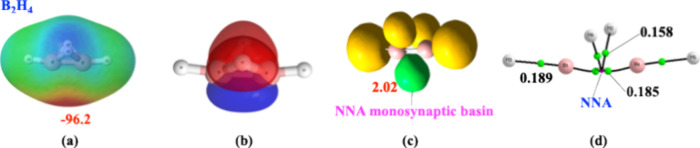 Figure 1
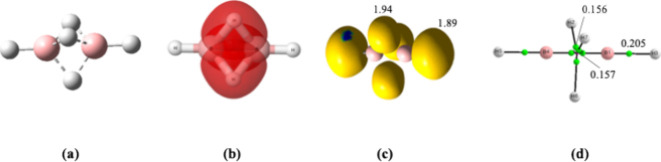 Figure 2
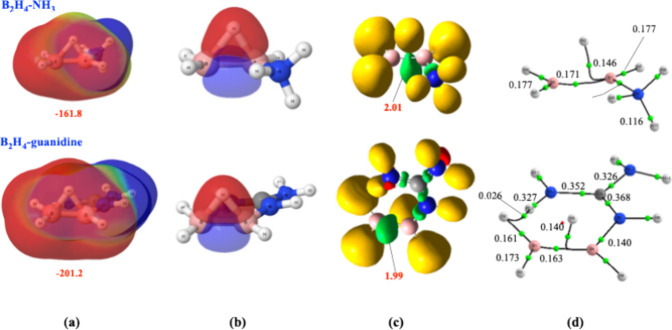 Figure 3
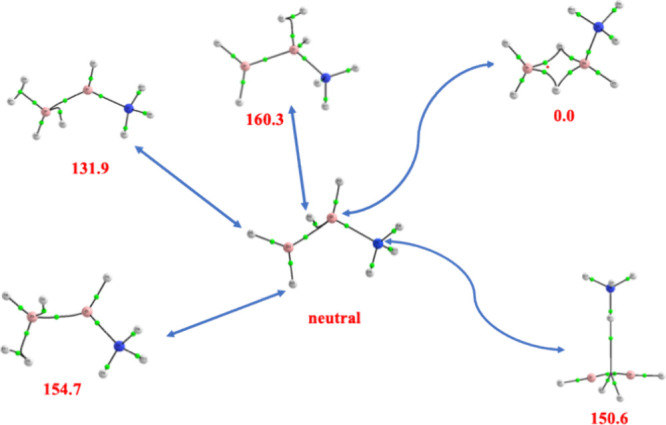 Figure 4
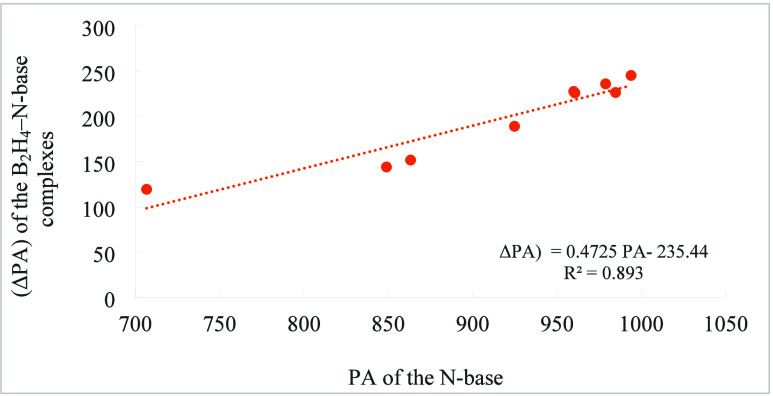 Figure 5
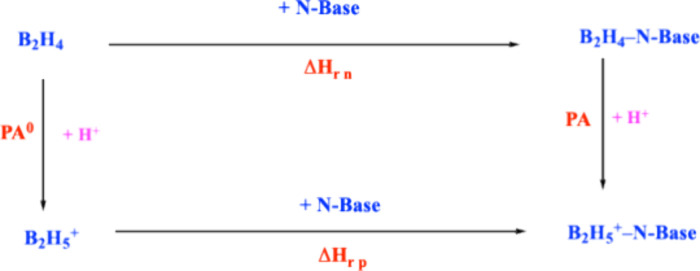 Figure 6
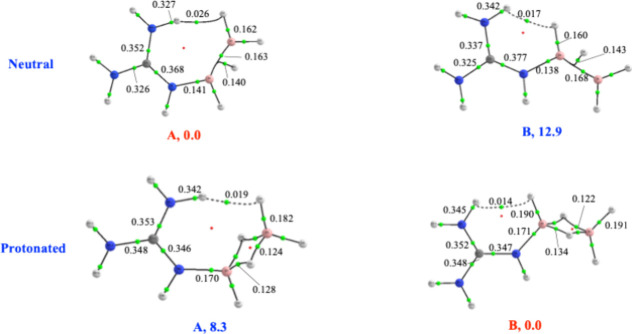 Figure 7
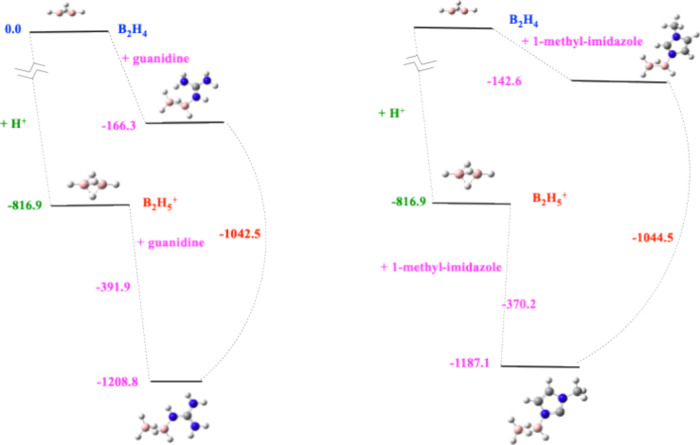 Figure 8
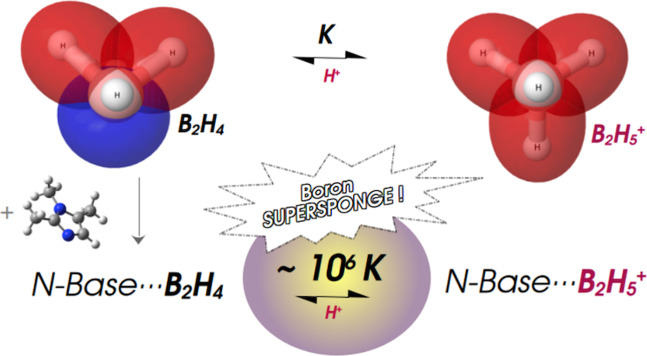 Figure 9
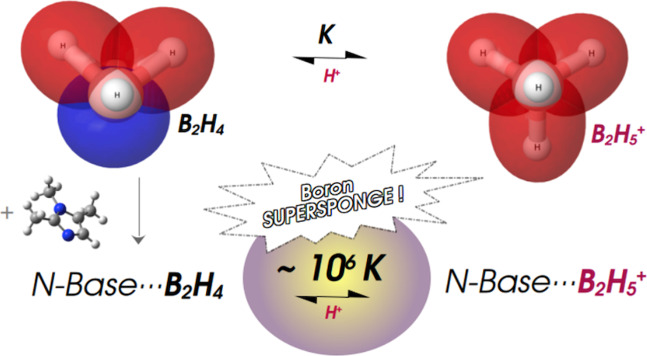 Figure 10
 Figure 11
 Figure 12
 Figure 13
 Figure 14
Peer Reviews
No public reviews on file for this paper yet. If you reviewed it on a platform where reviews are public (OpenReview, ICLR, NeurIPS, ICML), you can paste yours below so the community can read it here.
Videos
No videos yet. Explain this paper in a talk, walkthrough, or lecture? Add one.
Taxonomy
TopicsOrganoboron and organosilicon chemistry · Boron Compounds in Chemistry · Radical Photochemical Reactions