Scale‐up of a monoclonal antibody CHO fed‐batch production in stirred tank bioreactors: Effect of hydrodynamic conditions and feeding regimen
Lucas Lemire, Sebastian‐Juan Reyes, Yves Durocher, Robert Voyer, Olivier Henry, Phuong Lan Pham

TL;DR
This study explores how adjusting feeding and bioreactor conditions can improve monoclonal antibody production in cell cultures.
Contribution
The study introduces a low-volume feeding regimen and optimal aeration that enhance cell viability and antibody titer during scale-up.
Findings
A low-volume feeding regimen increased volumetric titer by 33% compared to high-volume feeding.
An optimum airflow rate of 0.0031 vvm improved cell growth and final titer.
Maintaining constant volume through feed removal improved product titers after induction.
Abstract
Key hydrodynamic‐related parameters such as volumetric power input (P/V), impeller configuration, aeration strategy, and maximum gas sparge rate, as well as an appropriate feeding strategy, must be carefully selected to improve production yields in bioreactor. In this study, the feeding regimen was found to have an important impact on cell growth and productivity of a cumate‐inducible CHO fed‐batch cell culture. A low‐volume feeding regimen avoided a rapid increase in osmolality, allowing for prolonged cell viability and a 33% increase in volumetric titer compared to the high‐volume feeding regimen. Both sparged air and oxygen were used for dissolved oxygen (DO) control, utilizing three levels of airflow rates. An optimum airflow rate of 0.0031 vvm was found to improve cell growth, longevity, and thus final titer. A larger air cap required increased gas flow rates, which led to an…
Genes, proteins, chemicals, diseases, species, mutations and cell lines named across the full text — each resolved to its canonical identifier and authoritative record.
Click any figure to enlarge with its caption.
 Figure 1
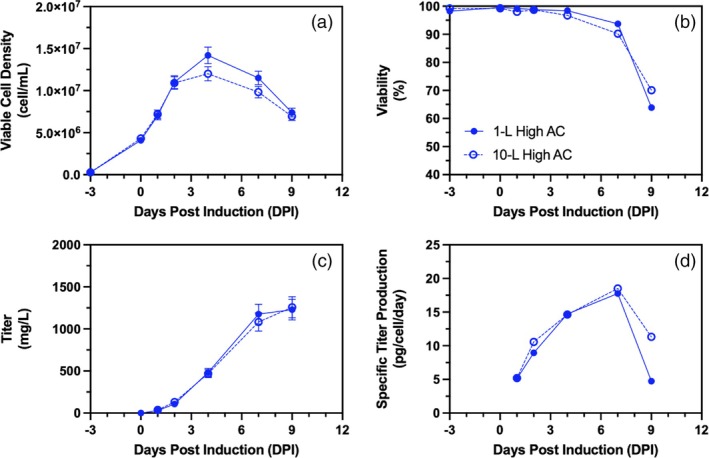 Figure 2
 Figure 3
 Figure 4
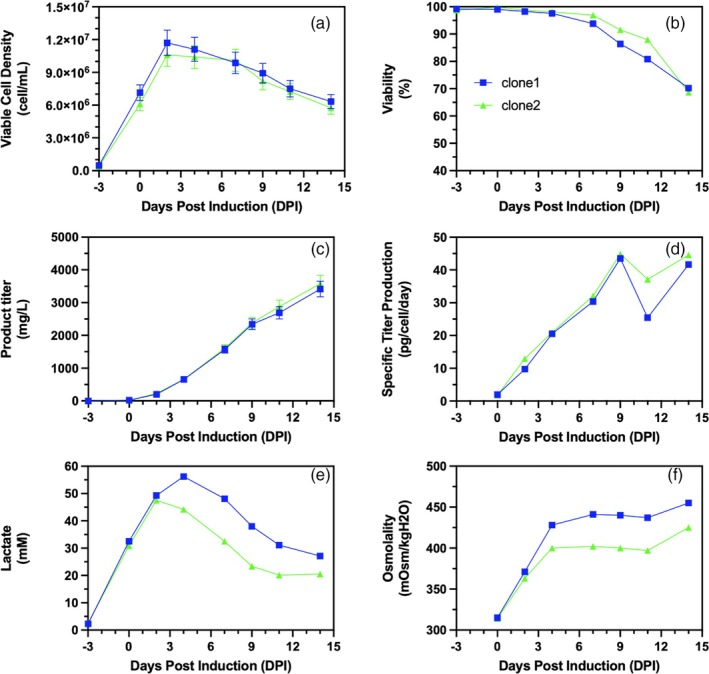 Figure 5
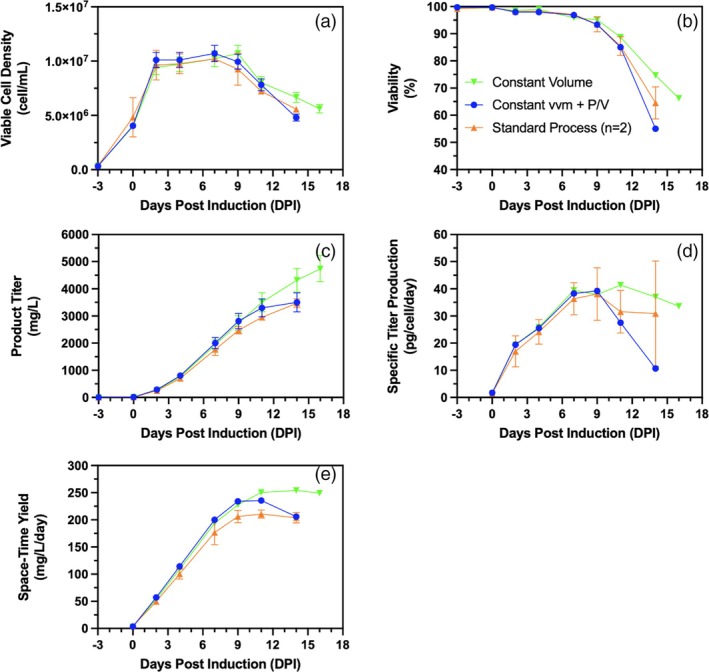 Figure 6
 Figure 7
 Figure 8
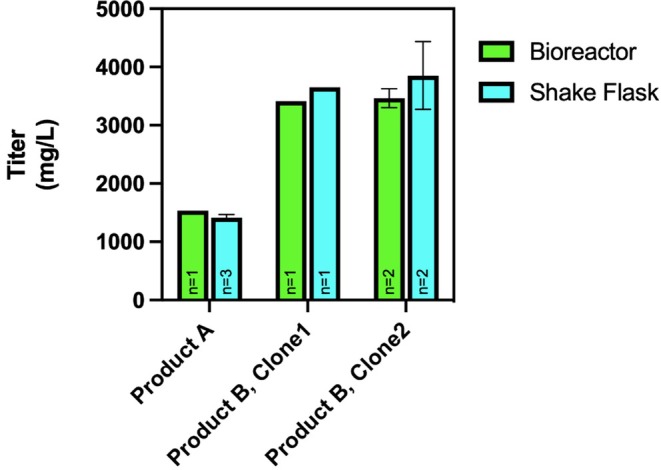 Figure 9
 Figure 10
 Figure 11
 Figure 12
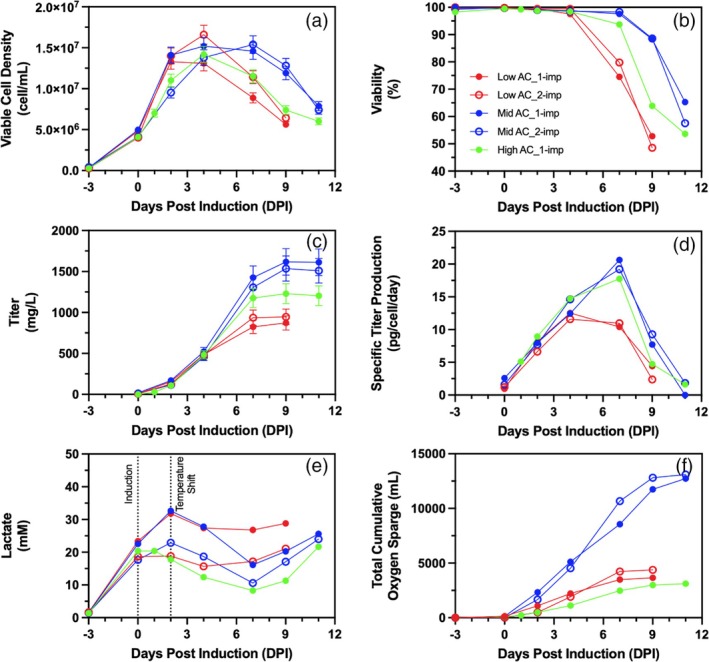 Figure 13
 Figure 14
 Figure 15
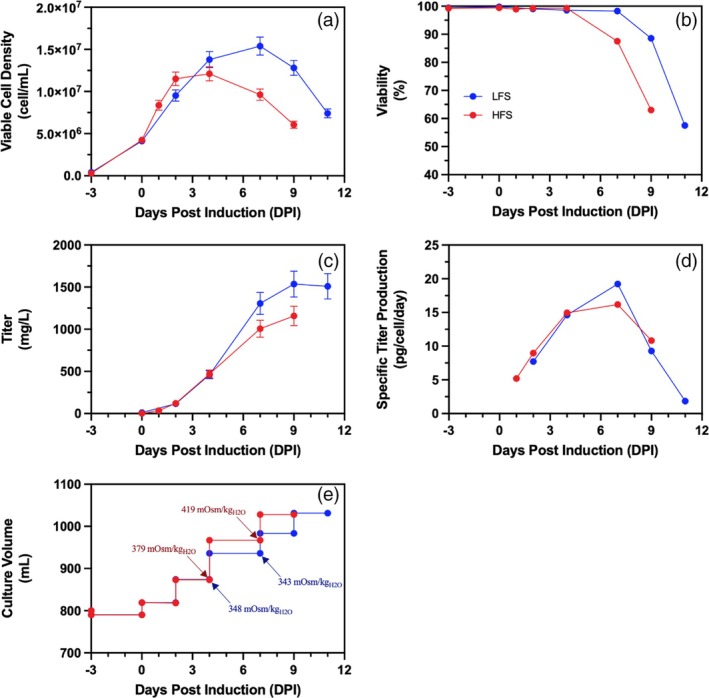 Figure 16
Peer Reviews
No public reviews on file for this paper yet. If you reviewed it on a platform where reviews are public (OpenReview, ICLR, NeurIPS, ICML), you can paste yours below so the community can read it here.
Videos
No videos yet. Explain this paper in a talk, walkthrough, or lecture? Add one.
Taxonomy
TopicsViral Infectious Diseases and Gene Expression in Insects · Innovative Microfluidic and Catalytic Techniques Innovation · 3D Printing in Biomedical Research