Myophosphorylase Knock Out Prevents the Exaggerated Exercise Pressor Reflex in Rats With Simulated Peripheral Artery Disease
Guillaume P. Ducrocq, Laura Anselmi, Victor Ruiz‐Velasco, Marc P. Kaufman

TL;DR
This study shows that lactate and hydrogen ions are key in causing exaggerated blood pressure responses during exercise in rats with simulated peripheral artery disease.
Contribution
The study demonstrates that myophosphorylase knockout prevents the exaggerated metabolic exercise pressor reflex in a rat model of PAD.
Findings
In wild-type rats, ischemia increased pressor responses to contraction and acid injection by 88% and 22%, respectively.
Myophosphorylase knockout rats showed no exaggerated pressor responses after femoral artery ligation.
Ischemia exacerbated pressor responses to passive stretch in both groups, indicating a mechanical component.
Abstract
Controversy exists on which metabolites determine the exaggerated exercise pressor reflex (EPR) in peripheral artery disease (PAD). In decerebrated rats, we investigated the role played by lactate and hydrogen ions in a model of PAD, which was simulated by ligating the femoral artery for 72 h before the start of the experiment. Production of lactate and hydrogen ions by the contracting hindlimb muscles was manipulated by knocking out the myophosphorylase gene (pygm). In both knockout (pygm−/−; n = 13; 6‐females) and wild‐type rats (pygm+/+; n = 14; 7‐females), the EPR was evoked by statically contracting the triceps‐surae muscles. Blood pressure, tension, and renal sympathetic nerve activity were measured. Responsiveness of the metabolic component of the EPR was evaluated by intra‐arterial injections of lactic acid and diprotonated phosphate solutions. Responsiveness of the mechanical…
Genes, proteins, chemicals, diseases, species, mutations and cell lines named across the full text — each resolved to its canonical identifier and authoritative record.
Click any figure to enlarge with its caption.
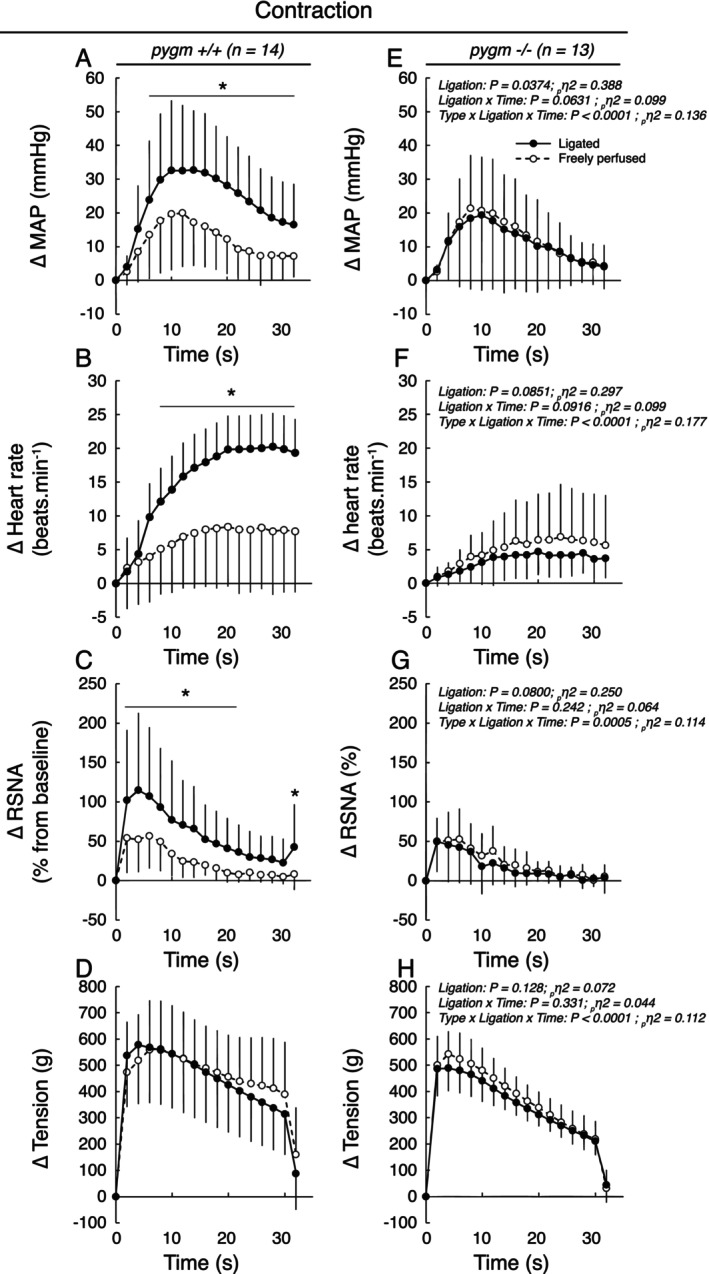 Figure 1
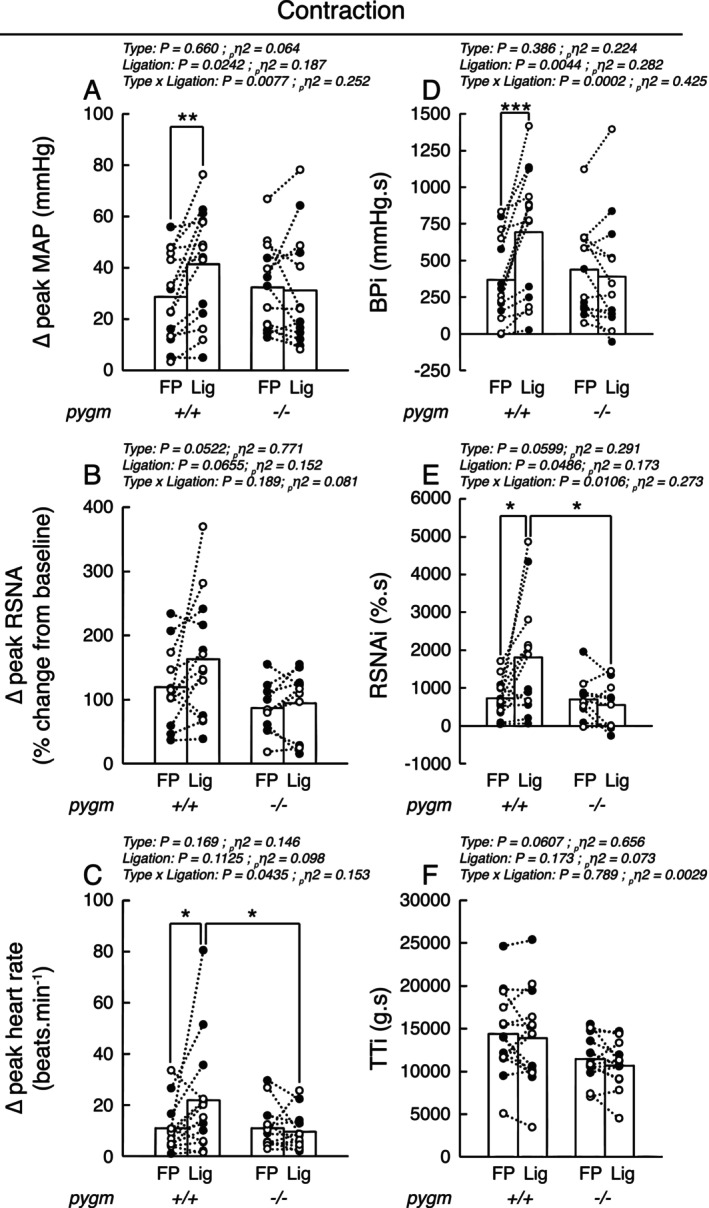 Figure 2
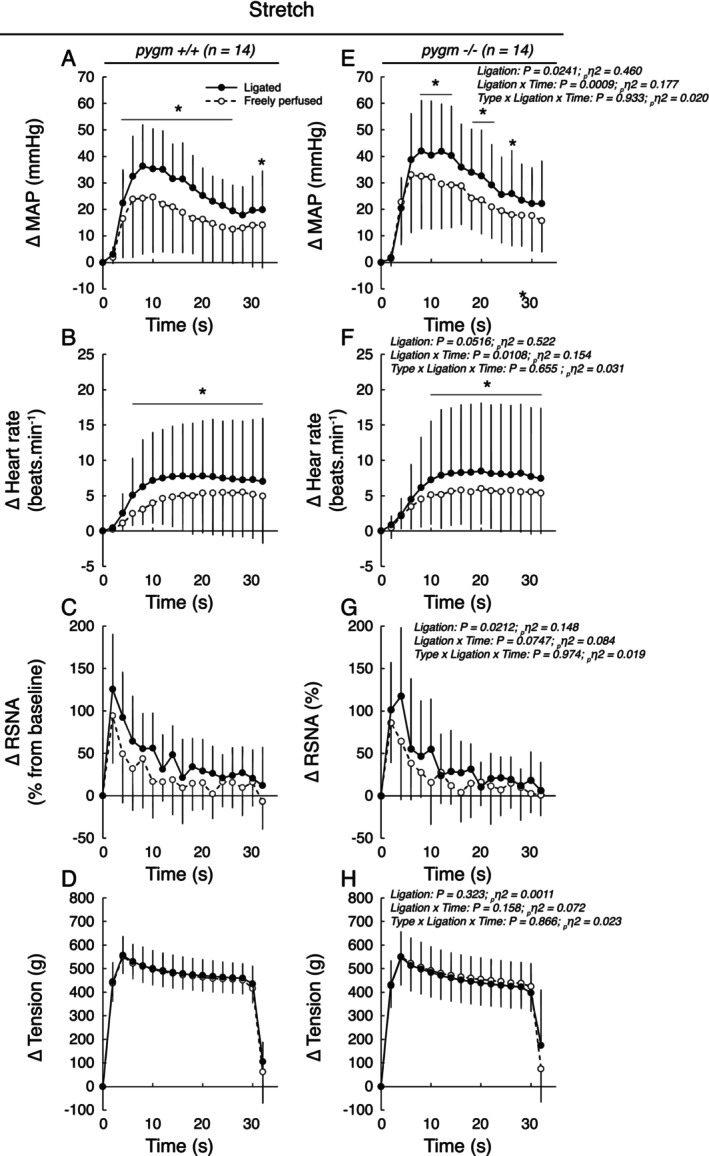 Figure 3
 Figure 4
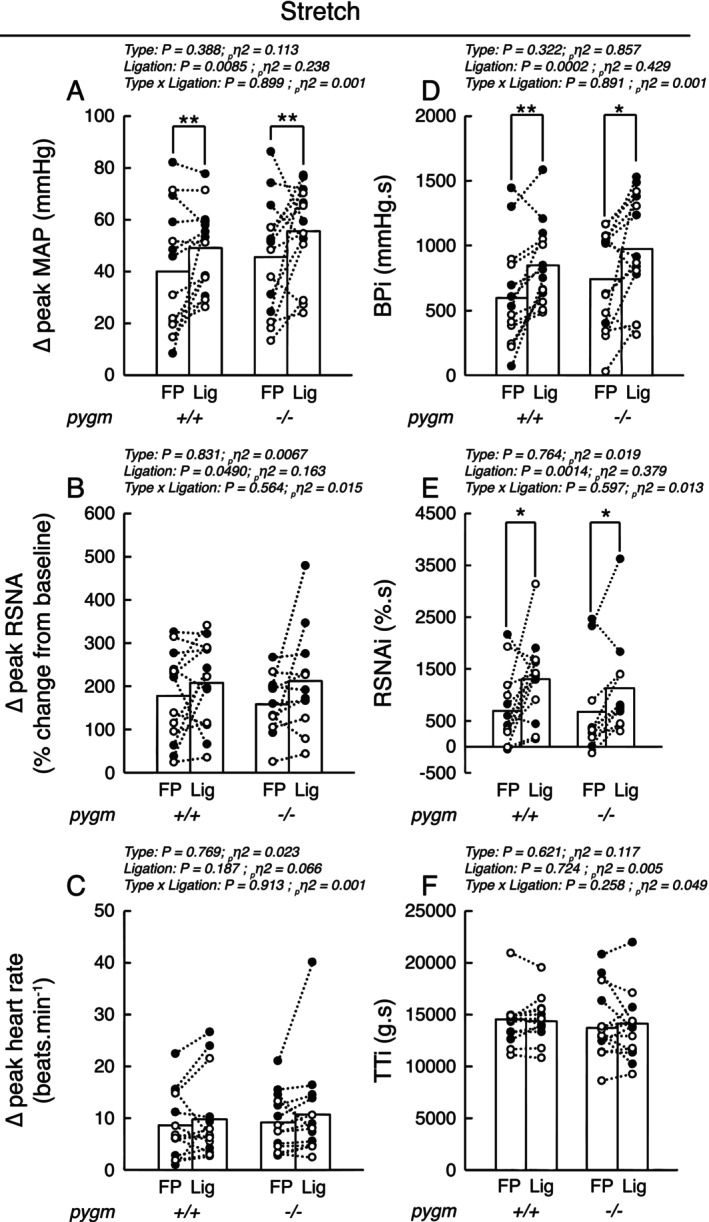 Figure 5
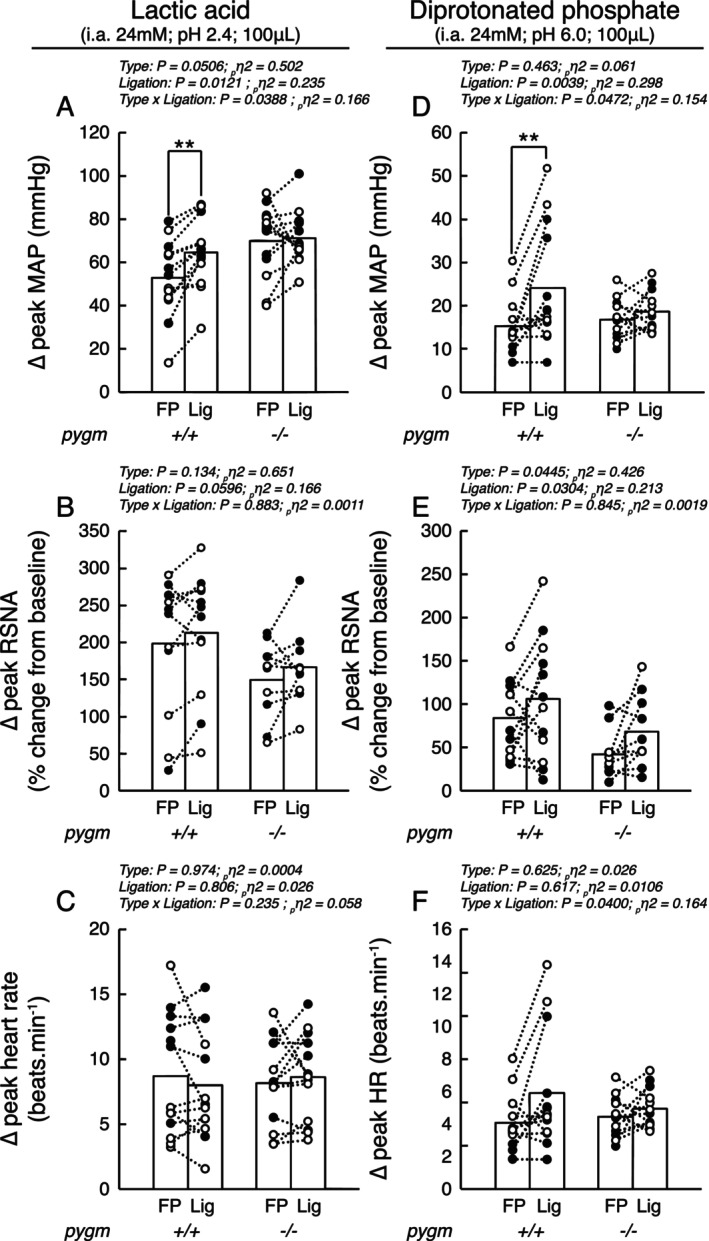 Figure 6
Peer Reviews
No public reviews on file for this paper yet. If you reviewed it on a platform where reviews are public (OpenReview, ICLR, NeurIPS, ICML), you can paste yours below so the community can read it here.
Videos
No videos yet. Explain this paper in a talk, walkthrough, or lecture? Add one.
Taxonomy
TopicsHeart Rate Variability and Autonomic Control · Transcranial Magnetic Stimulation Studies · Cardiovascular and exercise physiology