Acute coronary occlusion among cancelled STEMI alerts: a prospective study in a telemedicine-guided network
Blanca Herrera, David García, Anna Cufí, Aida Feu, Simon Tapia, Carmen Martín, Victor Agudelo, Pablo Loma-Osorio, Rafel Ramos, Ramon Brugada, Jaime Aboal

TL;DR
This study examines how often acute heart blockages are missed when STEMI alerts are canceled, finding that while rare, these cases have higher risk factors and subtle ECG signs.
Contribution
The study identifies the frequency and characteristics of acute coronary occlusions missed after STEMI alert cancellations in a telemedicine network.
Findings
Missed acute coronary occlusions occurred in 4.2% of canceled STEMI alerts.
Patients with missed occlusions had higher rates of hypertension, diabetes, and prior heart surgery.
ECG findings in missed cases were often subtle or non-classical.
Abstract
ST-segment elevation myocardial infarction (STEMI) networks often face false-positive activations, leading to unnecessary catheterization laboratory use. To optimize resource allocation, STEMI alerts are sometimes cancelled after telematics evaluation; however, this strategy may result in missed cases of acute coronary occlusion (ACO) requiring urgent revascularization. This prospective, single-centre study included patients with initially activated but subsequently cancelled STEMI alerts via the ODISEA digital platform between January 2022 and December 2024. Based on coronary angiography, patients were classified as having ACO (TIMI 0–1 flow with thrombotic appearance) or no occlusion. Baseline characteristics, electrocardiogram (ECG) findings, angiographic data, and in-hospital mortality were compared. Of 2259 STEMI activations, 665 alerts (29.4%) were cancelled following a telematic…
Genes, proteins, chemicals, diseases, species, mutations and cell lines named across the full text — each resolved to its canonical identifier and authoritative record.
Click any figure to enlarge with its caption.
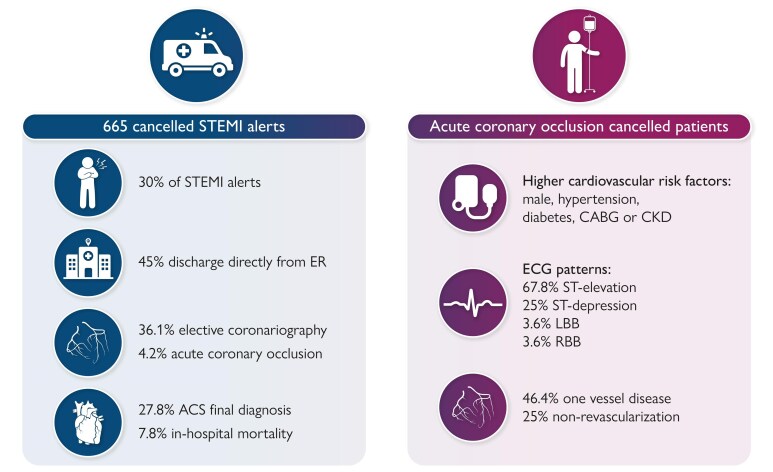 Figure 1
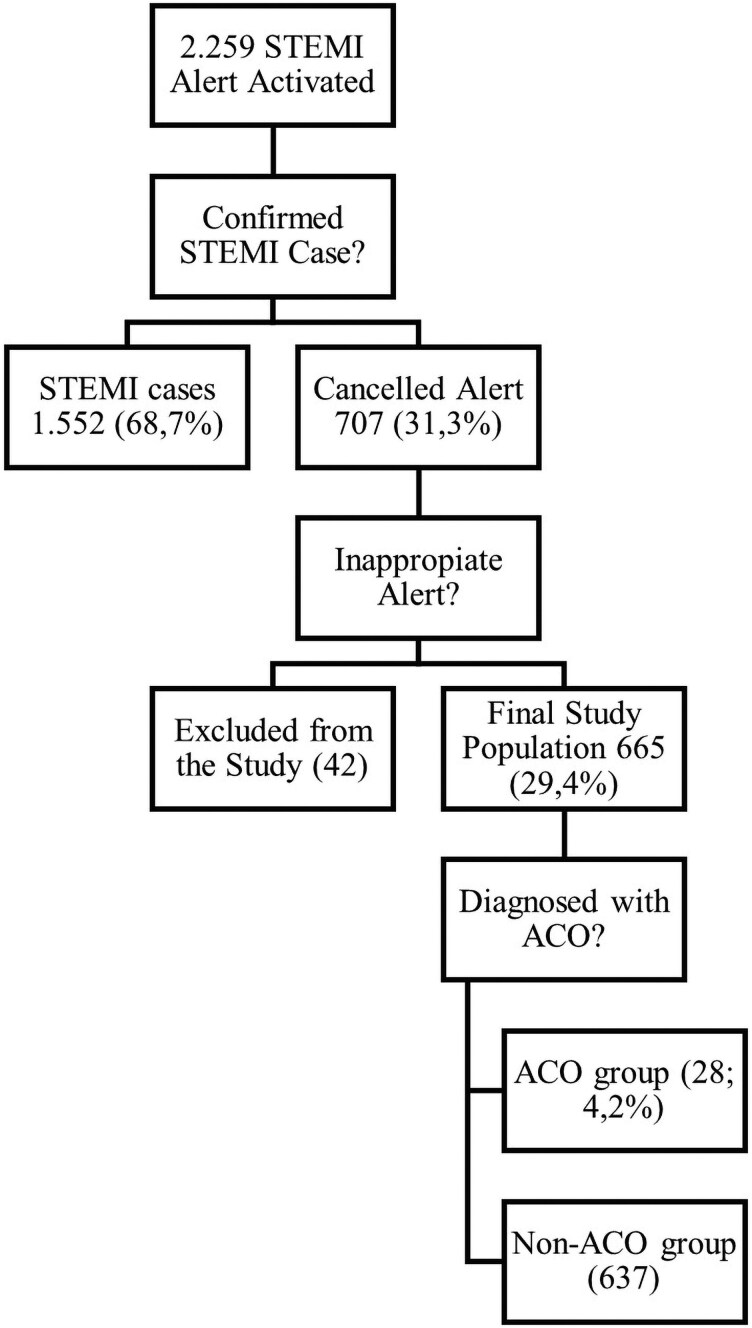 Figure 2
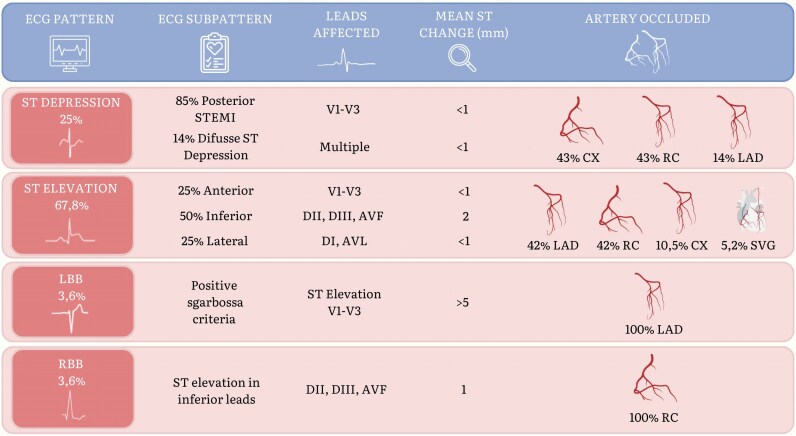 Figure 3
Peer Reviews
No public reviews on file for this paper yet. If you reviewed it on a platform where reviews are public (OpenReview, ICLR, NeurIPS, ICML), you can paste yours below so the community can read it here.
Videos
No videos yet. Explain this paper in a talk, walkthrough, or lecture? Add one.
Taxonomy
TopicsAcute Myocardial Infarction Research · Mechanical Circulatory Support Devices · Cardiac pacing and defibrillation studies