Early-stage fasting leads to long-term growth inhibition and body composition changes in turbot (Scophthalmus maximus)
Haiyan Xiong, Dixin Wang, Yuhan Fan, Yanjiao Zhang, Qiang Ma, Yuliang Wei, Mengqing Liang, Houguo Xu

TL;DR
Fasting juvenile turbot early in life causes long-term growth delays and changes in body composition, even after refeeding.
Contribution
This study shows that early fasting in turbot leads to lasting growth inhibition and body composition changes, challenging the effectiveness of compensatory growth strategies.
Findings
Early fasting for 3 to 12 days caused final growth retardation in turbot, with longer fasting leading to greater inhibition.
Fasting increased lipid and glycogen accumulation but reduced muscle protein and amino acid content after refeeding.
Transcriptome analysis revealed that 12-day fasting inhibited protein biosynthesis even after 60 days of refeeding.
Abstract
Stimulation of compensatory growth by refeeding after a period of fasting has been used as an economical strategy of growth and body composition manipulation in aquaculture practice. In this study, a total of 300 turbot juveniles, at 85 d post hatch with an initial weight of 5.53 ± 0.06 g, were randomly allocated to 15 tanks (20 fish/tank). The control group was continuously fed, while the four experimental groups were subjected to fasting for 3, 6, 9, or 12 d, respectively, followed by a 60-d refeeding. Each feeding strategy was applied to triplicate tanks. Fish were hand-fed a commercial feed (containing 54.0% protein, 8.0% lipid, and 21.6 MJ/kg gross energy) to apparent satiation. Sampling was conducted at the end of refeeding. Early fasting for 3 to 12 d resulted in final growth retardation compared to the control. This growth inhibition was closely correlated to the fasting…
Genes, proteins, chemicals, diseases, species, mutations and cell lines named across the full text — each resolved to its canonical identifier and authoritative record.
Click any figure to enlarge with its caption.
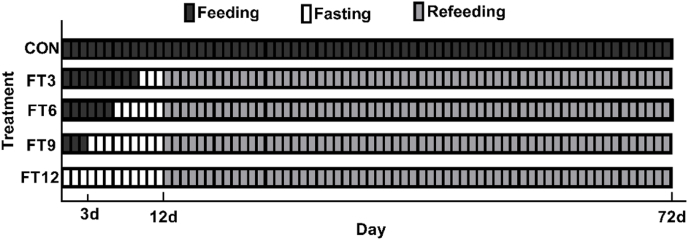 Figure 1
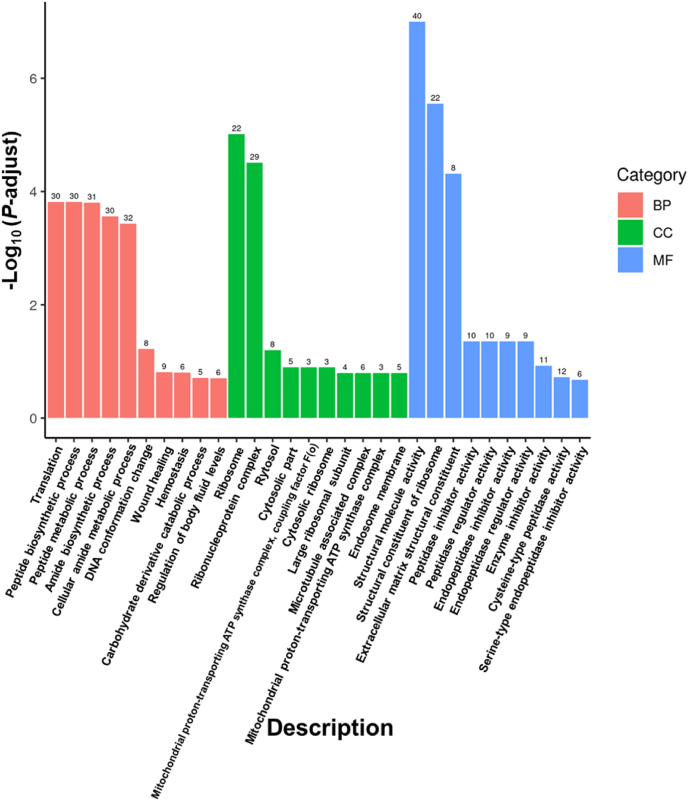 Figure 2
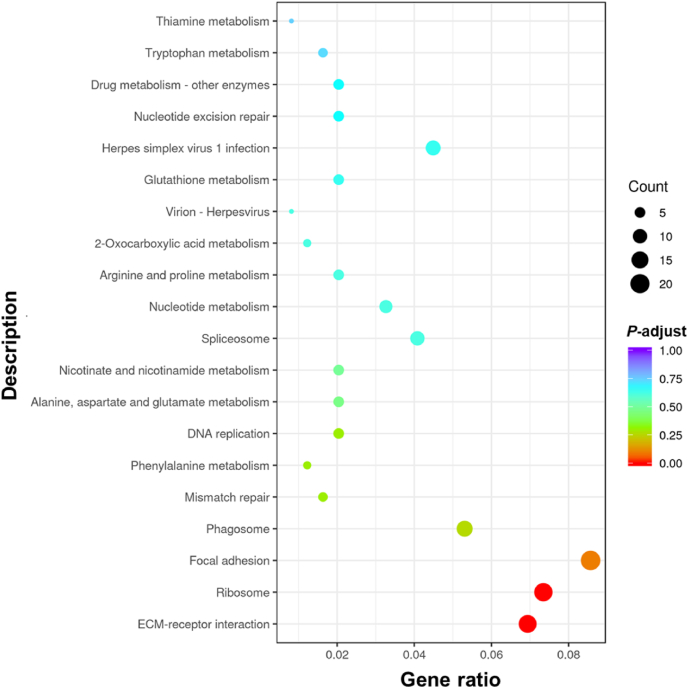 Figure 3
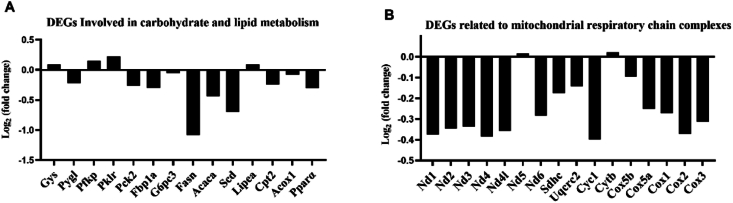 Figure 4
Peer Reviews
No public reviews on file for this paper yet. If you reviewed it on a platform where reviews are public (OpenReview, ICLR, NeurIPS, ICML), you can paste yours below so the community can read it here.
Videos
No videos yet. Explain this paper in a talk, walkthrough, or lecture? Add one.
Taxonomy
TopicsAquaculture Nutrition and Growth · Aquaculture disease management and microbiota · Reproductive biology and impacts on aquatic species