Tripterygium glycosides: recent advances in mechanisms, therapeutic applications, and safety optimization
Yujie Jin, Yongxin Cui, Zhanyan Zhang, Chenglin Huang, Ruoting Tong, Ye Ling, Qirui Pei, Yan Ma, Qixia Zhan, Xiaojian Leng, Junjun He, Lizhuo Wang, Jialin Gao

TL;DR
This review explores recent progress in understanding and improving tripterygium glycosides, natural compounds with anti-inflammatory properties used for autoimmune and inflammatory diseases.
Contribution
The paper highlights new strategies to reduce toxicity and enhance efficacy of tripterygium glycosides through structural optimization and innovative drug delivery.
Findings
Tripterygium glycosides show therapeutic potential in autoimmune and inflammatory diseases like lupus and rheumatoid arthritis.
New derivatives like LLDT-8 and triptonide reduce toxicity while maintaining efficacy.
Advanced techniques like AI-assisted drug design are accelerating the development of safer TG-based therapeutics.
Abstract
Tripterygium glycosides (TG), bioactive extracts derived from Tripterygium wilfordii Hook F., possess potent anti-inflammatory and immunomodulatory properties, making them promising therapeutic candidates for a range of autoimmune and inflammatory diseases. This review summarizes recent advances in the pharmacological mechanisms of TG, including their roles in cytokine suppression, autophagy modulation, anti-fibrotic remodeling, and oxidative stress regulation. Evidence from clinical trials and real-world studies supports the therapeutic potential of TG in conditions such as systemic lupus erythematosus, diabetic kidney disease, rheumatoid arthritis, and psoriasis. In addition, we highlight ongoing efforts to overcome TG's narrow therapeutic window through monomer isolation, structural optimization, prodrug strategies, and innovative delivery systems. Emerging derivatives—such as LLDT-8…
Genes, proteins, chemicals, diseases, species, mutations and cell lines named across the full text — each resolved to its canonical identifier and authoritative record.
Click any figure to enlarge with its caption.
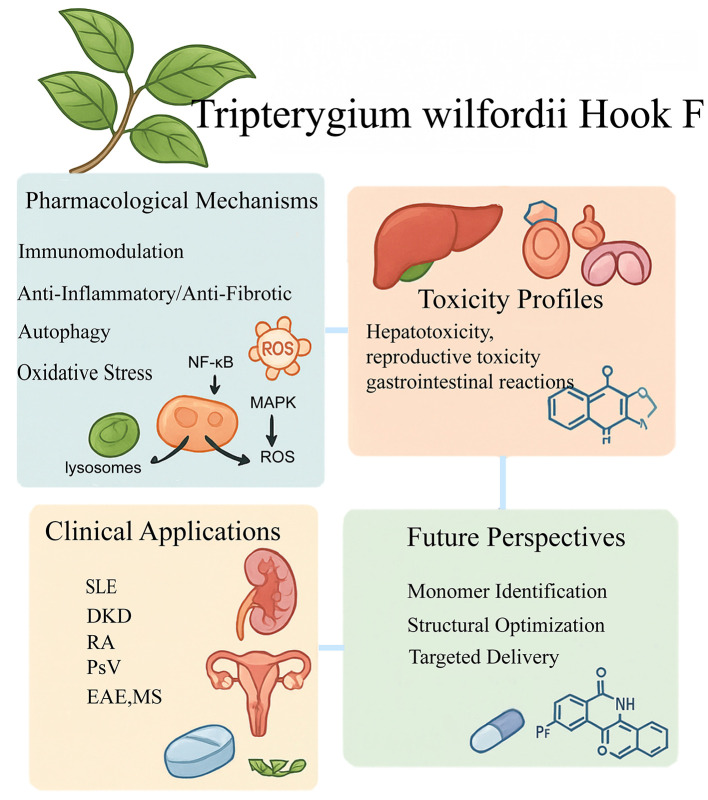 Figure 1
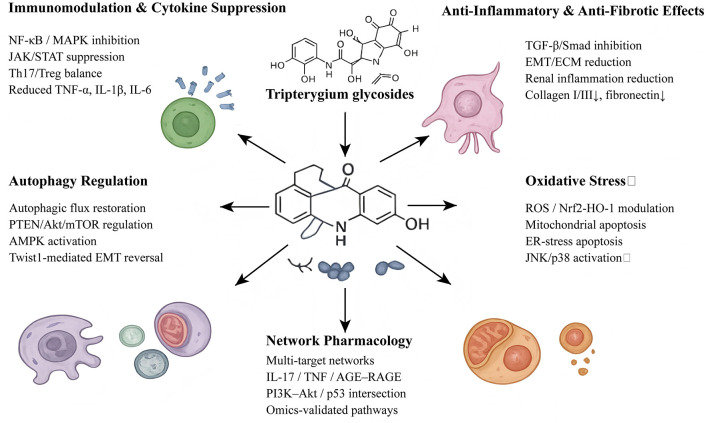 Figure 2
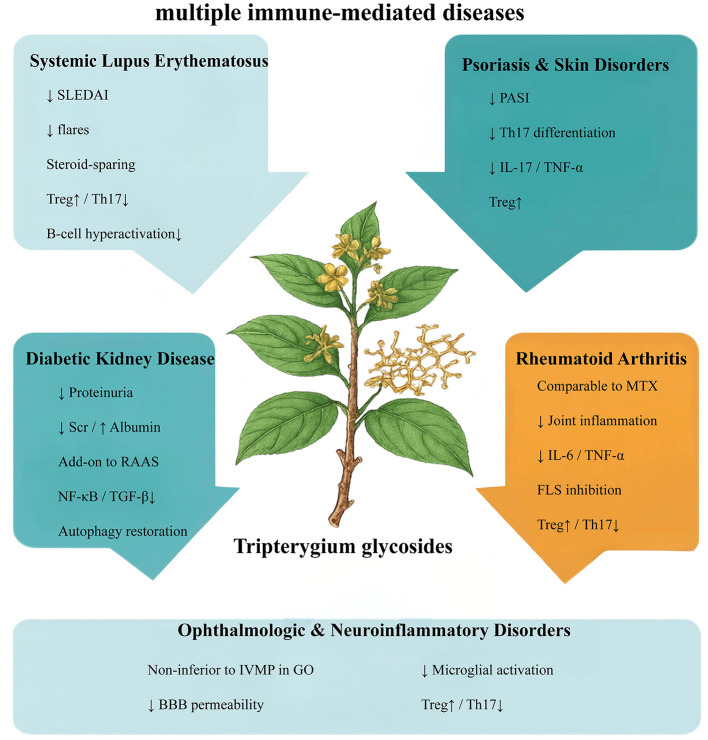 Figure 3
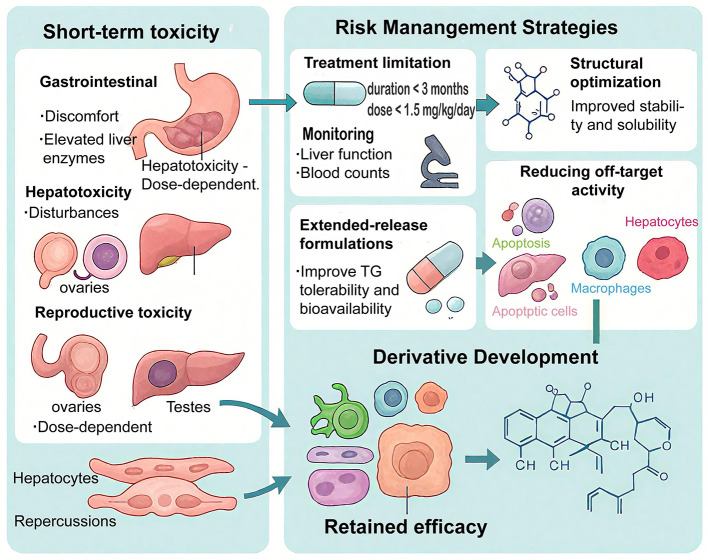 Figure 4
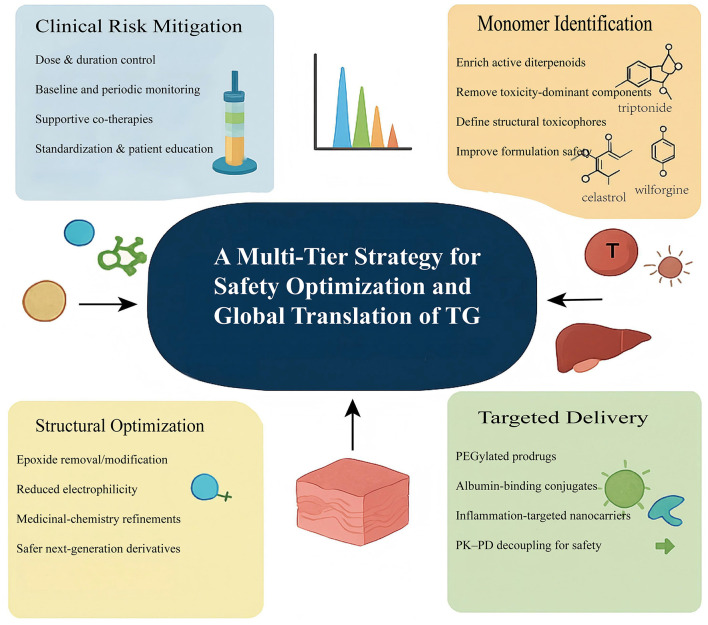 Figure 5
Peer Reviews
No public reviews on file for this paper yet. If you reviewed it on a platform where reviews are public (OpenReview, ICLR, NeurIPS, ICML), you can paste yours below so the community can read it here.
Videos
No videos yet. Explain this paper in a talk, walkthrough, or lecture? Add one.
Taxonomy
TopicsNatural Compounds in Disease Treatment · Natural product bioactivities and synthesis · Autoimmune and Inflammatory Disorders Research