Complement activation and M2-like macrophage accumulation in anti-MDA5 monoclonal antibody–induced hepatic injury in mice
Takuma Koga, Yoshiaki Zaizen, Hiroyuki Suzuki, Suzuna Sugi, Hironao Hozumi, Noriho Sakamoto, Takafumi Suda, Hiroshi Mukae, Hironori Kusano, Akihiko Kawahara, Jun Akiba, Takumi Kawaguchi, Shinjiro Kaieda, Tomoaki Hoshino

TL;DR
This study explores how anti-MDA5 antibodies cause liver damage in mice, finding that complement activation and M2-like macrophages play key roles.
Contribution
The study identifies a novel mechanism involving complement activation and M2-like macrophages in anti-MDA5 antibody-induced liver injury.
Findings
CD206-positive M2-like macrophages accumulate in the liver following anti-MDA5 antibody treatment.
Complement component C3 deficiency reduces hepatic injury in the mouse model.
Liver injury is accompanied by increased infiltration of M2-like macrophages.
Abstract
Patients with anti–melanoma differentiation–associated gene 5 (MDA5) antibody–positive dermatomyositis (DM) frequently develop rapidly progressive interstitial lung disease and may also exhibit hepatic dysfunction, yet the mechanisms of hepatic injury remain poorly defined. We investigated the roles of M2−like macrophages and complement activation in hepatic injury associated with anti−MDA5 antibody–positive DM. Liver specimens from five autopsy cases of anti-MDA5 antibody–positive DM were examined for the presence of CD80-positive M1-like and CD206-positive M2-like macrophages. To establish a model of antibody-mediated hepatic injury, human MDA5 transgenic mice were treated with in-house anti-human MDA5 monoclonal antibodies. The contribution of complement was assessed by comparing hepatic pathology between wild-type and complement component C3-deficient MDA5 transgenic mice. Liver…
Genes, proteins, chemicals, diseases, species, mutations and cell lines named across the full text — each resolved to its canonical identifier and authoritative record.
Click any figure to enlarge with its caption.
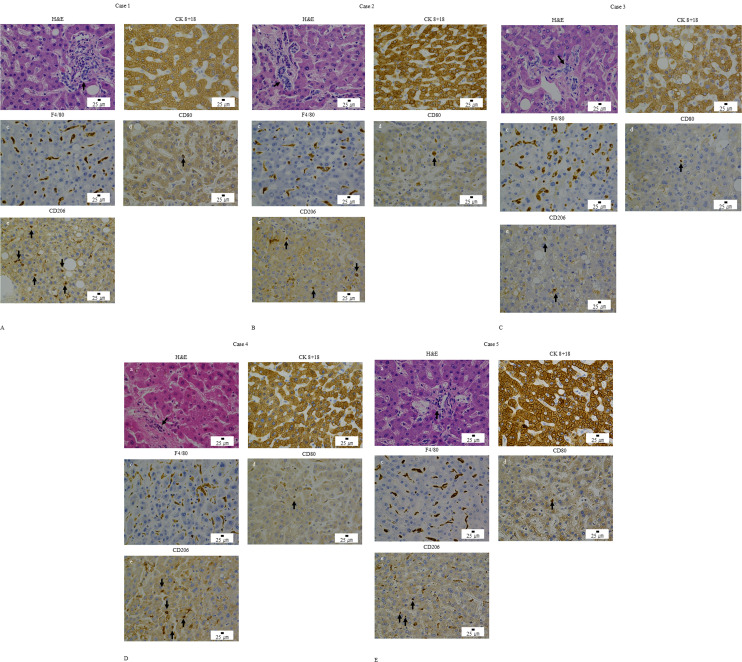 Figure 1
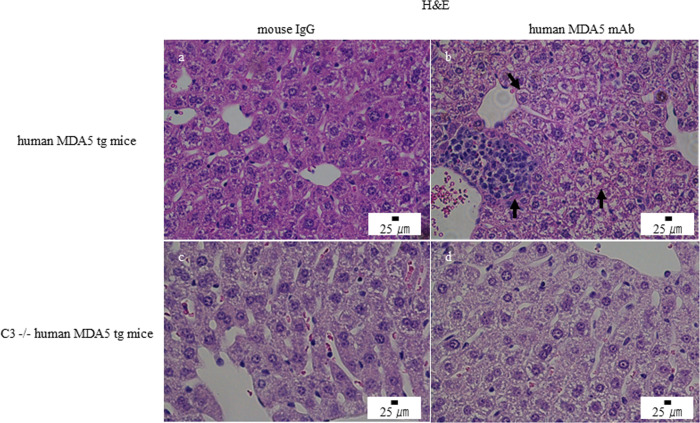 Figure 2
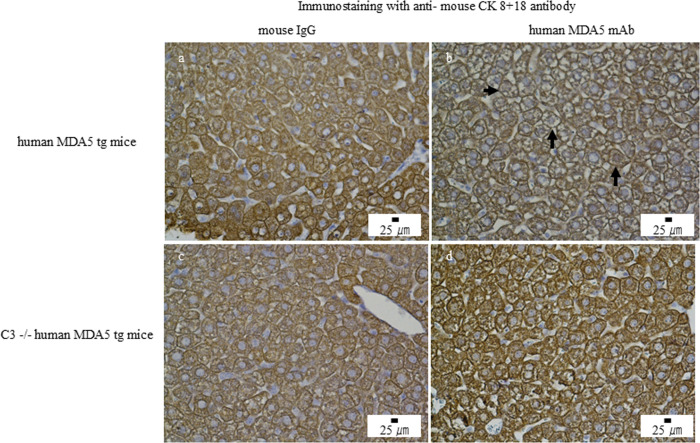 Figure 3
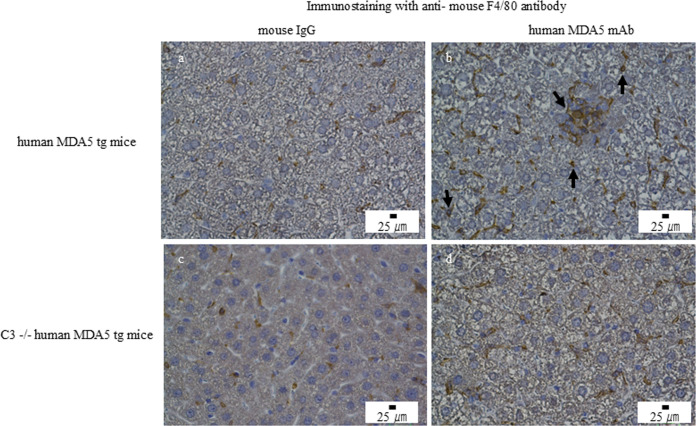 Figure 4
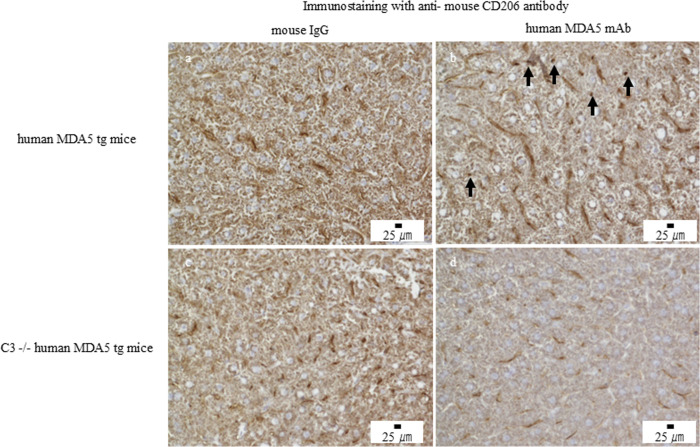 Figure 5
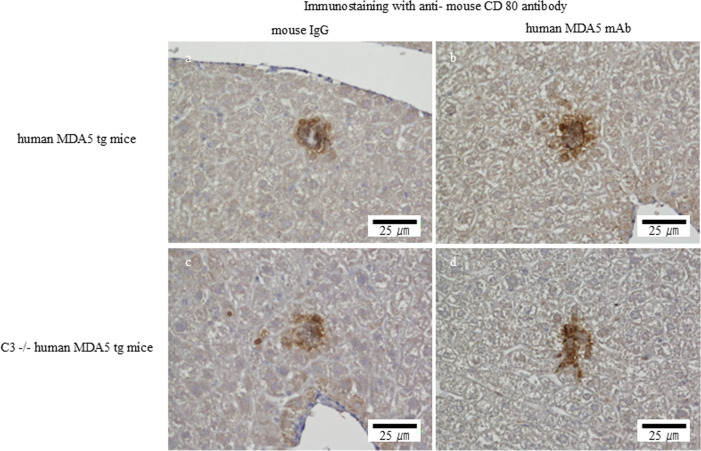 Figure 6
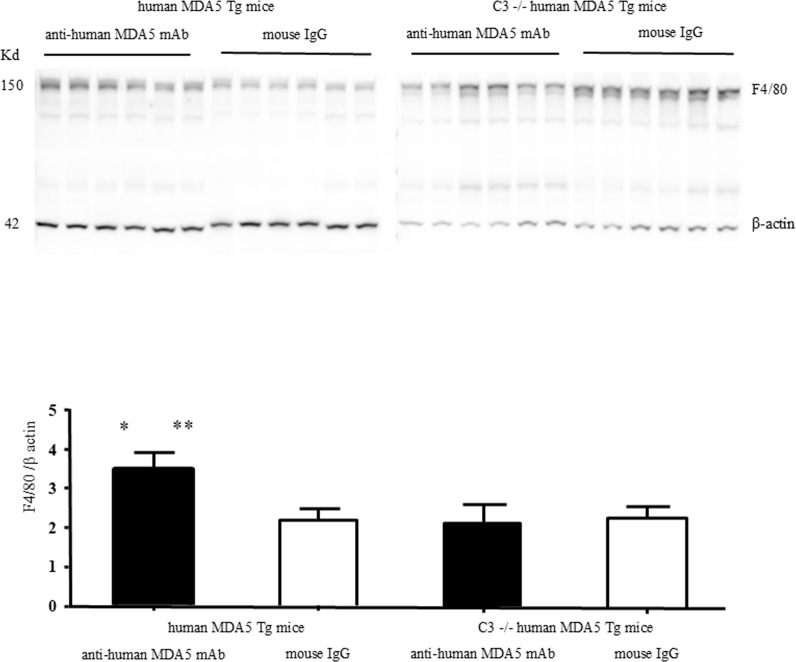 Figure 7
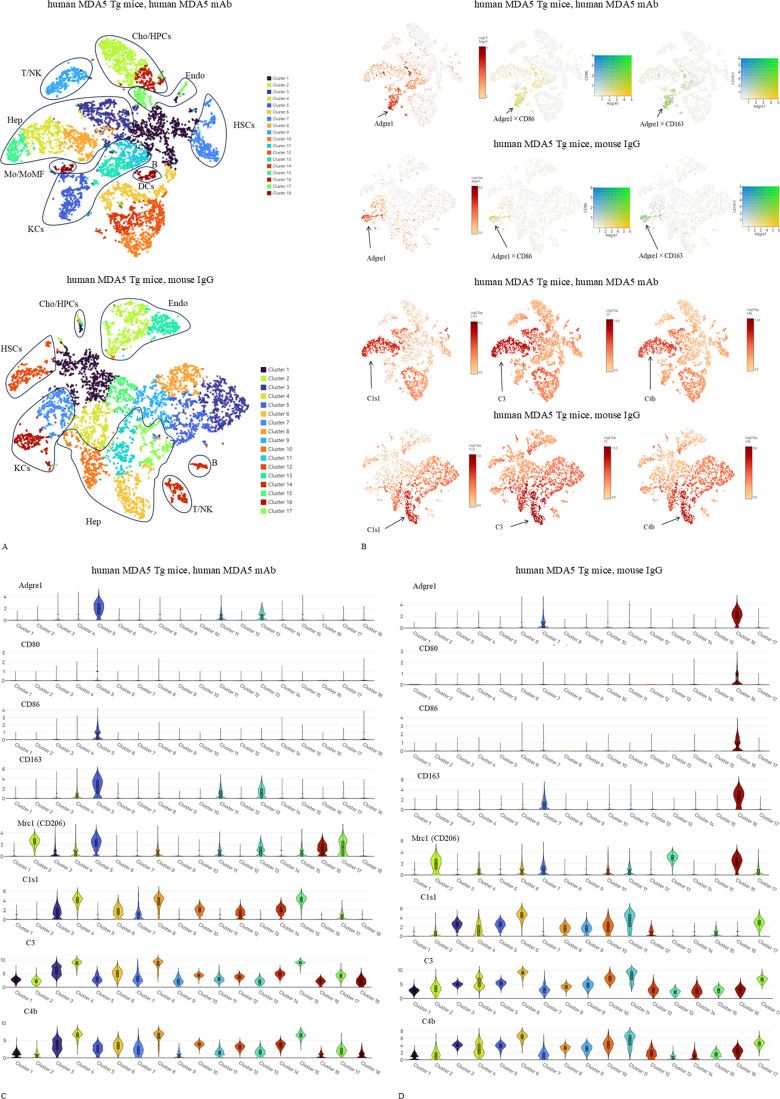 Figure 8
Peer Reviews
No public reviews on file for this paper yet. If you reviewed it on a platform where reviews are public (OpenReview, ICLR, NeurIPS, ICML), you can paste yours below so the community can read it here.
Videos
No videos yet. Explain this paper in a talk, walkthrough, or lecture? Add one.
Taxonomy
TopicsInflammatory Myopathies and Dermatomyositis · Interstitial Lung Diseases and Idiopathic Pulmonary Fibrosis · Systemic Sclerosis and Related Diseases