Molecularly modified ultrathin Al2O3 layers as proton-conductive, oxygen-impermeable nanomembranes for catalytic surfaces
Dalia Leon-Chaparro, Christos Englezos, Bastian Mei, Guido Mul, Georgios Katsoukis

TL;DR
This paper studies ultrathin alumina layers that block oxygen but allow protons to pass through, which could improve catalytic reactions in energy technologies.
Contribution
The study introduces molecularly modified alumina layers that balance proton conductivity and oxygen impermeability for catalytic applications.
Findings
Al2O3 layers of 3–5 nm show proton diffusivity of ~10−13 m²/s and block oxygen effectively.
Adding oligo(ethylene glycol) chains lowers proton transport resistance but increases charge-transfer resistance.
Design priorities differ for high-current electrocatalysis versus low-current photocatalysis based on resistance trade-offs.
Abstract
Ultrathin inorganic oxide coatings can improve selectivity in photo- and electrocatalysis, but they also bury active sites and impede transport of the desired reactants. Here we quantify proton and O2 permeability of 3–5 nm amorphous alumina (Al2O3) overlayers on poly-crystalline Pt using electrochemical impedance spectroscopy (EIS) and fourier-transform infrared reflection–absorption spectroscopy (FT-IRRAS). The apparent proton diffusivity amounts to ∼10−13 m2 s−1 in the atomic-layer-deposited (ALD) films. FT-IRRAS reveals hydrated AlOOH motifs whose presence correlates with the measured diffusion coefficients, highlighting their role as the dominant proton-transport pathways. The through-(Al2O3) film resistance is growing non-linear with thickness (17 → 37 Ω cm2 for 3 → 4 nm) and becomes close to infinity at 5 nm. Embedding oligo(ethylene glycol) chains within the alumina reduces the…
Genes, proteins, chemicals, diseases, species, mutations and cell lines named across the full text — each resolved to its canonical identifier and authoritative record.
Click any figure to enlarge with its caption.
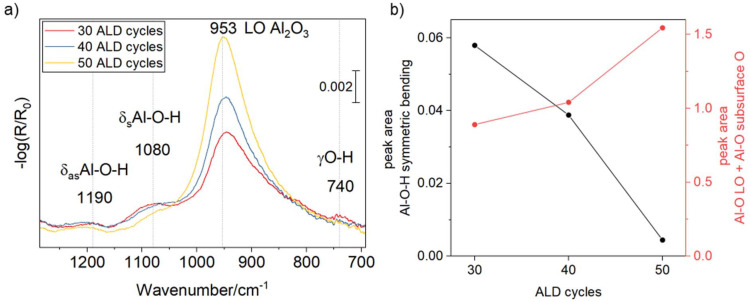 Figure 1
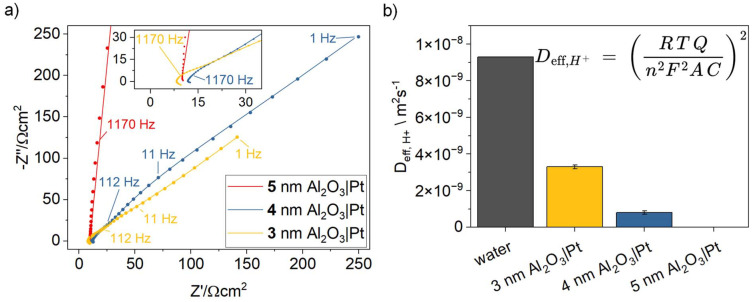 Figure 2
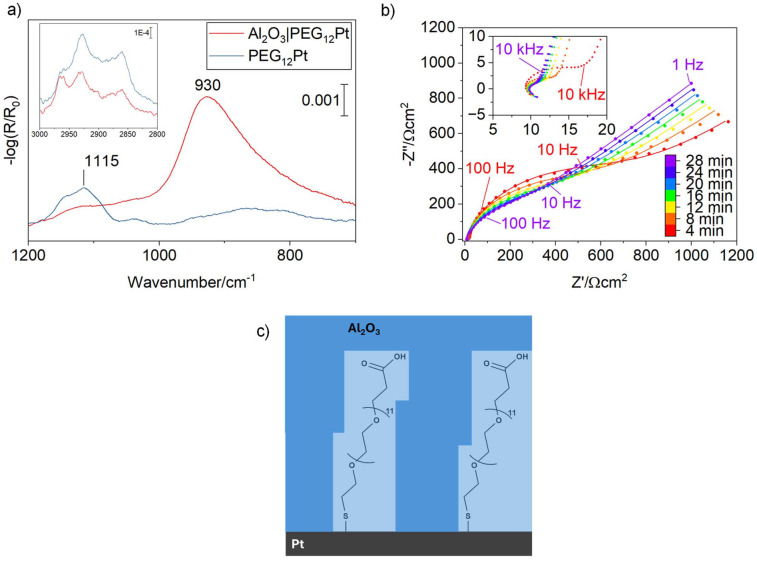 Figure 3
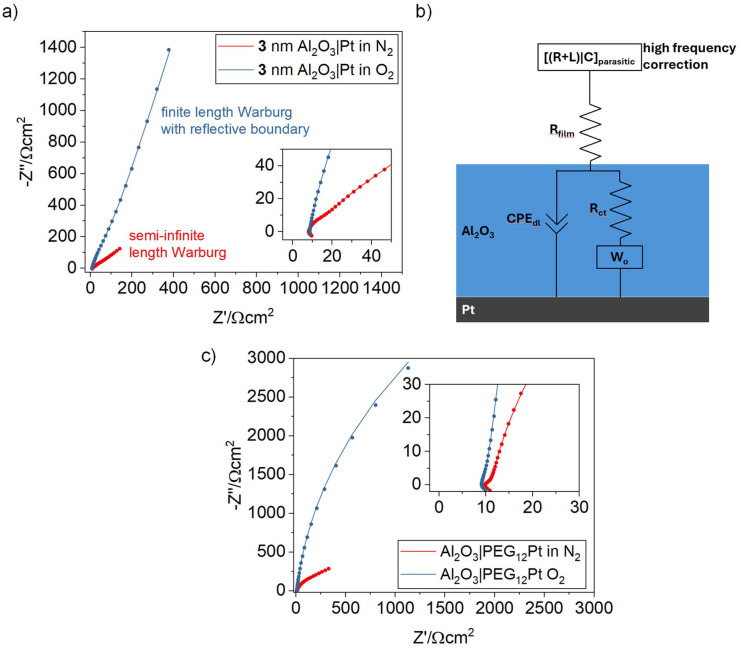 Figure 4
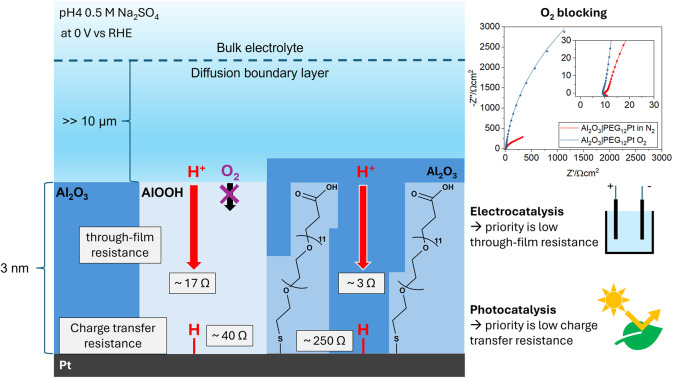 Figure 5
 Figure 6
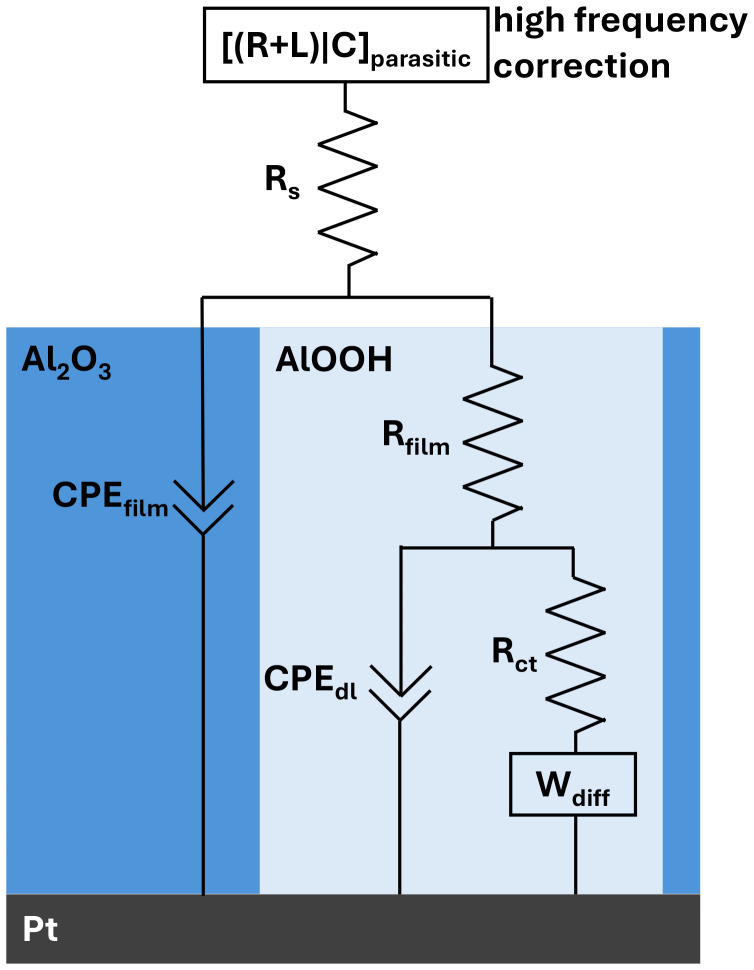 Figure 7
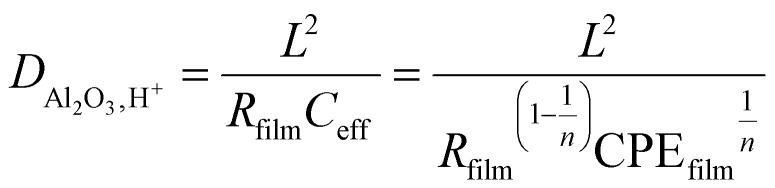 Figure 8
 Figure 9
Peer Reviews
No public reviews on file for this paper yet. If you reviewed it on a platform where reviews are public (OpenReview, ICLR, NeurIPS, ICML), you can paste yours below so the community can read it here.
Videos
No videos yet. Explain this paper in a talk, walkthrough, or lecture? Add one.
Taxonomy
TopicsElectrocatalysts for Energy Conversion · Fuel Cells and Related Materials · Advancements in Solid Oxide Fuel Cells