Steroid Recognition in Adhesion GPCRs: A Structural and Pharmacological Perspective
Bethany Fleming, Abdul‐Akim Guseinov, Irina G. Tikhonova, Graeme Milligan, Nicole A. Perry‐Hauser

TL;DR
This paper explores how steroids might bind to adhesion GPCRs, focusing on structural insights and the potential for drug design.
Contribution
The paper presents structural evidence and modeling to support a shared steroid recognition mechanism in adhesion GPCRs.
Findings
Cryo-EM structures revealed a steroid-binding pocket in ADGRD1.
Comparative modeling suggests conserved features for steroid recognition.
A selective synthetic agonist was rationally designed based on these findings.
Abstract
Emerging evidence suggests steroids may act as generalizable ligands for adhesion GPCRs, a receptor class with considerable pharmacological potential. While most studies have focused on the ADGR‘G' subfamily, recent cryo‐EM structures of the androgens 5α‐dihydrotestosterone (5α‐DHT) and methenolone bound to ADGRD1 revealed a putative steroid‐binding pocket and enabled the rational design of a selective synthetic agonist. This perspective considers the broader significance of these findings amid some debate about the reproducibility and physiological relevance of steroid binding to adhesion GPCRs, reviewing all structural evidence and presenting comparative docking and homology modeling to evaluate conserved features and the plausibility of a shared recognition mechanism.
Genes, proteins, chemicals, diseases, species, mutations and cell lines named across the full text — each resolved to its canonical identifier and authoritative record.
Click any figure to enlarge with its caption.
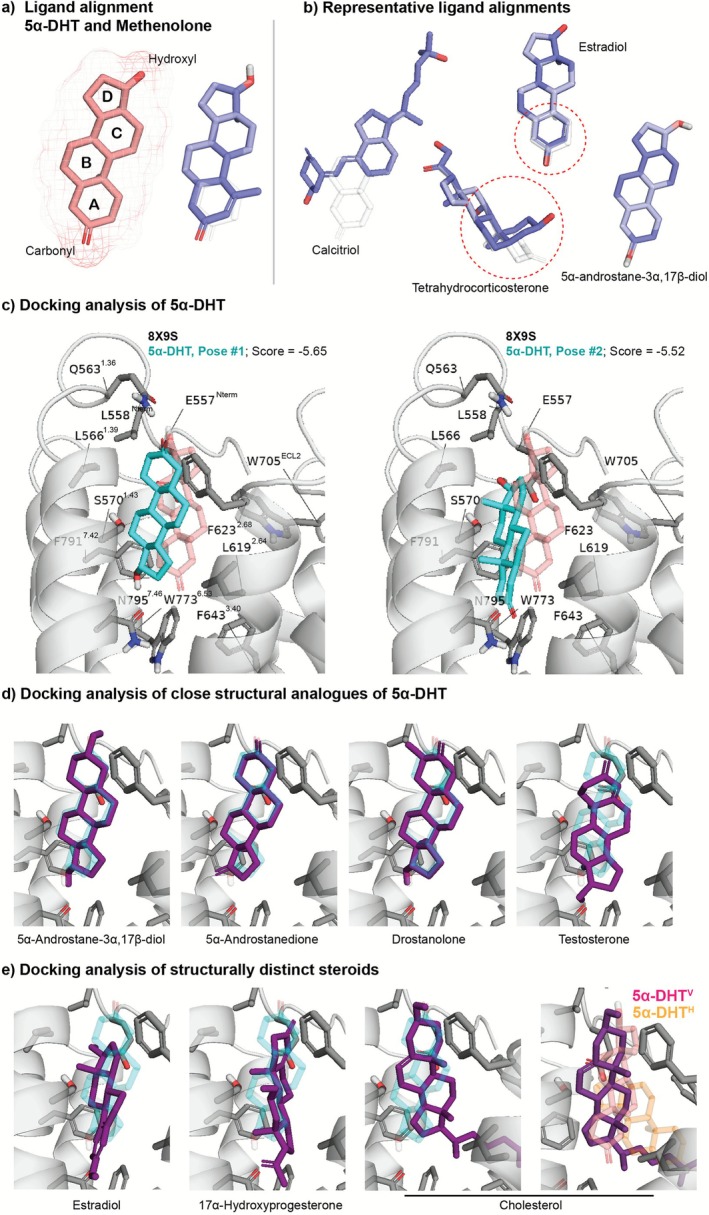 Figure 1
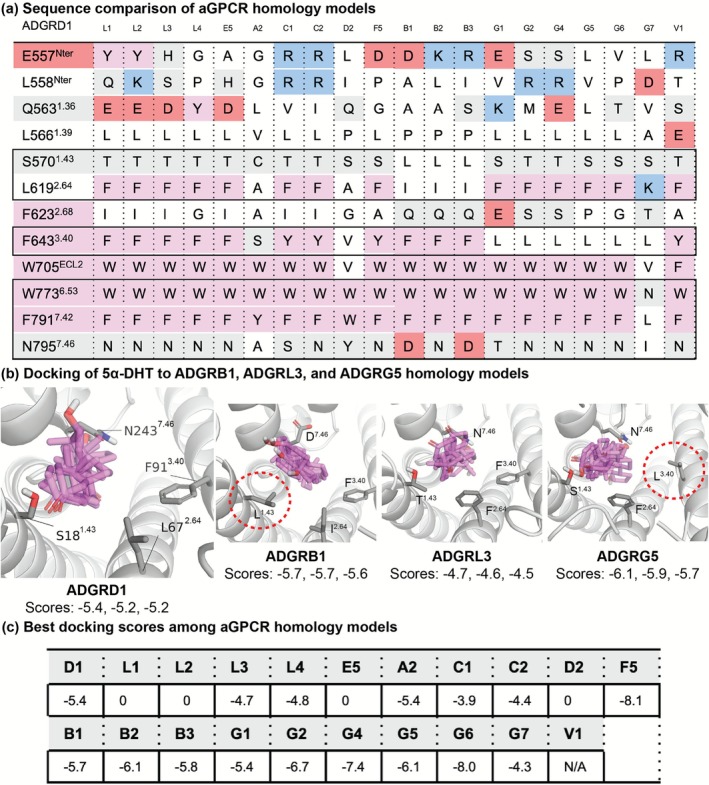 Figure 2
Peer Reviews
No public reviews on file for this paper yet. If you reviewed it on a platform where reviews are public (OpenReview, ICLR, NeurIPS, ICML), you can paste yours below so the community can read it here.
Videos
No videos yet. Explain this paper in a talk, walkthrough, or lecture? Add one.
Taxonomy
TopicsReceptor Mechanisms and Signaling · Estrogen and related hormone effects · Diabetes Treatment and Management