Whole-genome sequencing for surveillance of Salmonella at a public health institution in South Africa
Anthony M. Smith, Phuti Sekwadi, Hlengiwe M. Ngomane, Bolele Disenyeng, Linda K. Erasmus, Juno Thomas, Dineo Bogoshi, Shannon L. Smouse, Nomsa P. Tau

TL;DR
This study uses whole-genome sequencing to track Salmonella infections in South Africa, identifying common strains and antibiotic resistance patterns to improve public health responses.
Contribution
The study provides the first large-scale genomic surveillance of Salmonella in South Africa using WGS, revealing population structure and AMR trends.
Findings
Salmonella Enteritidis and Typhimurium were the most prevalent serovars, accounting for 71.2% of isolates.
16% of isolates showed resistance to multiple antibiotics, with Salmonella Isangi showing the highest resistance levels.
Abstract
Whole-genome sequencing (WGS) is transforming communicable disease surveillance globally. The National Institute for Communicable Diseases, South Africa, participates in national laboratory-based surveillance for human isolates of Salmonella. This study was to investigate human Salmonella isolates from South Africa, 2020–2023, using WGS analysis. WGS was performed using Illumina NextSeq Technology. Data were analysed using multiple bioinformatics tools, including those available at the Center for Genomic Epidemiology, Pathogenwatch and EnteroBase. Data analysis allowed for identification and characterisation of isolates. Core-genome multilocus sequence typing was used to investigate the phylogeny of isolates. Of the 8006 isolates of Salmonella that were analysed using WGS, 130 distinctive serovars and subspecies were identified. Salmonella enterica serovar Enteritidis (Salmonella…
Genes, proteins, chemicals, diseases, species, mutations and cell lines named across the full text — each resolved to its canonical identifier and authoritative record.
Click any figure to enlarge with its caption.
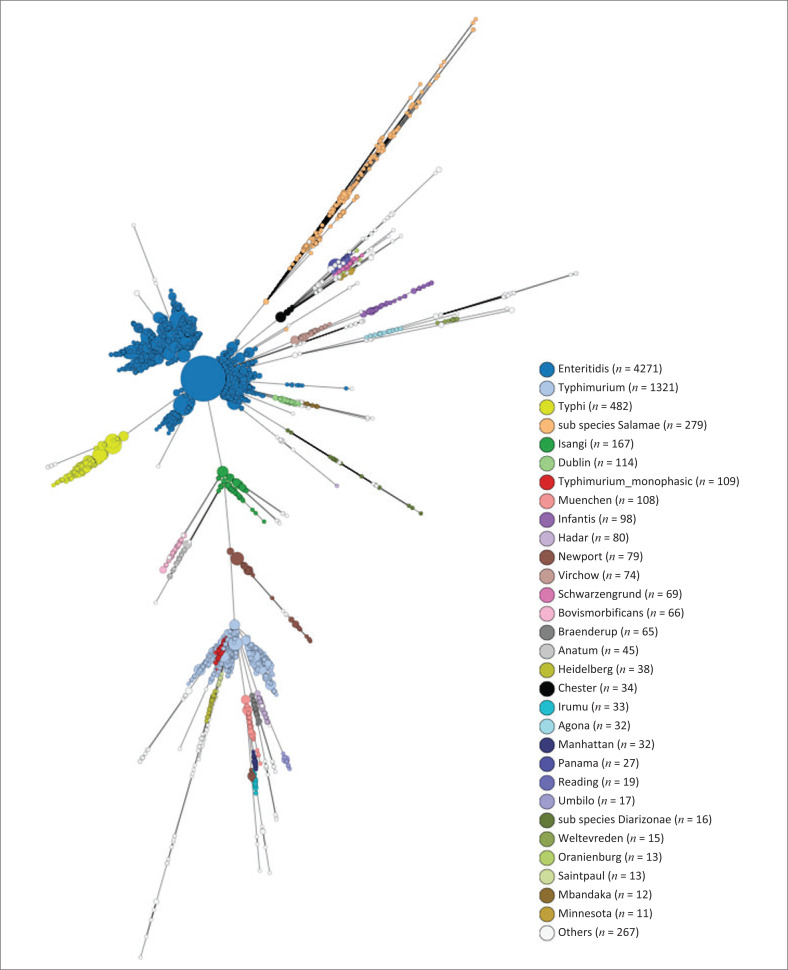 Figure 1
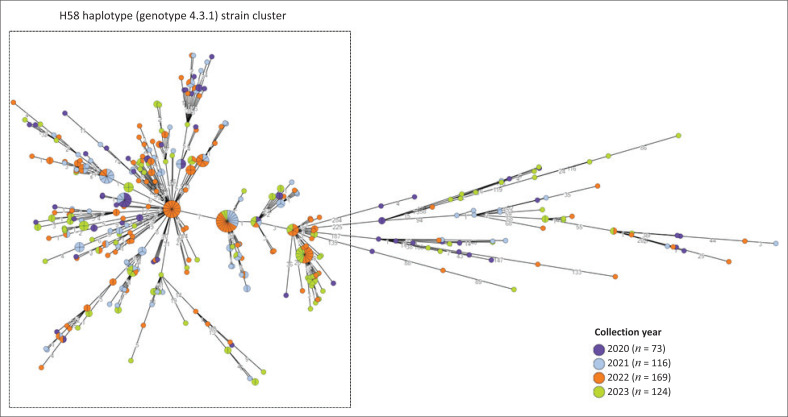 Figure 2
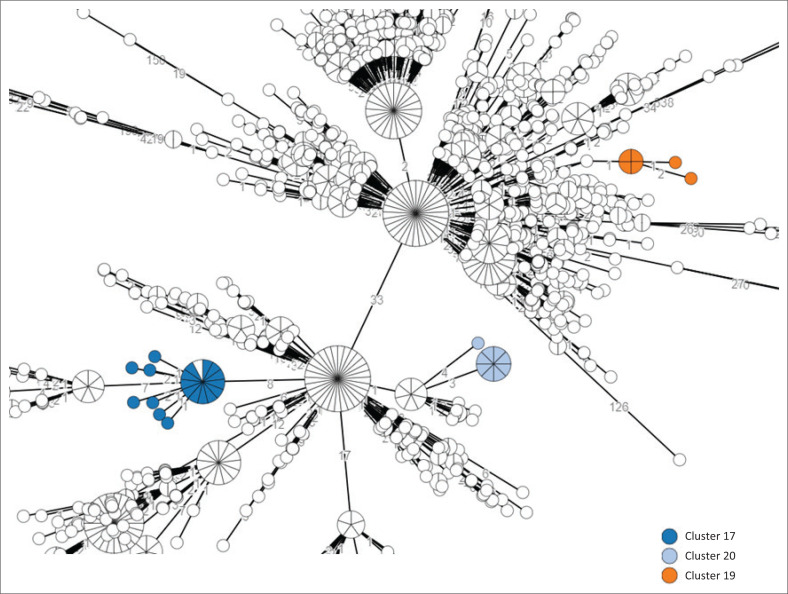 Figure 3
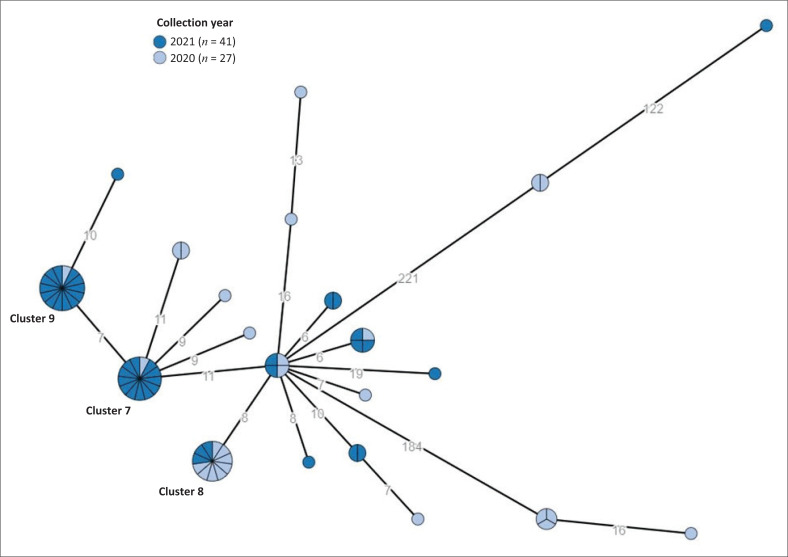 Figure 4
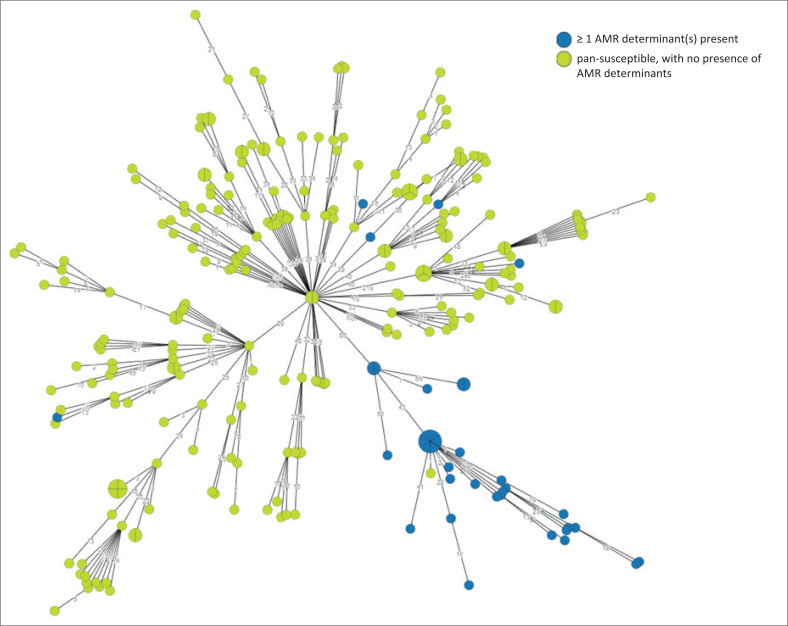 Figure 5
Peer Reviews
No public reviews on file for this paper yet. If you reviewed it on a platform where reviews are public (OpenReview, ICLR, NeurIPS, ICML), you can paste yours below so the community can read it here.
Videos
No videos yet. Explain this paper in a talk, walkthrough, or lecture? Add one.
Taxonomy
TopicsSalmonella and Campylobacter epidemiology · Vibrio bacteria research studies · Escherichia coli research studies