Metabolic effects of metyrapone treatment in patients with mild autonomous cortisol secretion: a prospective proof-of-concept trial
Helena Niziolek, Ivica Just, Anna Tosin, Clemens Baumgartner, Konrad Körmöczi, Luise Bellach, Paul Fellinger, Hannes Beiglböck, Hana Skuciova, Greta Gericke, Stefan Lässer, Anton Luger, Siegfried Trattnig, Alexandra Kautzky-Willer, Marie Helene Schernthaner-Reiter

TL;DR
This study shows that metyrapone treatment in patients with mild cortisol overproduction reduces liver fat and improves metabolic health.
Contribution
The study provides first evidence that metyrapone can lower intrahepatic lipid content and improve metabolic markers in patients with mild autonomous cortisol secretion.
Findings
Metyrapone significantly reduced intrahepatic lipid content in patients with mild autonomous cortisol secretion.
The treatment improved fasting insulin, c-peptide levels, and inflammatory parameters.
No adverse symptoms of adrenal insufficiency were reported during the study.
Abstract
Mild autonomous cortisol secretion (MACS) is associated with an increased morbidity and mortality. Treatment options range from adrenalectomy to conservative management of comorbidities, but evidence on the effects of medical treatment is scarce. We therefore aimed to investigate the metabolic effects of evening metyrapone treatment in patients with MACS. We did a prospective, open-label, proof-of-concept trial (EudraCT: 2022-000161-40). Patients with uni-or bilateral adrenal incidentaloma and MACS defined by cortisol >1·8 μg/dL after 1 mg-dexamethasone-suppression-testing without clinical signs of Cushing's syndrome were included. Participants were investigated at baseline and after 12 weeks of treatment with metyrapone (500 mg at 6 p.m. and 250 mg at 10 p.m.). Intrahepatic lipid content (IHL) and abdominal visceral/subcutaneous fat mass were measured by magnetic resonance…
Genes, proteins, chemicals, diseases, species, mutations and cell lines named across the full text — each resolved to its canonical identifier and authoritative record.
Click any figure to enlarge with its caption.
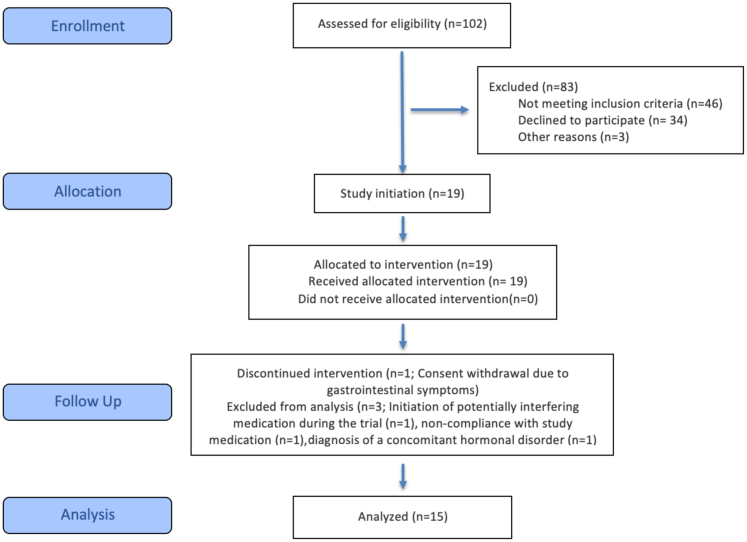 Figure 1
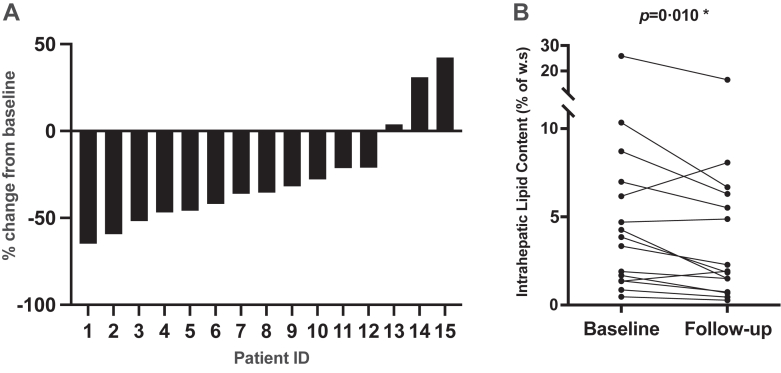 Figure 2
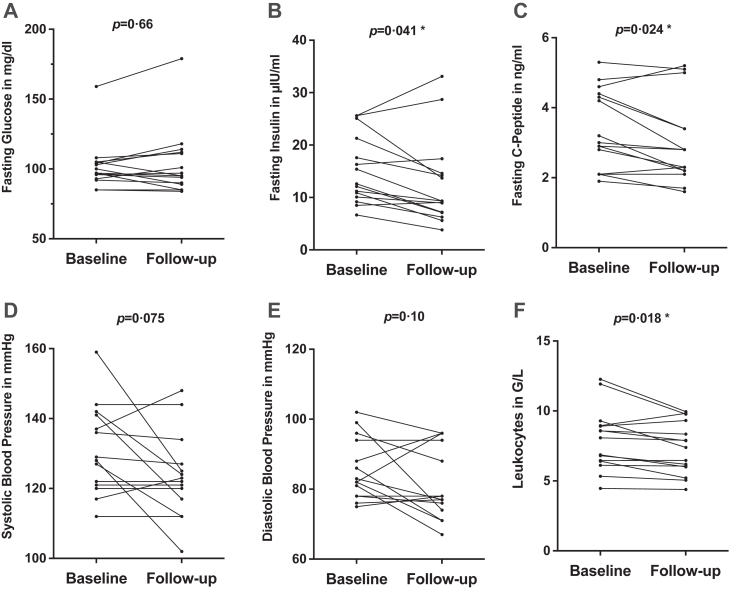 Figure 3
Peer Reviews
No public reviews on file for this paper yet. If you reviewed it on a platform where reviews are public (OpenReview, ICLR, NeurIPS, ICML), you can paste yours below so the community can read it here.
Videos
No videos yet. Explain this paper in a talk, walkthrough, or lecture? Add one.
Taxonomy
TopicsStress Responses and Cortisol · Adrenal Hormones and Disorders · Hormonal Regulation and Hypertension