MicroRNAs and their role in heart transplantation insights into rejection mechanisms: A narrative review
Rossella Loria, Antonio Giuseppe Bianculli, Paola Giustiniani, Maria Troiano, Marco Andreani, Giorgia Grutter

TL;DR
This review discusses how microRNAs could help detect heart transplant rejection without the need for invasive biopsies.
Contribution
The paper highlights the novel potential of miRNAs as non-invasive biomarkers for monitoring heart transplant rejection.
Findings
MicroRNAs regulate gene expression and may indicate allograft rejection.
MiRNAs could replace endomyocardial biopsy as a non-invasive monitoring tool.
This review suggests miRNAs offer a new approach to managing post-transplant patients.
Abstract
Heart transplantation is the definitive treatment for patients with advanced heart failure and refractory symptoms. However, allograft rejection—both acute and chronic—remains a major cause of morbidity, leading to graft dysfunction and failure. Traditionally, endomyocardial biopsy (EMB) has been the standard method for screening allograft rejection. MicroRNAs (miRNAs) are small, non-coding RNA sequences that regulate gene expression by binding to the 3' untranslated regions of complementary mRNA transcripts. This review explores the potential of miRNAs as biomarkers for detecting allograft rejection in heart transplant recipients. MiRNAs may serve as non-invasive “liquid biopsies,” providing a novel approach to monitor and manage post-transplant patients.
Genes, proteins, chemicals, diseases, species, mutations and cell lines named across the full text — each resolved to its canonical identifier and authoritative record.
Click any figure to enlarge with its caption.
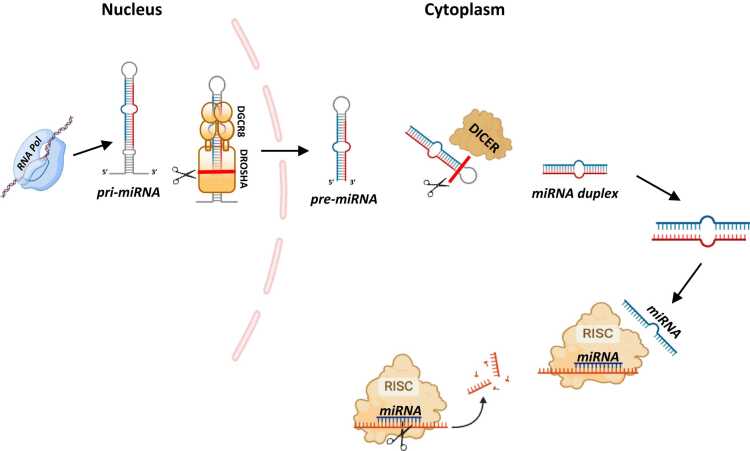 Figure 1
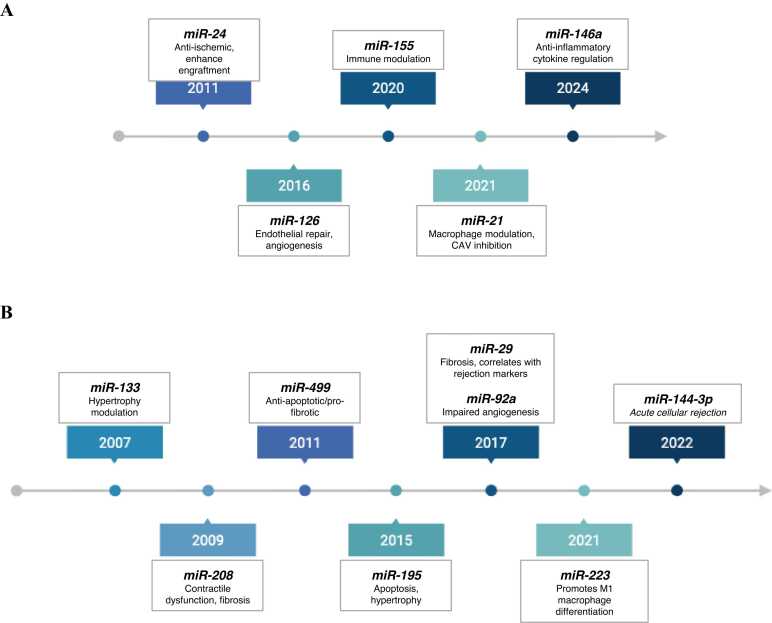 Figure 2
Peer Reviews
No public reviews on file for this paper yet. If you reviewed it on a platform where reviews are public (OpenReview, ICLR, NeurIPS, ICML), you can paste yours below so the community can read it here.
Videos
No videos yet. Explain this paper in a talk, walkthrough, or lecture? Add one.
Taxonomy
TopicsTransplantation: Methods and Outcomes · MicroRNA in disease regulation · Viral Infections and Immunology Research