Acoustic Features of Emotional Vocalizations Account for Early Modulations of Event‐Related Brain Potentials
Yichen Tang, Paul M. Corballis, Luke E. Hallum

TL;DR
This study shows that early brain responses to emotional sounds are mostly influenced by acoustic features like intensity and pitch, not just the emotion itself.
Contribution
The study demonstrates that acoustic features, not emotion per se, largely explain early ERP modulations in emotional vocalizations.
Findings
Early ERP amplitudes for sad vocalizations were lower than for other emotions, explained by acoustic intensity.
Acoustic intensity and pitch account for most ERP modulations in emotional vocalizations.
ERP differences between emotions at longer latencies are also largely explained by acoustic features.
Abstract
Emotion is key to human communication, and inferring emotion in a speaker's voice is a cross‐cultural and cross‐linguistic capability. Electroencephalography (EEG) studies of neural mechanisms supporting emotion perception have reported that early components of the event‐related potential (ERP) are modulated by emotion. However, the nature of emotion's effect, especially on the P200 component, is disputed. We hypothesized that early acoustic features of emotional utterances might account for ERP modulations previously attributed to emotion. We recorded multi‐channel EEG from healthy participants (n = 30) tasked with recognizing the emotion of utterances. We used 50 vocalizations in five emotions—anger, happiness, neutral, sadness and pleasure—drawn from the Montreal Affective Voices dataset. We statistically quantified instantaneous associations between ERP amplitudes, emotion…
Genes, proteins, chemicals, diseases, species, mutations and cell lines named across the full text — each resolved to its canonical identifier and authoritative record.
Click any figure to enlarge with its caption.
 Figure 1
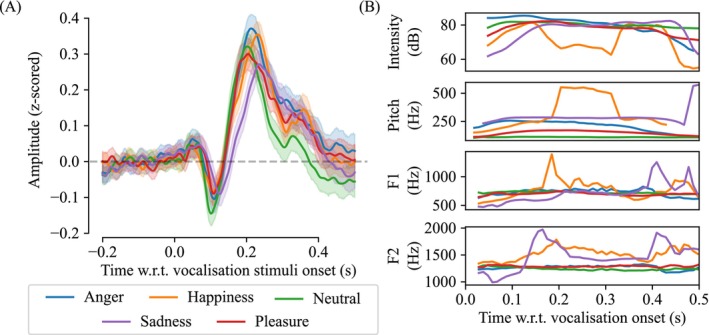 Figure 2
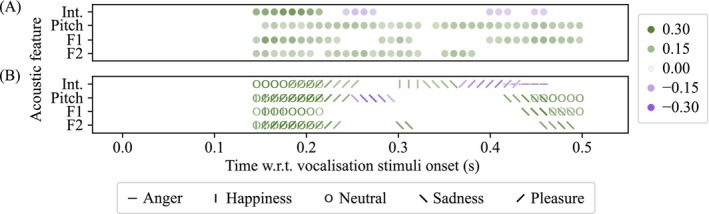 Figure 3
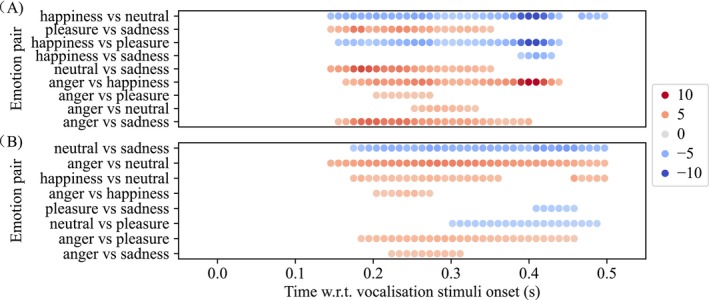 Figure 4
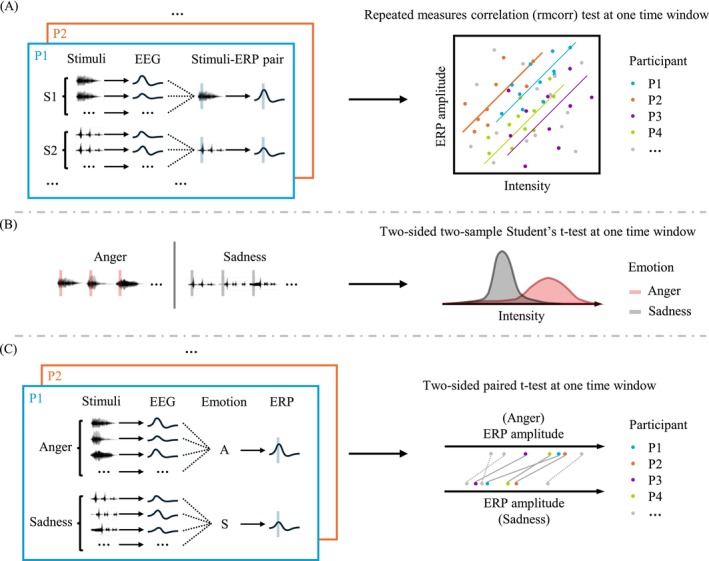 Figure 5
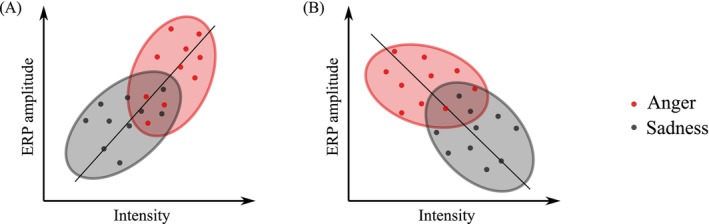 Figure 6
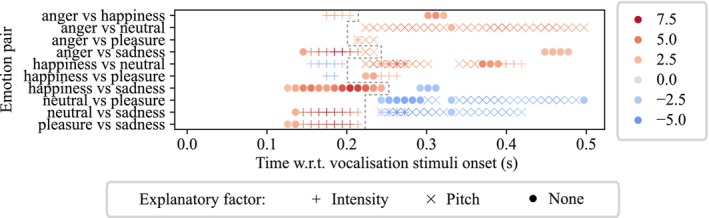 Figure 7
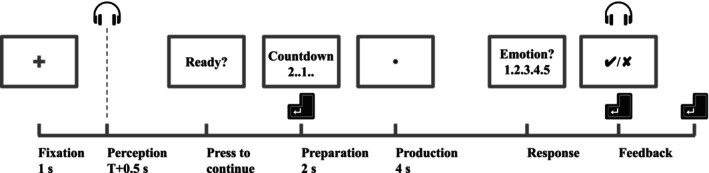 Figure 8
Peer Reviews
No public reviews on file for this paper yet. If you reviewed it on a platform where reviews are public (OpenReview, ICLR, NeurIPS, ICML), you can paste yours below so the community can read it here.
Videos
No videos yet. Explain this paper in a talk, walkthrough, or lecture? Add one.
Taxonomy
TopicsNeuroscience and Music Perception · Emotion and Mood Recognition · Neural dynamics and brain function