Genetically Predicted Homocysteine Levels and B Vitamins on Sarcopenia‐Related Traits: Insights From an Observational and Mendelian Randomization Analysis
Caizheng Yang, Shanshan Ge, Fangying Tian, Yan Jiang, Yue Guo, Xiumei Wang, Hongwei Wang

TL;DR
This study finds that high homocysteine levels are causally linked to sarcopenia traits like low grip strength and lean mass, suggesting Hcy interventions may help prevent sarcopenia.
Contribution
The study provides causal evidence linking genetically predicted homocysteine levels to sarcopenia-related traits using Mendelian randomization and longitudinal data.
Findings
Genetically predicted higher homocysteine levels are causally associated with lower grip strength and appendicular lean mass.
Individuals with medium or high stable homocysteine levels have significantly increased sarcopenia risk compared to low-level groups.
A dose–response relationship was observed between baseline homocysteine levels and sarcopenia risk.
Abstract
Sarcopenia is a significant public health concern that adversely affects the health and quality of life of older adults. The causal and longitudinal relationships between homocysteine (Hcy), B vitamins, and sarcopenia remain unclear. This study integrated genetic evidence with clinical cohort data to investigate these associations using a two‐stage design. First, we performed a two‐sample Mendelian randomization (MR) analysis using summary data from large‐scale genome‐wide association studies (GWAS) of European ancestry. We examined the potential causal effects of Hcy, Vit B6, folate, and Vit B12 on sarcopenia‐related phenotypes, including appendicular lean mass (ALM), grip strength, and walking pace, using the inverse‐variance weighted (IVW) method as the primary analysis. Second, to validate these genetic findings and examine their longitudinal relevance, we established an independent…
Genes, proteins, chemicals, diseases, species, mutations and cell lines named across the full text — each resolved to its canonical identifier and authoritative record.
Click any figure to enlarge with its caption.
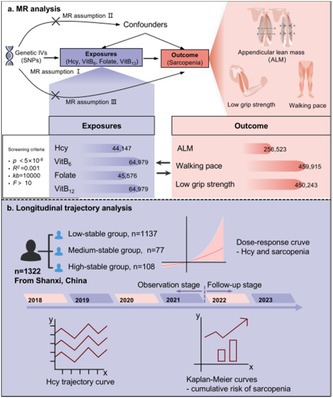 Figure 1
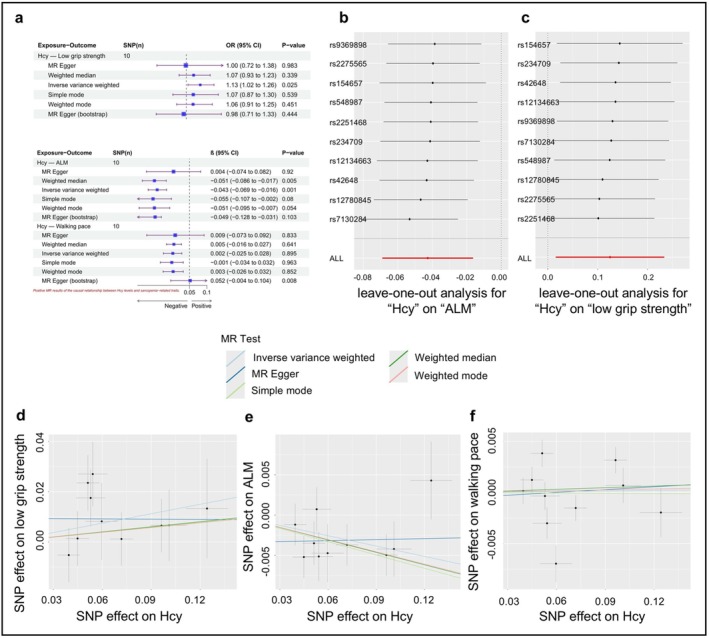 Figure 2
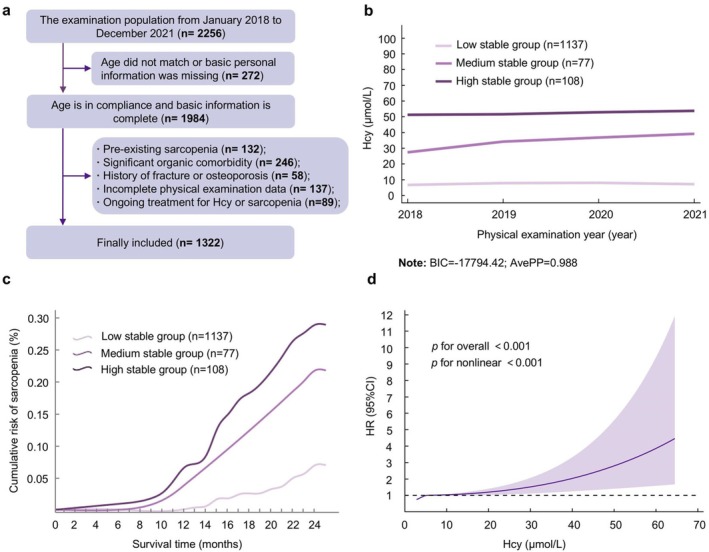 Figure 3
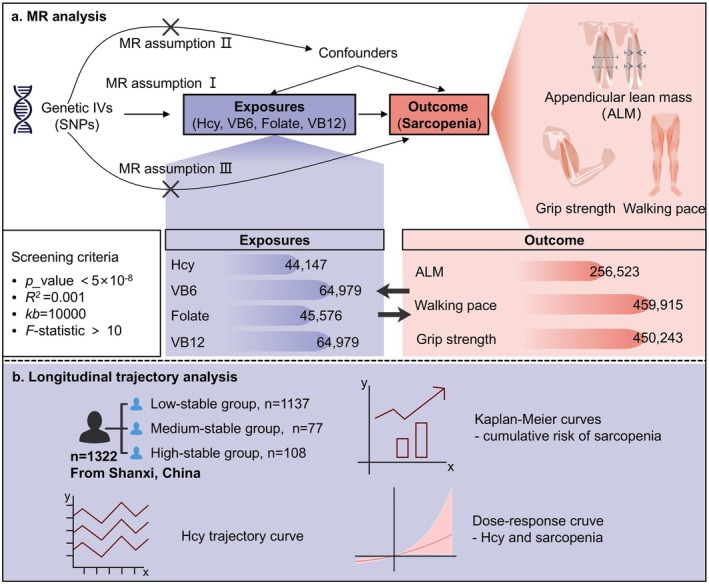 Figure 4
Peer Reviews
No public reviews on file for this paper yet. If you reviewed it on a platform where reviews are public (OpenReview, ICLR, NeurIPS, ICML), you can paste yours below so the community can read it here.
Videos
No videos yet. Explain this paper in a talk, walkthrough, or lecture? Add one.
Taxonomy
TopicsFolate and B Vitamins Research · Nutrition and Health in Aging · Nutrition, Genetics, and Disease