Assessing large language models as assistive tools in selecting first trial lens parameters for orthokeratology
Yijin Han, Junhan Wei, Jiaqi Wang, Yi-Ming Guo, Shaoguo Li, Lu Ye

TL;DR
This study evaluates how well large language models can help choose initial lens parameters for orthokeratology, finding that they show promise but require clinician oversight.
Contribution
The study introduces the use of LLMs in orthokeratology fitting workflows and identifies key parameter biases requiring clinician verification.
Findings
GPT-o3 and GPT-4o showed the strongest overall performance in providing accurate and high-quality responses.
LLM outputs showed tendencies in key fitting parameters, particularly a smaller BC radius and a larger RZD.
Most observations for first trial lens parameters lay within the 95% limits of agreement.
Abstract
Large language models (LLMs) have the potential to be powerful tools in optometry. Orthokeratology is widely used in clinical interventions for myopia control. This study aims to evaluate the performance of LLMs as assistive tools in the CRT-related orthokeratology fitting workflow. This retrospective analysis used four LLMs (GPT-4o, GPT-o3, GPT-4.1 and Claude 3.7 Sonnet) to analyze refractive error cases and get responses regarding the parameters of the first trial lens. Subjective evaluation includes the accuracy and overall quality of the answers provided, and objective evaluation focuses on differences in the parameters of the first trial lens. GQS and accuracy differed across models [χ2(3) = 39.85, p < 0.001; Kendall’s W = 0.148]. GPT-o3 and GPT-4o showed the strongest overall performance on the complete response (GQS: 4.66 ± 0.48 vs. 4.47 ± 0.5, Good ratings: 83.3% vs. 76.7%),…
Genes, proteins, chemicals, diseases, species, mutations and cell lines named across the full text — each resolved to its canonical identifier and authoritative record.
Click any figure to enlarge with its caption.
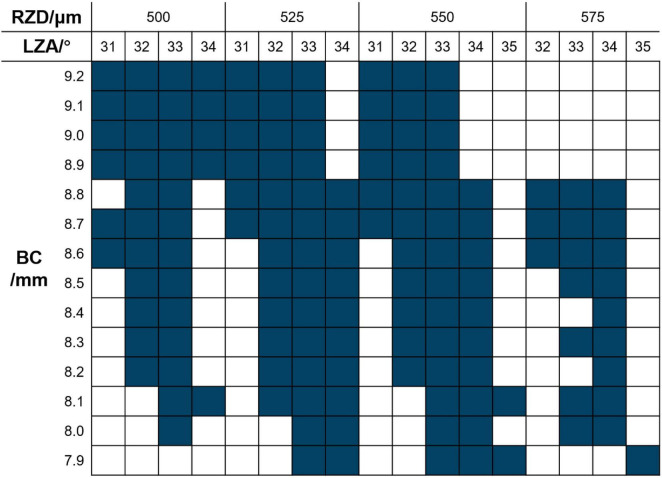 Figure 1
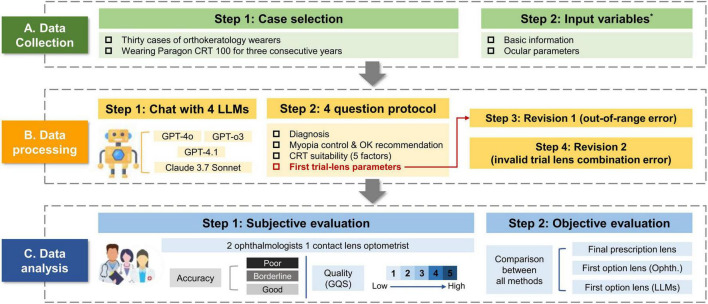 Figure 2
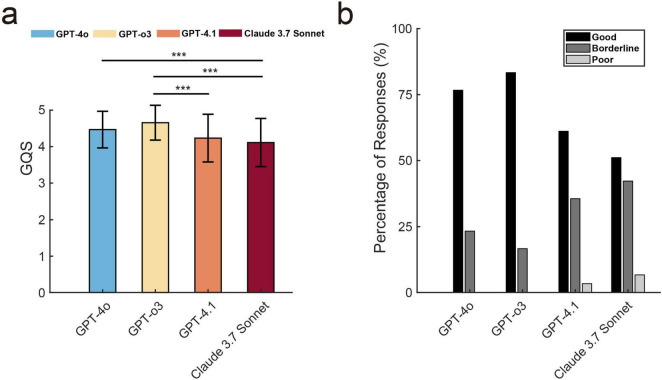 Figure 3
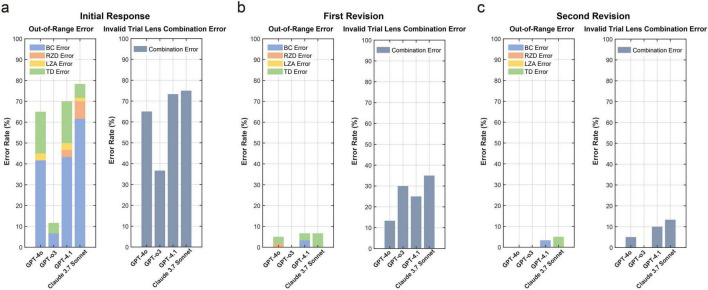 Figure 4
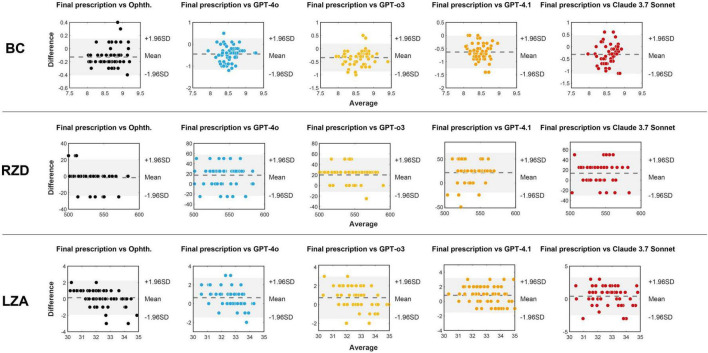 Figure 5
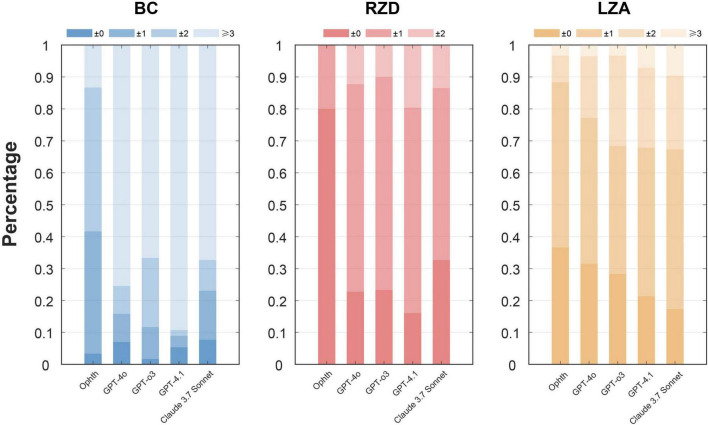 Figure 6
Peer Reviews
No public reviews on file for this paper yet. If you reviewed it on a platform where reviews are public (OpenReview, ICLR, NeurIPS, ICML), you can paste yours below so the community can read it here.
Videos
No videos yet. Explain this paper in a talk, walkthrough, or lecture? Add one.
Taxonomy
TopicsOphthalmology and Visual Impairment Studies · Retinopathy of Prematurity Studies · Corneal surgery and disorders